


Should your beauty brand launch a new product, offer a discount, or invest more in a best-selling product? Each choice affects how the brand allocates its resources and drives growth.
To choose the right path, a brand needs to understand how customer needs are changing, what competitors are doing, and which opportunities are worth pursuing. This article will analyze how beauty brands use market intelligence to make those decisions.
How Market Intelligence Reveals Where Beauty Brands Win or Lose Ground
A beauty brand’s competitive advantage can shift as customer demand changes, competitors adjust their prices, or new products attract attention. These changes aren’t always immediately reflected in revenue.

Market intelligence helps brands track these shifts through data on products, customer demand, and competitor activity. On e-commerce platforms, information such as selling prices, sales volume, reviews, search keywords, and changes in product catalogs can reveal which demands are growing, which competitors are strengthening their position, and which products are beginning to lose their competitive edge.
Market Intelligence Applications in the Beauty Industry
In the beauty industry, market intelligence can support four key decision-making areas: product improvement, trend analysis, competitor monitoring, and tracking visibility on e-commerce platforms as well as in AI search.
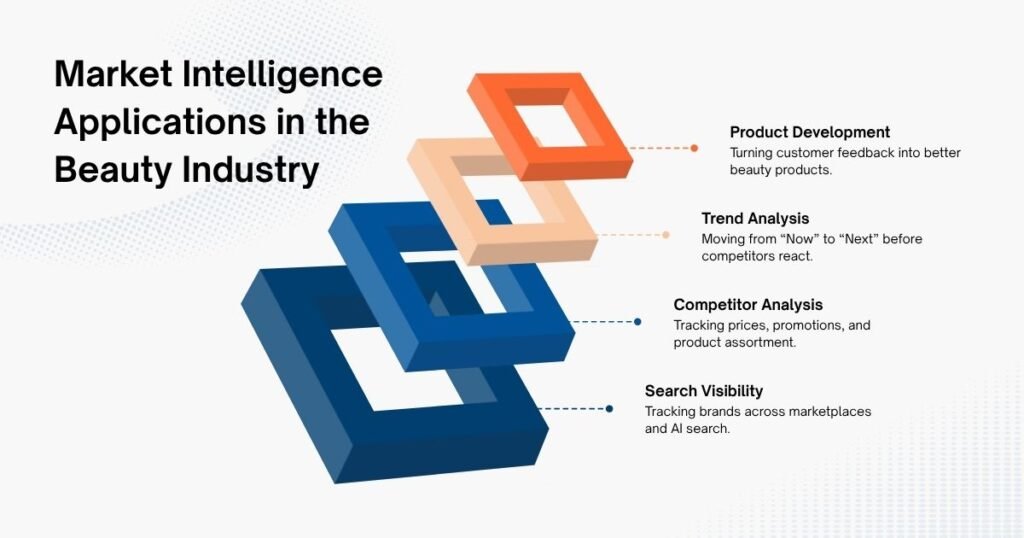
1. Product Development
Customer reviews help brands identify what their products are doing well and what areas leave users dissatisfied. By analyzing feedback on both their own products and those of competitors, brands can pinpoint the issues that need to be prioritized for improvement.
The Ordinary adopted this approach when improving its 2% Hyaluronic Acid + B5 serum. The company compiled feedback from Instagram, TikTok, its website, retailers, and customer service, then determined that texture was the most frequently mentioned issue. The new version was adjusted to be lighter and less sticky, and was tested with a group of customers before a wide release.
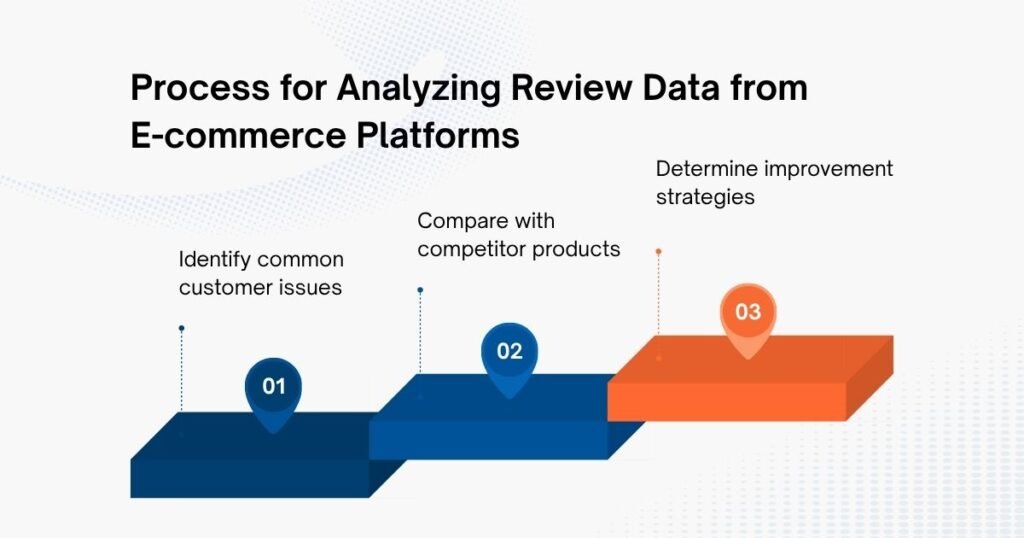
With review data from e-commerce platforms, brands can start by doing three things:
- Identify common customer issues: Categorize reviews by topic, such as texture, scent, packaging, leakage during shipping, or the actual color not matching the product image.
- Compare with competitor products: Check whether the issue appears across multiple SKUs in the same category or is primarily present in the brand’s own products.
- Determine improvement strategies: Depending on the feedback, brands can adjust formulas, change packaging, update product images and descriptions, or develop new variants.
However, a few prominent comments should not be taken as representative of the entire customer base. Brands need to monitor the number of reviews, the response rate by topic, and how these responses change over time.
Reviews help identify issues; however, they are not enough to confirm demand for a new version. Before investing in production, the brand should validate the beauty product idea and evaluate market opportunities.
2. Beauty Trend Analysis
A trending beauty product can gain attention on social media even before sales indicate strong consumer interest. If a brand starts its research only after the product begins selling well, it may miss valuable opportunities. On the other hand, pursuing every viral trend can cause a brand to invest in fleeting demands rather than sustainable growth.
L’Oréal once used TrendSpotter to scan approximately 3,500 online sources (from social media to news outlets and beauty blogs) to identify trends in skincare, hair care, and makeup. The system identifies both emerging trends and nascent signals, then forwards the results to a team of experts for evaluation.
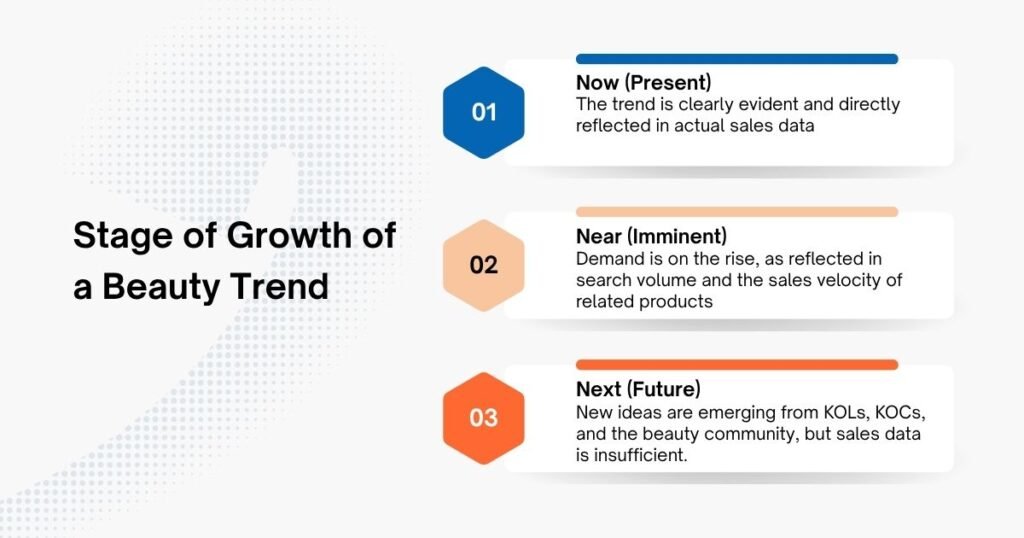
To distinguish the maturity level of a beauty trend, brands can categorize signals into three groups:
- Now: The trend is clearly evident in sales data and volume.
- Near: Demand is showing signs of growth, reflected in search volume and the sales velocity of related products.
- Next: New ideas or uses are emerging in content from KOLs, KOCs, and the beauty community, but there isn’t yet enough sales data to confirm demand.
On e-commerce platforms, brands can track search keywords, new listings within each niche, and the growth rate of sales for related products. For example, if search volume and sales are both increasing while the number of listings and shops offering these products remains limited, this could be a “Near” signal worth further investigation.
3. Beauty Competitor Analysis
A beauty brand’s competitors aren’t necessarily limited to those in the same price segment. Products at different price points can still compete if they meet the same consumer needs. Therefore, brands should monitor both direct competitors and products that could serve as substitutes for their own.
On e-commerce platforms, there are three key areas of information to monitor:
- Prices and promotions: Actual selling prices after applying coupons, timing of price reductions, promotion periods, and bundle offers.
- Product catalog: New SKUs, new variants, and discontinued products.
- Market response: Changes in sales volume for both your products and competitors’ following each price adjustment or promotion.
The case of e.l.f. Beauty illustrates the need to consider selling prices alongside business results. After raising product prices in 2025, the company saw a decline in sales and subsequently tested price adjustments on certain products to improve results. In a test with a skin tint product, lowering the price from $18 to $14 resulted in a sales increase of approximately 40%.
By comparing competitors’ prices and sales volumes with its own results, a brand can assess whether a price reduction would help a product compete more effectively or simply erode profit margins. However, changes in sales volume should not be attributed solely to selling price without considering other factors such as concurrent promotions, visibility, and fluctuations in demand.
Monitoring each channel separately is also crucial, as selling prices, promotional programs, and buyer responses can vary across platforms.
4. Search Visibility
A beauty brand’s visibility isn’t limited to its product rankings on the platform. When shoppers use AI assistants to research beauty products, whether the brand is mentioned and cited is also a key metric to track.
Tracking Search Visibility on E-commerce Platforms
Brands can start by selecting a set of keywords related to their products, such as “sunscreen” or “vitamin C serum,” and then periodically check search results on each platform. For each keyword, they should record:
- Display position: The ranking of the brand’s products and those of competitors in the search results.
- Price and promotions: Selling price, discount rates, and current promotional offers.
- Product and store information: Sales volume, reviews, and store type (Mall or non-Mall).
Tracking the same set of keywords over time helps brands identify which products are improving or losing rankings. Since marketplaces do not fully disclose how they rank search results, brands should rely on what they observe rather than speculating about the algorithm.
You can consult the guides on Shopee search data scraping and Shopee keyword scraping to learn how to collect this data.
Tracking Brand Visibility in AI Search
Shoppers can ask an AI assistant about products suited to their skin type, recommended ingredients, or brands worth considering. If a brand rarely appears in these suggestions, it may miss out on a point of contact with customers right from the product research stage.
A study by Avenue Z of 60 beauty brands revealed that 96.1% of the sources cited by ChatGPT when suggesting products came from third parties (such as news outlets, reviews, and reference sites) rather than the brands’ own websites. These results indicate that brands should pay attention to external sources mentioning them, in addition to content on their own websites.
To monitor this, brands can periodically:
- Ask the same set of questions about products and beauty needs across several AI assistants.
- Record the brands mentioned in the responses.
- Check the cited sources to identify which reviews, reference pages, or information sources are contributing to the brand’s inclusion in the suggestions.
AI responses may vary depending on the question and the time of the check, so a single check does not reflect a fixed ranking. Using the same set of questions over time helps brands track changes in visibility and identify which information sources warrant attention.
What Beauty Brands That Stay Ahead Do Differently
The difference lies not in the ability to gather a large amount of market insight, but in how a brand selects its sources, identifies the problems to be solved, and uses the data to make decisions.
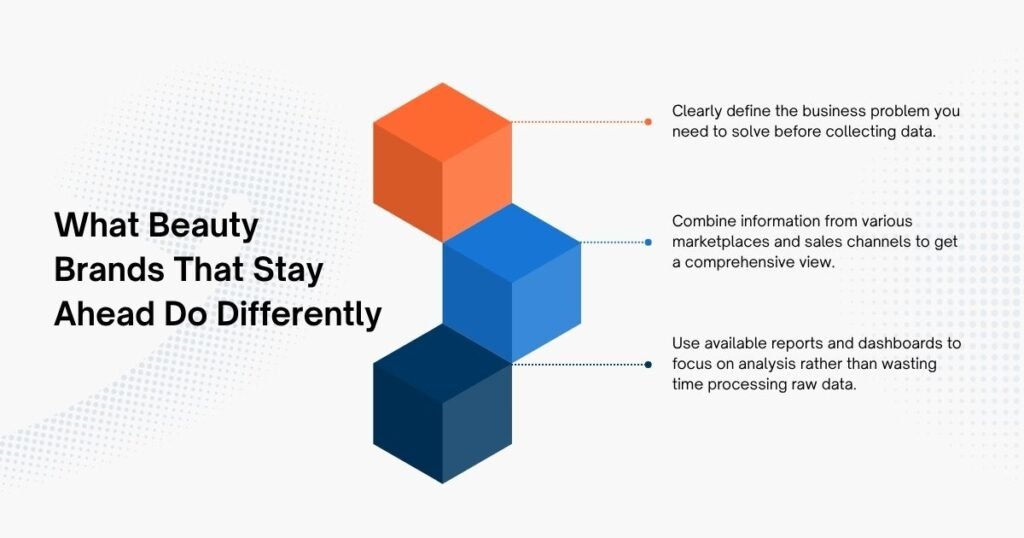
- Monitor the market from multiple sources: Sales data from a single platform reflects only a portion of the market. Combining information from various platforms and channels helps brands compare competitors’ activities, customer needs, and emerging trends.
- Start with a business question: Before collecting data, brands need to identify the problem they’re trying to solve, such as finding opportunities for new products, evaluating the effectiveness of discounts, or understanding why a product is losing its ranking. The clearer the question, the more focused the selection of data to track will be.
- Use tools and providers to reduce the data collection workload: Brands can receive pre-structured data for their own analysis, or use services that include both reports and dashboards to view key findings. The second approach is suitable when the team needs analytical support rather than just raw data.
Easy Data supports both of these needs with e-commerce market data: from structured data for brands to analyze on their own to reports and dashboards designed for market evaluation.
Conclusion
Market intelligence helps beauty brands identify changes in consumer demand, pricing, and competitor activity before those changes become evident in business results. It is important to select the right data for the specific problem at hand, and then use those insights to decide whether to improve products, adjust prices, or invest in new opportunities.
Leave a Reply