

Identifying a promising beauty trend does not necessarily mean the product will succeed on Shopee. Before investing in manufacturing or sourcing inventory, you need to validate whether the product addresses genuine market demand, delivers a satisfying customer experience, provides sustainable profit margins, and complies with marketplace regulations.
This article will guide you through the process of validating beauty products based on data before launching them on Shopee, helping you reduce risk and make more informed product decisions from the very beginning.
What Is Beauty Product Validation?
Beauty product validation is the process of evaluating a product idea before investing in production, inventory, or marketing.
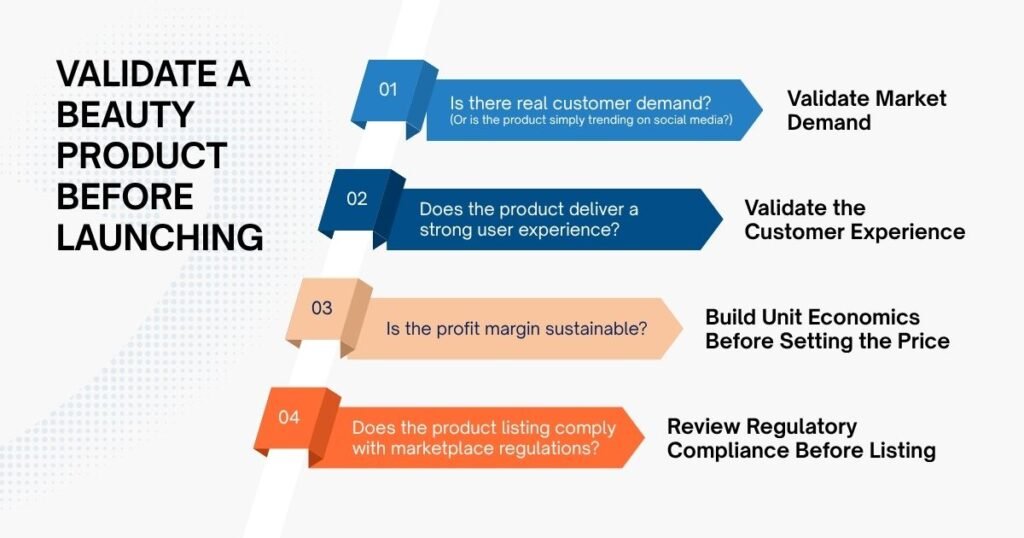
For a beauty product on Shopee, the validation process should answer four critical questions:
- Is there real customer demand, or is the product simply trending on social media?
- Does the product deliver a strong user experience? Consider factors such as formulation, texture, fragrance, packaging, and overall usability that encourage positive reviews and repeat purchases.
- Is the profit margin sustainable? After accounting for marketplace fees, advertising costs, vouchers, packaging, operations, and cost of goods sold (COGS), can the product still generate healthy profits?
- Does the product listing comply with marketplace regulations? Product names, claims, ingredients, regulatory documentation, and listing content should all meet Shopee’s requirements to avoid restrictions or removal.
Ignoring any one of these questions may not cause immediate problems at launch, but the consequences often appear later in the form of slow sales, negative reviews, rising advertising costs with little return, or listing restrictions once orders begin to accumulate.
Stage 1 – Validate Market Demand
The first question is not “Is this product trending?” but rather “How many people are actually paying for products like this?” Although these questions may seem similar, they lead to very different business decisions.
Use the following five signals to determine whether genuine market demand exists before moving forward.
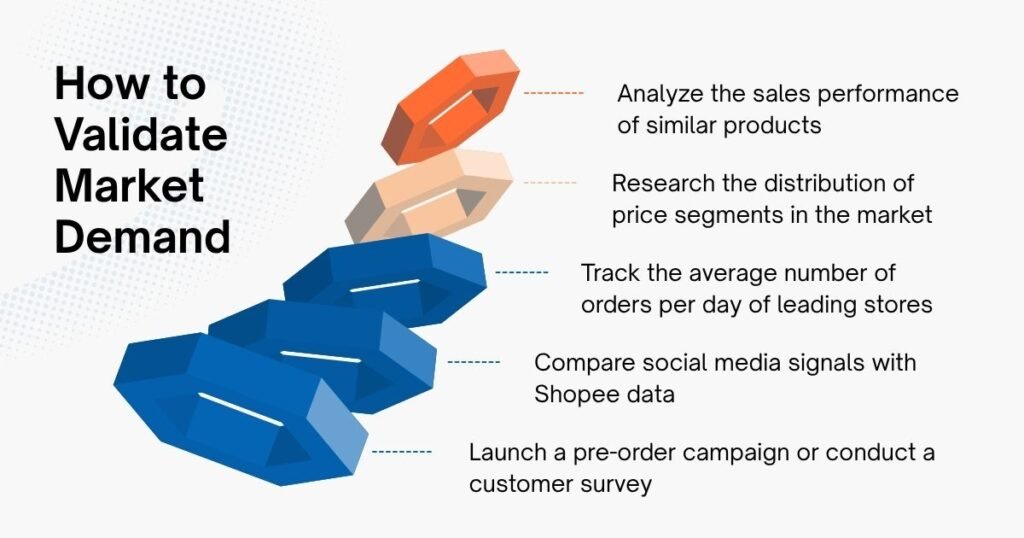
1. Measure Real Market Demand
Start by analyzing the sales performance of similar products over the past three to six months. You can collect this information using beauty market intelligence services or other data analytics platforms.
However, don’t accept every number at face value. Before evaluating GMV or sales volume, filter out signals that may distort the market picture, such as inactive or abandoned stores, unusual sales spikes, or potential fake-order manipulation.
For example, if the ratio of product reviews to total sales is significantly below 5%, it is often a signal that the sales data deserves closer examination.
2. Identify the Right Price Range
Pricing directly affects conversion rates, especially for new products.
The example below illustrates how the Vietnamese cosmetics and skincare market is typically distributed across different price segments.
| Price Range (VND) | Sales Volume Share | Expected Conversion Rate | Competition Level |
| Under 50,000 | Very High | >5% | Extremely High |
| 50,000–100,000 | Relatively High | 3.5–5% | High |
| 100,000–200,000 | Highest (Core Tier) | 2.5–4% | Medium to High |
| 200,000–400,000 | Medium | 1.5–2.5% | Moderate |
| Above 400,000 | Low | <1.5% | Low (mostly international brands) |
In this example, the 100,000–200,000 VND price range represents an attractive entry point for new products. It is affordable enough to encourage trial purchases while still leaving sufficient margin for advertising, vouchers, and marketplace fees.
By contrast, pricing above 300,000 VND without Shopee Mall status or strong brand recognition typically results in lower conversion rates and higher customer acquisition costs.
3. Monitor Sales Velocity
Search volume alone does not tell the whole story. Track the sales velocity of leading listings (the average number of orders each listing receives per day). If keyword searches continue to grow while the sales velocity of top-performing stores begins to slow, the market may already be approaching saturation.
For a deeper understanding of beauty trend life cycles, see Guide to Finding Trending Beauty Products Before Your Competitors.
4. Compare Social Media Signals with Shopee Data
A product that goes viral on social media does not automatically generate purchasing demand on Shopee. Platforms such as TikTok, Facebook, and Instagram measure attention through views and engagement, while Shopee reflects actual buying intent through search activity and order data.
Before investing in a social media trend, compare it against Shopee data by asking:
- How many searches does the keyword receive?
- How many stores are currently selling the product?
- How quickly are the top listings generating orders?
If social engagement is high but Shopee search volume remains low, the product is likely attracting attention rather than real purchase intent.
5. Validate with Pre-orders or Customer Surveys
Even after completing market analysis, many beauty brands conduct one final validation step before committing to large-scale production. Common approaches include:
- Launching a pre-order campaign
- Running surveys with the target customer segment
These methods validate real demand at a much lower cost than mass production while providing market signals that are significantly more reliable than assumptions alone.
Stage 2 – Validate the Customer Experience
Once you’ve confirmed that a product has genuine market demand, the next step is to determine whether it delivers an experience that encourages customer satisfaction and repeat purchases.
One of the most valuable data sources for this stage is the 1–3-star reviews of competing products. These reviews reveal the issues customers encounter most often and provide practical insights for improving your product before launch.
Evaluate the following three areas before finalizing your product.

1. Analyze Competitors’ 1–3-Star Reviews
Begin by collecting and categorizing several hundred to around one thousand reviews from your direct competitors. This dataset helps identify recurring customer complaints, allowing you to avoid the same issues during product development.
The example below illustrates a typical review analysis for cosmetics and personal care products.
| Common Issue | Negative Customer Feedback | Likely Technical Cause | Recommended Improvement |
| Texture | Sticky, clumpy during application, leaves a white cast | Emulsion system is not optimized; excessive silicone or gelling agents | Reformulate with a lighter emulsion system and improve moisture balance |
| Fragrance | Strong chemical smell or overpowering fragrance | Low-quality fragrance used to mask raw material odor | Use refined, low-irritation fragrance or a fragrance-free formula |
| Absorption | Feels greasy, causes shine after 30 minutes, triggers clogged pores | Oils with high comedogenic ratings | Replace with lightweight esters and add oil-control ingredients |
| Packaging | Leakage during shipping, clogged pump, cracked cap | Low-quality materials, loose threading, or inadequate sealing | Upgrade to high-quality PET/PETG packaging with locking pumps and reinforced seals |
2. Evaluate the User Experience for Your Target Market
Customer preferences are heavily influenced by local climate and consumer habits.
For example, consumers across most Southeast Asian markets generally prefer beauty products with lightweight gel, essence, or lotion textures that absorb quickly without leaving a greasy finish.
By contrast, moisturizers originally formulated for colder, drier climates (such as Korea or Europe) often receive negative reviews when sold in Southeast Asia without reformulation because they can feel heavy or clog pores in humid conditions.
This is a critical factor that many brands overlook when expanding into new markets.
3. Compare the Actual Product Experience with Your Marketing Claims
Not every negative review is caused by the product itself. In many cases, dissatisfaction results from a mismatch between marketing promises and actual user experience.
For example, claims such as “Whiter skin in 7 days” or “Eliminates acne in just 3 days” can create unrealistic expectations. When customers fail to achieve these results within the promised timeframe, they are more likely to leave negative reviews, often accompanied by photos documenting their experience.
This not only reduces repeat purchase rates but can also damage the reputation of your entire store.
If you’d like to expand your competitive analysis beyond customer experience to include pricing, listing optimization, operational performance, and competitive strategy, see Guide to Analyzing Beauty Competitors on Shopee.
Stage 3 – Build Your Unit Economics Before Setting the Price
A product can have strong market demand and deliver an excellent customer experience, yet still fail to generate sustainable profits if the cost structure is calculated incorrectly.
Many new beauty brands overlook this stage because it seems less exciting than spotting trends or developing formulations. In reality, however, it often determines whether a product can scale successfully after launch.
Before finalizing your retail price, evaluate the following three factors.
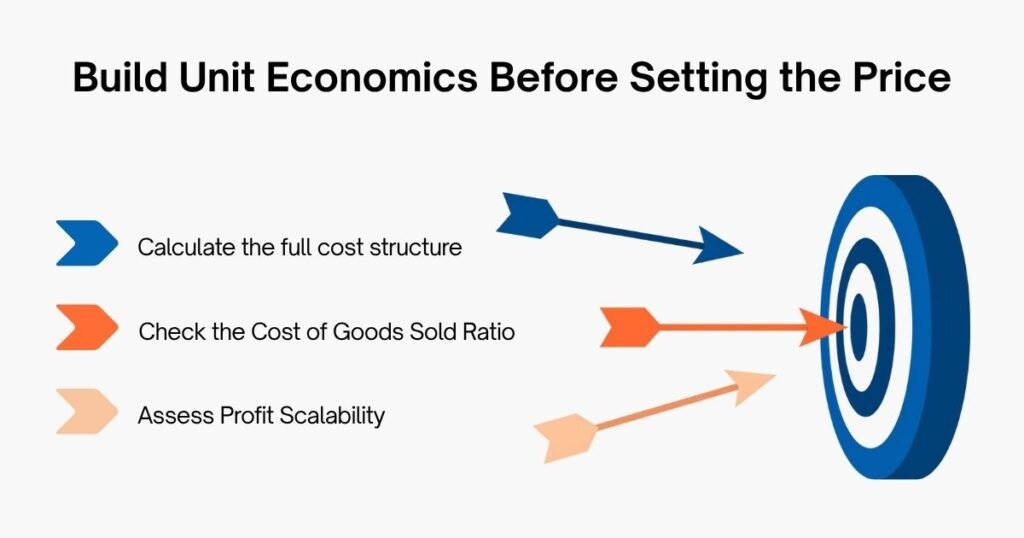
1. Calculate the Full Cost Structure
Don’t base your pricing decision on manufacturing cost alone. On Shopee, the actual cost of selling includes multiple expenses incurred throughout the sales process.
The example below illustrates the cost structure for a cosmetics product priced at 200,000 VND on Shopee Vietnam.
| Cost Component | % of Selling Price | Estimated Cost (VND) |
| Marketplace commission | 8–15% | 16,000–30,000 |
| Transaction fee | 3.27% | 6,540 |
| Platform service fee | 5% | 10,000 |
| Promotional services (Promo Xtra / Free Shipping) | 3.5–5% | 7,000–10,000 |
| Search & Display Ads | 8–10% | 16,000–20,000 |
| Store vouchers & subsidies | 3–5% | 6,000–10,000 |
| Packaging & operational costs | 3–5% | 6,000–10,000 |
| Cost of Goods Sold (COGS) | 20–25% | 40,000–50,000 |
| Net Profit | 10–15% | 20,000–30,000 |
2. Check Your COGS Ratio
Once you’ve accounted for every cost component, evaluate what percentage of the retail price is allocated to Cost of Goods Sold (COGS).
In the example above, maintaining advertising while preserving a 10–15% net profit margin generally requires COGS to remain below 20–25% of the retail price. If COGS exceeds approximately 30%, the remaining budget for advertising, promotions, and marketplace incentives becomes significantly smaller, making it much harder to scale sales profitably.
3. Evaluate Profit Scalability
A profitable product is not necessarily a scalable one. Instead of relying on aggressive price discounts, many successful beauty brands now focus on strategies that increase customer value while protecting their profit margins, such as:
- Selling product bundles to increase Average Order Value (AOV).
- Offering complimentary mini-size products with full-size purchases.
- Selling mini-size SKUs bundled with vouchers for a future full-size purchase.
These approaches lower the barrier to trial without significantly reducing perceived product value or profit margins. According to market data referenced in this guide, combining mini-size samples with follow-up vouchers can also be an effective strategy for acquiring new customers in the beauty category.
Stage 4 – Review Regulatory Compliance Before Listing
Launching a beauty product successfully only to have it removed from Shopee because of missing documentation or non-compliant claims can be far more costly than delaying the launch.
Before listing your product on Shopee or selling it in Southeast Asian markets, review the following two areas to ensure regulatory compliance.
1. Prepare the Required Documentation and Technical Testing
Beauty and personal care products sold in ASEAN markets are generally expected to comply with the ASEAN Cosmetic Directive and maintain a Product Information File, along with the required supporting documentation.
For most cosmetic and personal care businesses, the following documentation and testing are typically required.
| Requirement | Purpose |
| Microbiological Testing | Confirms that the product meets microbiological limits and is free from harmful microorganisms such as Pseudomonas aeruginosa and Staphylococcus aureus. |
| Stability Testing | Evaluates formula stability under accelerated aging conditions to determine shelf life and the Product After Opening period. |
| Primary Irritation Patch Test | Assesses the product’s skin irritation potential under dermatological supervision. |
| Safety Assessment Report | A safety evaluation prepared by qualified professionals according to the requirements of the target market. |
Note: Regulatory requirements may vary across ASEAN countries. Always verify the regulations applicable to the market where your product will be sold before commercialization.
2. Review Product Names and Marketing Claims Before Publishing Your Listing
Beyond legal compliance, Shopee continuously reviews product titles, images, and descriptions for content that may violate its advertising policies (particularly in the beauty category. Some expressions that appear harmless can still result in reduced visibility or even listing removal.
| High-Risk Category | Risky Claims | Safer Alternatives |
| Medical Claims | “Treats”, “Cures”, “Complete Acne Treatment”, “Medicine” | “Helps improve”, “Supports skin care”, “Helps soothe” |
| Instant Results | “Whiter overnight”, “Instant wrinkle removal”, “Clears acne in 24 hours” | “Brightens the complexion”, “Helps reduce the appearance of wrinkles” |
| Absolute Guarantees | “100% irritation-free”, “Guaranteed to eliminate acne” | “Dermatologist tested”, “Suitable for sensitive skin” |
| Medical Conditions | “Dermatitis”, “Fungal infection”, “Eczema treatment” | “For dry skin”, “Helps soothe redness” |
Before publishing your listing, carefully review all product content (including titles, descriptions, images, and marketing claims) to ensure compliance and avoid undermining all the validation work completed in the previous stages.
Conclusion
Validating a beauty product before launch is more than just another step in product development, it’s a practical framework for reducing risk before investing in manufacturing, inventory, and sales on Shopee.
For Shopee sellers, the process should begin by confirming market demand, followed by evaluating the customer experience, building a sustainable unit economics model, and finally ensuring regulatory compliance before publishing the product listing.
When each stage is completed in the right order, every launch decision is supported by real market data and measurable insights rather than assumptions alone.
Leave a Reply