
As ecommerce businesses continue to scale, data has become an essential part of every business decision. However, turning that growing volume of data into real business value remains a challenge that requires significant time, cost, and resources.
By 2026, more businesses are adopting Data as a Service solutions as a new approach to simplify data management and shift their focus toward data analysis and decision-making.
So, how are Data as a Service solutions changing the way ecommerce brands manage and leverage data? The answer begins with the limitations of traditional data management approaches.
How Legacy Data Approaches Are Failing Ecommerce Brands
Before Data as a Service (DaaS) became widely adopted, most ecommerce brands had to build and manage their data infrastructure in different ways. While each approach offered certain advantages, their limitations became increasingly apparent as businesses grew.
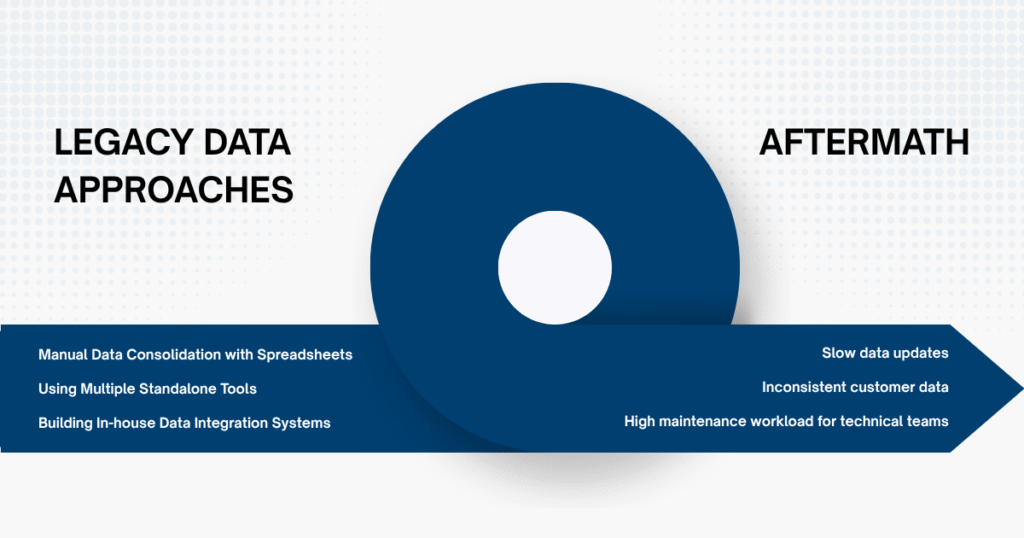
Manual Data Consolidation with Spreadsheets
Teams often had to collect data from individual advertising accounts, inventory management systems, and marketplace reports before manually consolidating everything in Excel or Google Sheets. This process was not only time-consuming but also error-prone, leaving businesses making decisions based on outdated data rather than on what was happening in the market.
Using Multiple Standalone Tools
Many businesses rely on separate tools for their ecommerce website, marketplace operations, and advertising platforms. When these systems are disconnected or difficult to synchronize with ERP and POS systems, data becomes scattered across multiple sources. As a result, gaining a complete view of business performance becomes much more difficult.
Building In-house Data Integration Systems
Some larger businesses choose to build their own data integration pipelines to centralize data in a single system. However, this approach requires significant technical resources. Whenever platforms such as Facebook, Google, or ecommerce marketplaces update their APIs or change their data structures, engineering teams must spend additional time updating and maintaining those integrations.
These traditional approaches often lead to several common challenges:
- Slow data updates: When data is processed in batches, businesses struggle to monitor inventory levels and market changes in a timely manner. This can result in overselling or delayed responses to shifts in customer demand.
- Inconsistent customer data: When data from websites, marketplaces, and physical stores is not unified, the same customer may appear as multiple profiles. This reduces the accuracy of analyses.
- High maintenance workload for technical teams: Instead of focusing on product development or system optimization, data engineers often spend a significant amount of time troubleshooting and maintaining data integration and synchronization processes.
How Data as a Service Solutions Transform Ecommerce Data Workflows
Many businesses quickly recognized the limitations of traditional data management and adopted Data as a Service solutions to streamline their data workflows. The biggest difference lies in the following three capabilities.
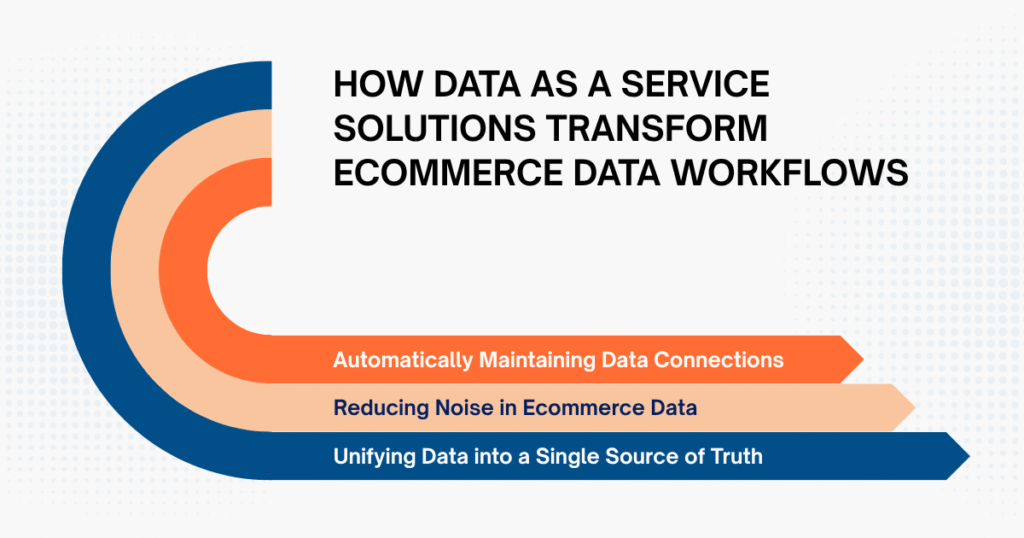
Automatically Maintaining Data Connections
In traditional data infrastructures, engineering teams must update their systems whenever platforms such as Facebook, Google, or ecommerce marketplaces change their APIs to prevent data disruptions.
With DaaS solutions, these connections are automatically maintained and updated. This allows businesses to spend far less time maintaining data infrastructure and focus more on extracting value from their data.
Reducing Noise in Ecommerce Data
Ecommerce data, especially in Southeast Asian marketplaces, is often affected by multiple promotional campaigns such as Flash Sales, vouchers, shipping subsidies, and cashback programs. Analyzing raw data alone can easily lead to inaccurate conclusions about pricing or business performance.
A DaaS solution processes these promotional layers before the data is analyzed, providing a clearer view of actual pricing structures and overall market performance.
Unifying Data into a Single Source of Truth
Many businesses still allow different departments to work with separate data sources. Data as a Service solutions collect, clean, and standardize data from multiple systems into a single, unified platform.
When Marketing, Operations, and Finance all work from the same source of truth, performance tracking becomes more consistent, and business decisions are based on the same set of reliable data.
How Data as a Service Solutions Help Ecommerce Brands Make Better Decisions
When data is continuously collected, standardized, and kept up to date, the Data as a Service model does more than simplify data management. It changes how ecommerce brands operate and make decisions. This transformation is reflected in three key areas.
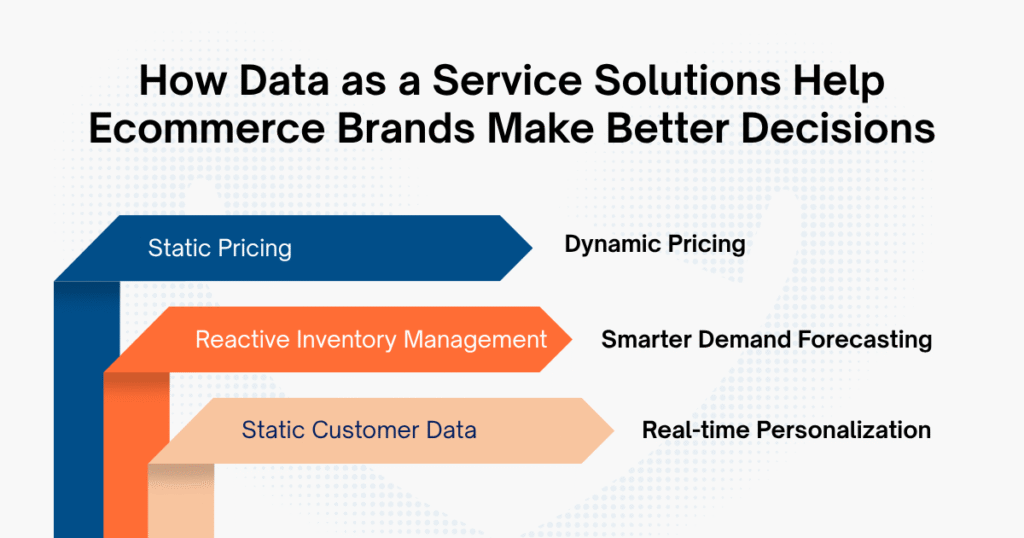
From Static Pricing to Dynamic Pricing
Traditionally, many businesses adjusted their prices based on weekly or monthly reports, causing pricing decisions to lag behind actual market conditions.
With DaaS solutions, businesses can continuously monitor competitors’ pricing and market changes in real time. Combined with pricing algorithms, these insights allow pricing strategies to be adjusted automatically, helping improve conversion rates while protecting profit margins.
From Reactive Inventory Management to Smarter Demand Forecasting
During peak shopping events such as Black Friday or major ecommerce campaigns, sudden spikes in traffic and orders can put significant pressure on both data infrastructure and business operations.
Data as a Service solutions leverage the scalability of cloud infrastructure to automatically scale computing resources based on actual demand, allowing businesses to avoid investing in more infrastructure than they need.
In addition, by combining sales data with external market signals, businesses can forecast demand more accurately, allocate inventory across fulfillment centers more efficiently, and reduce the risk of stock shortages during peak seasons.
From Static Customer Data to Real-time Personalization
Customer data only creates value when it is updated quickly enough to reflect customers’ current behavior.
Through continuous two-way data synchronization, DaaS solutions not only collect and standardize data but can also write processed data back into CRM systems and marketing automation platforms. As soon as a customer takes a new action, the updated data can immediately support product recommendations or personalized experiences within the same shopping session.
Learn more: Data as a Service Use Cases for Ecommerce Brands
Common Types of Data as a Service Solutions on the Market
The Data as a Service market is highly diverse, and not every solution is designed to solve the same business challenges. Choosing the right platform starts with understanding what each type of solution is built for.
From an ecommerce perspective, DaaS solutions can generally be grouped into three main categories.
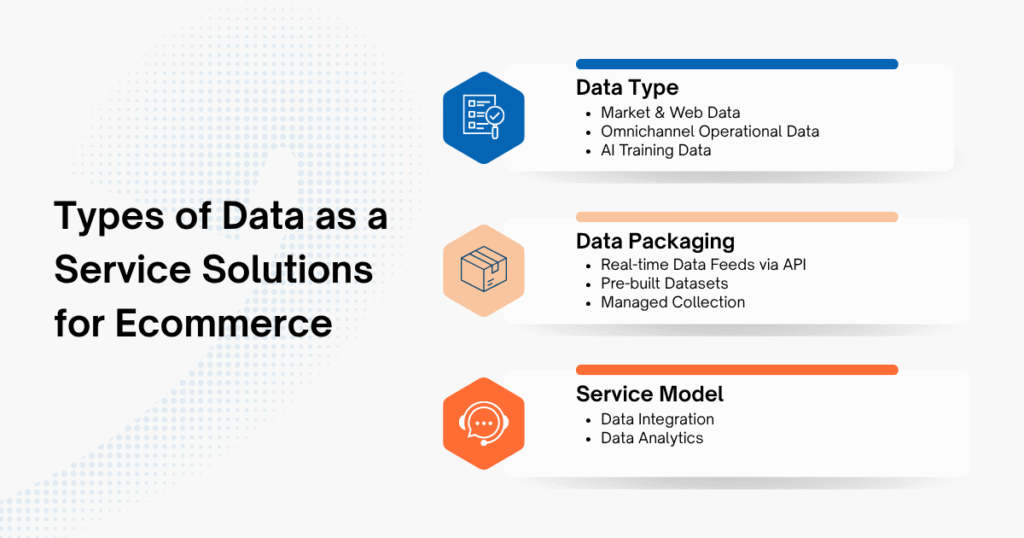
By Data Type
This is the most common way to classify DaaS solutions, helping businesses identify the right data source for their specific objectives.
- Market & Web Data: Providers in this category collect publicly available data from ecommerce marketplaces such as Amazon, Shopee, and TikTok Shop, as well as competitor websites. The data typically includes product pricing, inventory levels, customer reviews, product rankings, and other indicators that reflect market dynamics.
- Omnichannel Operational Data: These solutions focus on consolidating internal business data from systems such as Shopify, Meta Ads, ERP, and POS into a unified data repository, giving businesses a more complete view of their operations.
- AI Training Data: These providers offer cleaned and labeled datasets that businesses can use to train AI models, such as recommendation engines or demand forecasting models.
By Data Packaging
Depending on their existing technology stack, businesses can adopt Data as a Service solutions in different delivery formats.
- Real-time Data Feeds via API: Data is continuously delivered to business systems through APIs. This option is ideal for use cases that require real-time data, such as dynamic pricing or Buy Box monitoring.
- Pre-built Datasets: These ready-to-use datasets are designed for market research. Businesses can immediately access consumer trend data or historical pricing data for a specific product category without building API integrations.
- Managed Collection: The provider handles the entire data collection, standardization, and maintenance process. This model is well suited for businesses without an in-house data engineering team or those looking to reduce the operational costs of managing data infrastructure.
By Service Model
Beyond the data itself, Data as a Service solutions also differ in how much they support analysis and decision-making.
- Data Integration: These solutions focus on connecting data from multiple sources, standardizing it, and delivering it into a centralized data repository. They serve as the foundation for downstream analytics and reporting.
- Data Analytics: In addition to providing data, these solutions include built-in dashboards and visual reports that help businesses monitor performance, analyze Customer Lifetime Value (LTV), identify revenue leakage, and track important market changes more efficiently.
What to Look for in an Ecommerce DaaS Solution
When evaluating a Data as a Service solution, ecommerce brands should focus on whether it helps the business unlock greater value from its data. The following criteria can help guide that evaluation.
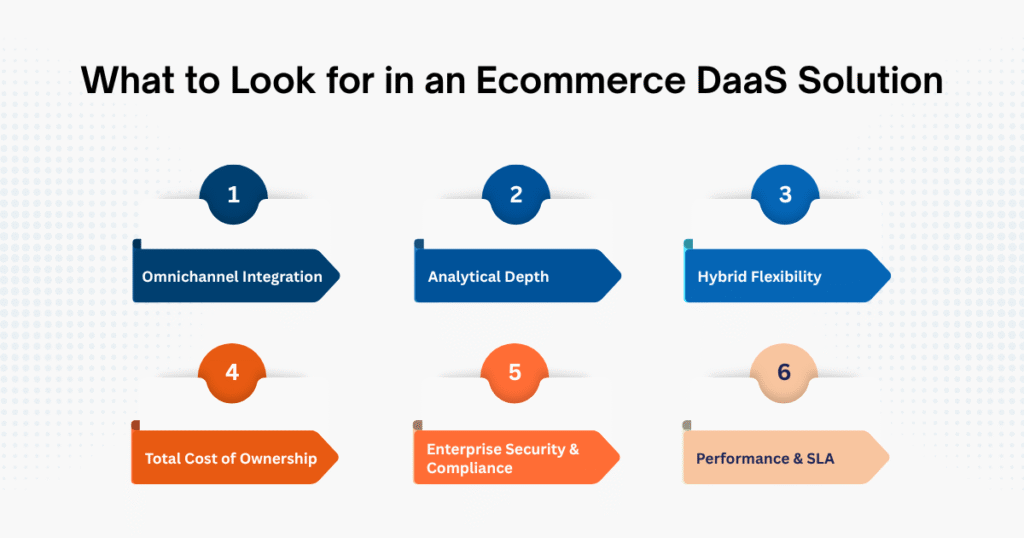
- Omnichannel Integration: The solution should support data integration across every business channel, including DTC websites (Shopify, Magento), ecommerce marketplaces (Amazon, Shopee, Lazada, TikTok Shop), advertising platforms (Meta, Google, TikTok), as well as ERP and POS systems.
- Analytical Depth: Beyond basic metrics, the platform should provide deeper analytics such as Customer Lifetime Value (LTV), Cohort Analysis, Buy Box Monitoring, and competitor tracking to support more informed business decisions.
- Hybrid Flexibility: A strong Data as a Service solution should balance ease of use with flexibility. Intuitive dashboards support day-to-day monitoring, while SQL query capabilities allow data teams to perform more advanced analysis when needed.
- Total Cost of Ownership (TCO): Don’t evaluate a solution based solely on its subscription fee. Consider the total cost of ownership, including infrastructure expenses, engineering resources, pipeline maintenance, and the potential business impact of data interruptions or inaccuracies.
- Enterprise Security & Compliance: Choose providers that meet recognized security standards such as SOC 2 Type II or ISO 27001, while also complying with data privacy regulations such as GDPR to ensure enterprise data remains secure.
- Performance & SLA: A reliable DaaS platform should provide clear Service Level Agreements (SLAs) and high uptime guarantees to ensure data is always available, especially during peak periods such as Mega Campaigns or Black Friday when transaction volumes increase significantly.
Conclusion
Adopting Data as a Service solutions is about more than replacing a tool or upgrading your data infrastructure. More importantly, it represents a shift in how businesses approach data: from spending significant time and resources collecting, maintaining, and processing data to focusing on using data to drive better business decisions.
By removing the ongoing burden of managing data infrastructure and synchronization, ecommerce brands can spend more time on what truly creates value: understanding the market, understanding their customers, and making faster, more informed decisions.
Leave a Reply