

In the beauty industry, trends on TikTok and social media change very quickly, while the product development process often takes several months. This difference in speed makes it difficult for many brands to identify the right time to launch a product, increasing the risk of weak demand and excess inventory. This article explains the key product launch risks and how real-time beauty market data can help brands make more informed decisions.
Why a Research Cycle Doesn’t Match How Fast Beauty Trends Move
In the beauty industry, social media is playing an increasingly important role in how consumers discover and evaluate products. A trend can gain traction within just a few days, but turning an idea into a finished product still takes much longer.
A full OEM project, from developing a custom formula to designing dedicated packaging, typically takes several weeks for production, not including sampling and stability testing beforehand. If the product is sold across multiple markets, different regulatory requirements in each country (such as BPOM registration and Halal certification in Indonesia or Thai FDA approval) can add several more months.
When these stages add up, they can create a significant gap between when a brand identifies a market opportunity and when the product is actually ready to sell. During that time, demand can change, a trend can cool down, or competitors may have already adjusted their products and pricing to gain an advantage.
| Criteria | Traditional Research & Production | Real-Time Data & Flexible Ecosystem |
| Data signal lag | 3–6 months of historical data | Continuously updated daily |
| Product R&D timeline | 6–16 weeks for a customized OEM formula | 15–30 days with an existing ODM/white-label formula |
| Minimum MOQ | 3,000–10,000+ units/SKU | 100–500 units for a test batch |
| Demand forecasting model | Based on static historical sales data | Based on real-time search, social, and transaction signals |
| Risk profile | Higher risk of excess inventory, missing the trend, or sudden stockouts | Lower risk through small batches and continuous demand validation |
Note: The timelines and MOQs above reflect common industry ranges. Actual figures may vary depending on the manufacturer, product type, and market.
How to Use Real-Time Signals to Reduce Beauty Product Launch Risks
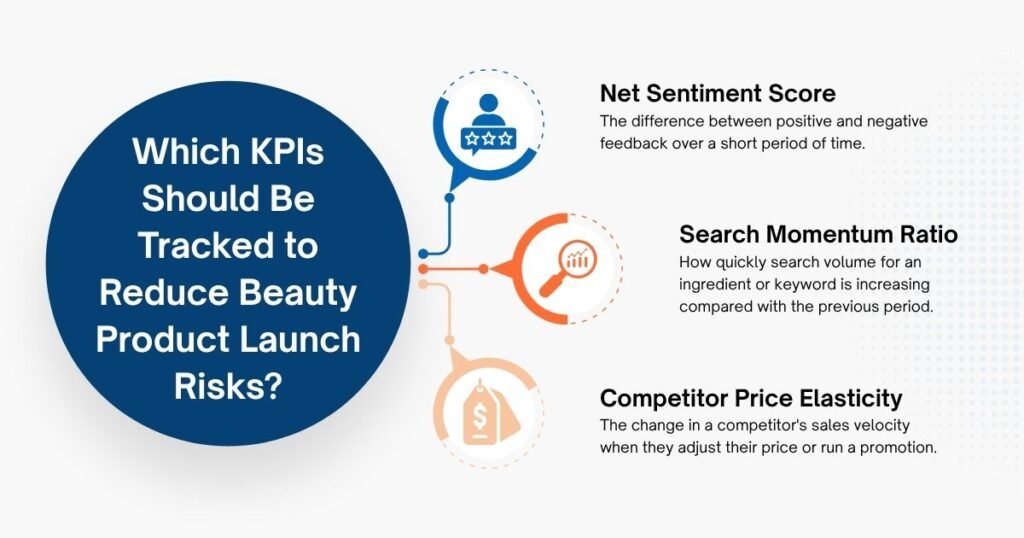
When a product is being developed or has just launched, the important thing is not to monitor every signal in the market. More importantly, brands need to identify changes that may signal a risk early enough to take action. For beauty products, there are three key groups of signals to monitor: consumer sentiment, ingredient & trend shifts, and pricing & sales velocity.
Track Live Consumer Sentiment
Customers do not wait for a brand to send a survey before saying they dislike a product. They leave reviews, comments, and feedback soon after making a purchase. These responses often focus on very specific factors such as texture, fragrance, or how the product feels on the skin.
What matters is that a problem often does not appear in just one review. When the same feedback starts appearing across multiple customers, that is when it becomes a meaningful signal. Review mining helps brands process this feedback more systematically: instead of reading individual reviews one by one, teams can group them by topic and track which issues are appearing more frequently.
The guide Validate a Beauty Product Before Launching on Shopee goes into more detail on how to do this in the Shopee context.
Metric to track: Net Sentiment Score. Simply put, this is the difference between positive and negative feedback over a short period of time.
For a new product, what matters is which direction sentiment is moving. If sentiment declines within the first 1–2 weeks and the same negative reason keeps appearing (such as “feels heavy on the skin,” “too strong a fragrance,” or “not suitable for oily skin“), the brand has a basis to review the formula or messaging before continuing to scale production.
Monitor Ingredient & Trend Shifts
A rapidly growing trend does not necessarily mean demand will last. On social media, a trend can reach millions of views while being driven by only a small group of creators. So views only tell part of the story. Brands also need to look at how many different creators are participating, whether consumers are actually searching for the ingredient, and whether related products are selling well.
If views are rising sharply but remain concentrated among a small group of accounts, this is a point to check additional signals before deciding to increase production. It does not necessarily mean abandoning the trend; it simply means that a short-lived spike should not yet be treated as strong enough evidence of long-term demand.
Guide to Finding Trending Beauty Products goes into more detail on how to track the lifecycle of a beauty trend.
Metric to track: Search Momentum Ratio. This metric shows how quickly search volume for an ingredient or keyword is increasing compared with the previous period.
If search volume continues to increase across multiple cycles, demand may still be expanding. Conversely, if search volume rises sharply and then falls quickly after a short-lived peak, the brand should validate the signal further before expanding production.
Optimize Pricing & Inventory with Sales Velocity
Competitor prices and their sales velocity also change continuously. If a brand only looks at a price at a single point in time, it is difficult to understand how that price is actually affecting demand. Tracking price changes alongside sales velocity allows brands to see this relationship more clearly. For example, if a competitor’s sales velocity increases significantly after they lower their price or run a promotion, this could signal a price range that the market is responding well to.
These signals are also useful for inventory decisions. If sales velocity is increasing, the brand can consider planning its next production run earlier. If sales slow down, continuing to produce a large batch could increase inventory risk.
How to Monitor Beauty Product Prices Like Top Brands provides more detail on how to track price changes and sales velocity for beauty products.
Metric to track: Competitor Price Elasticity. Simply put, this is the change in a competitor’s sales velocity when they adjust their price or run a promotion.
If sales velocity increases significantly after a competitor lowers its price to a certain level, and this pattern repeats across multiple observations, that price range may be worth considering when positioning the brand’s own product.
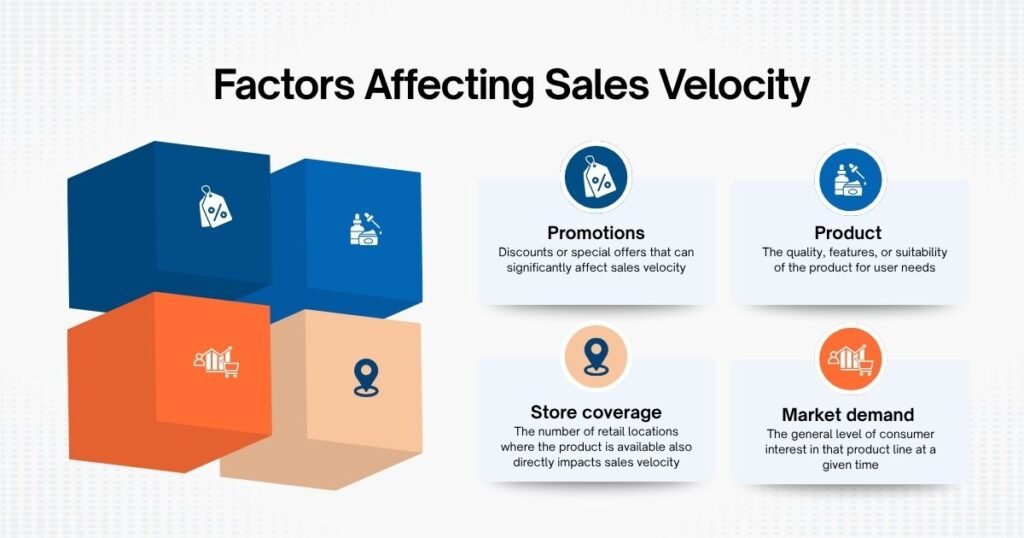
However, price elasticity should not be read in isolation. Promotions, the product itself, store coverage, and market demand can all affect sales velocity. Competitor pricing should therefore be considered alongside these signals before using it to make pricing or production decisions.
Real-World Use Case
An example from the beauty industry shows how data and real-world signals can be used to adjust marketing activities.
In a campaign by Maybelline in Vietnam, the brand used a network of KOCs and engagement data rather than relying solely on broad advertising. As a result, product usage increased from 34% to 63%, consumer sales increased by 80%, and sales through beauty retailers increased by 51%.

What stands out is not only the results, but how the brand used data to select KOCs and adjust messaging based on actual engagement and conversion, rather than simply looking at follower counts.
This is an example from marketing, but the principle can also be applied to product launches: monitor signals as the market changes and use them to adjust decisions rather than waiting for an end-of-period report. For a new product, these signals can include sentiment, trends, pricing, or sales velocity.
Conclusion
Beauty brands cannot control how long a trend will last, nor can they shorten every step of the R&D, production, or regulatory process. But they can shorten the time between when the market changes and when the team recognizes it and makes a decision.
Tracking consumer sentiment, ingredient trends, pricing, and sales velocity helps brands detect these changes earlier. When an issue starts recurring in reviews, an ingredient begins to lose momentum, or sales velocity changes with price, brands have more basis to adjust the product, production, or inventory before the cost of reacting too slowly becomes greater. That is the practical value of real-time beauty market data.
Leave a Reply