
The goals of product research are different for beauty brands, beauty sellers, and dropshippers. Beauty sellers and dropshippers typically use product research platforms to find products with demand, strong sales, and profit potential, then source those products and list them on marketplaces.
For beauty brands, the goal of product research is broader. They need product research tools to understand the market, consumer demand, and the products already available before developing a new product.
What Are the Best Product Research Tools for Beauty Brands?
There is currently no single tool that can support every aspect of product research for beauty brands.
Researching a new beauty product usually requires a brand to combine different types of data from multiple sources. Some research tasks also require industry-specific analysis, such as ingredients, skin concerns, product attributes, or consumer behavior across different beauty product categories.
By breaking product research down into specific tasks such as trend forecasting, tracking ingredient trends and social insights, analyzing market gaps from ecommerce data, researching consumer feedback, and applying beauty tech, brands can choose specialized tools for each research need.
The table below summarizes popular tools based on the core beauty product research tasks they support:
| Platform / Tool | Core Beauty Product Research Use Case |
|---|---|
| Spate | Ingredient and demand trend forecasting from search and social data |
| Shoplus | Search volume, keyword, and hashtag research on TikTok |
| Google Trends | Tracking search interest and search trends on the web |
| Easy Data | SKU-level ecommerce data analysis and review mining on Shopee, TikTok Shop, and Lazada |
| Ipsos Synthesio | Social listening and sentiment analysis at enterprise scale |
| WGSN Beauty | Long-term beauty trend forecasting and consumer insights |
| BEAUTYSTREAMS | B2B trend analysis for packaging, colors, and ingredients |
| Vypr | Rapid consumer surveys and concept research |
| Bazaarvoice | Product sampling and consumer feedback collection |
| Syncly | AI-powered Voice of Customer analysis |
| Perfect Corp | AI skin analysis and product recommendations |
| GlamAR | Virtual try-on and AR for beauty products |
| Haut.AI | AI skin analysis based on biometric indicators |
1. Trend & Ingredient Discovery Tools
Spate
Spate uses machine learning to analyze search and social data to identify emerging beauty trends. For R&D teams, this data not only shows whether an ingredient or product is gaining attention, but also whether demand is growing quickly or steadily over time.
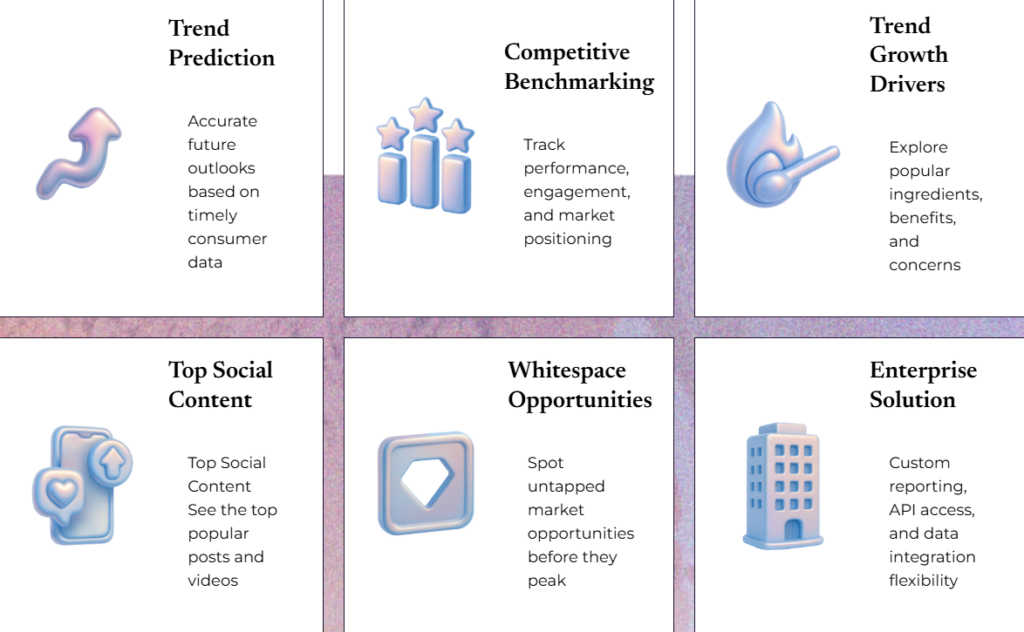
For example, a brand can use Spate to see whether search demand related to peptides or the skin barrier is growing steadily or only increasing for a short period. This provides a basis for identifying which ingredients or product concepts are worth researching further.
Shoplus
Shoplus focuses on search demand on TikTok. Brands can look up search volume, keywords, and hashtags related to a product or ingredient, then track interest across different markets.
For example, if a brand is researching a new ingredient, search data can show whether consumers in a specific market are actually interested in that ingredient. This provides a useful signal before going deeper into product development.
Google Trends
Google Trends is a free tool for tracking search interest on the web over time. It is also a simple way for brands to test a product idea before investing more resources in research.
Brands can use Google Trends to check seasonality, track whether a trend is growing or declining, or compare interest across ingredients and product categories. For example, when considering Retinol and Bakuchiol, a brand can compare search interest for the two keywords to gain another signal of consumer interest.
WGSN Beauty
WGSN Beauty is suitable for brands that need to look beyond trends happening on marketplaces or social media. The platform focuses on long-term trend forecasting and consumer insights, with a long-term perspective.
Brands can track changes in consumer lifestyle, aesthetics, colors, materials, and sustainability, giving them additional data to support decisions around product direction, packaging, and brand positioning.
BEAUTYSTREAMS
BEAUTYSTREAMS focuses on beauty industry trends and B2B insights, making it suitable for brands and product teams researching product development.
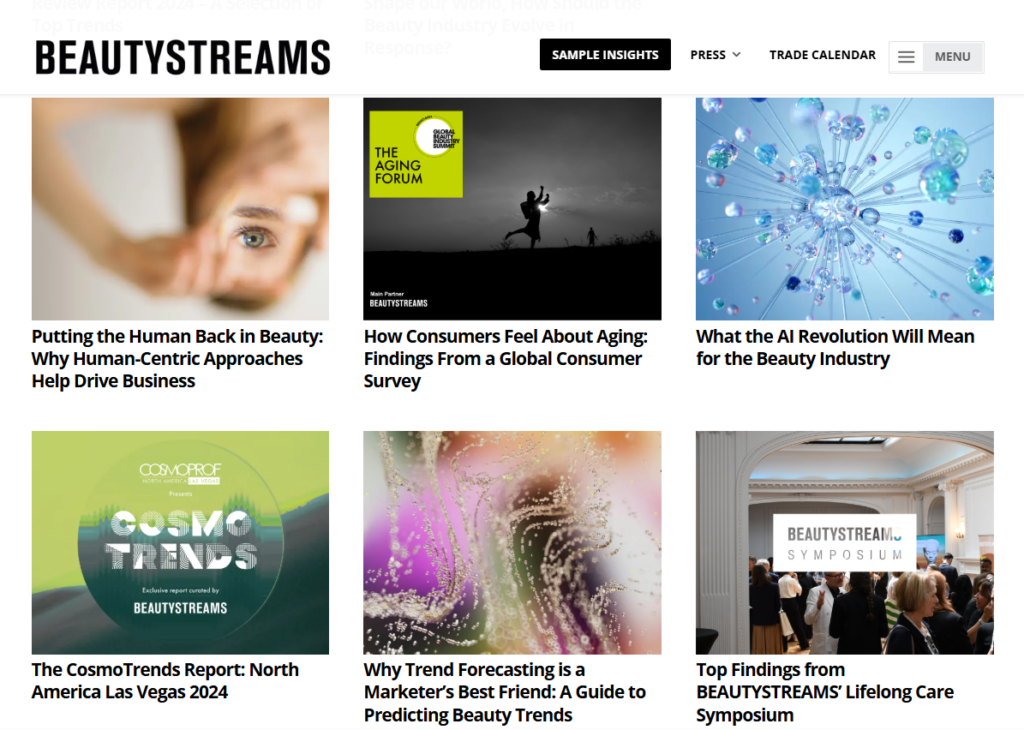
The platform provides information on packaging, color trends, ingredients, and product concepts in the beauty industry. Brands can track how a trend is developing and how that trend is being expressed through product and design directions in the market.
2. Market Gap & Social Listening Tools
Easy Data
One practical way to identify a product gap is to look at what customers are still dissatisfied with in products already available on the market.
Easy Data provides SKU-level data across Shopee, Lazada, and TikTok Shop, allowing brands to track products, sellers, prices, and individual SKU attributes. Combined with review mining, brands can process large volumes of reviews to identify recurring issues in customer feedback.
For example, many customers may complain that sunscreen melts easily in hot and humid weather or that spray nozzles break easily. When these issues appear across multiple products, R&D teams can consider them when researching formulas, packaging, or product attributes for a new product.
Explore Easy Data’s E-commerce Data Services
Click to discover real-time crawling solutions for Shopee, TikTok Shop, and Lazada.
Ipsos Synthesio
For brands that need to monitor consumer conversations beyond marketplaces, Ipsos Synthesio provides data from social media, forums, and blogs. Brands can see what consumers are saying about a skin concern, ingredient, or product category, including topics that may not yet appear frequently in product reviews.
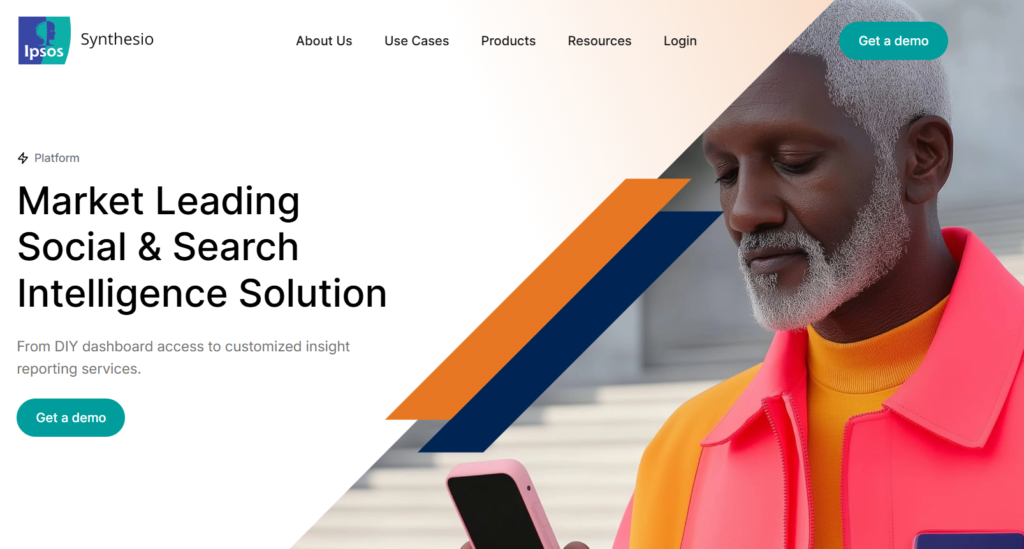
Combined with AI sentiment analysis, this data shows whether consumer reactions are leaning positive or negative and how sentiment changes when a trend or new product emerges.
Syncly
Syncly consolidates feedback from multiple touchpoints such as email, chat, and reviews, then uses AI to categorize feedback and identify recurring issues. For example, if many customers mention that a serum oxidizes quickly, a brand can identify it as an issue worth considering without having to read every individual response.
These recurring issues can become an input for R&D when identifying product problems to prioritize, helping teams improve products or adjust subsequent production batches.
3. Consumer Research & Concept Testing
Vypr
Vypr helps brands test consumer reactions to a product concept before moving deeper into development. R&D teams can present multiple options for a product concept, packaging, or naming for consumers to evaluate and compare.
Brands can collect consumer feedback and quantitative data to see which concept is better received and how users respond to each option. For example, when considering two packaging directions for the same skincare line, a brand can conduct a survey to see which design is more appealing and which concept generates more interest.
Bazaarvoice
Bazaarvoice supports product research through product sampling and consumer feedback. Brands provide product samples for consumers to try, then collect feedback and reviews based on their actual experience. For beauty products, this feedback helps brands better understand how consumers perceive texture, fragrance, packaging, or the overall product experience after use.
Feedback from the sampling process can also highlight areas for improvement before the brand continues developing the product.
4. Beauty Tech & AI Diagnostics Tools
Perfect Corp
Perfect Corp provides AI skin analysis and beauty personalization technologies, allowing brands to analyze skin conditions and build product consultation experiences based on image data. For product research, this data helps brands better understand the skin concerns commonly found among their target users.
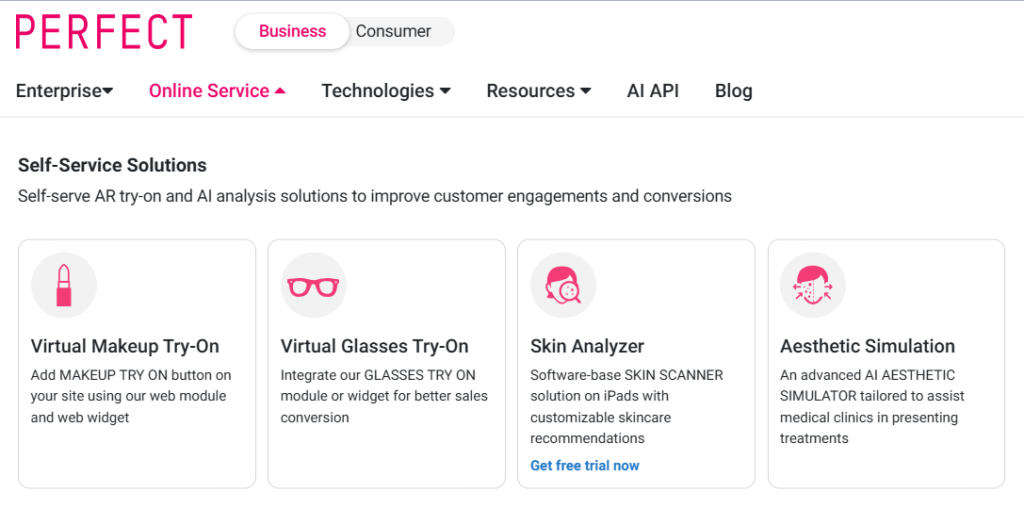
For example, if a group of users commonly experiences issues with uneven skin tone or fine lines, a brand can incorporate these needs into research around product claims, ingredients, or product concepts.
GlamAR
GlamAR focuses on Virtual Try-On and AR, particularly for makeup products such as lipstick and eyeshadow. Users can try different shades virtually before deciding to purchase. For brands, data from the try-on process provides another perspective on users’ color preferences and product preferences.
For example, if certain shades are tried more often than others, a brand can continue researching demand for those shades when building its assortment.
Haut.AI
Haut.AI focuses on AI skin analysis, analyzing characteristics and indicators related to skin condition from user images. For brands developing skincare or dermocosmetics, this data helps classify skin concerns and skincare needs across different user groups in greater detail.
When combined with data on ingredients and product performance, these insights can support R&D teams in researching product concepts and ingredient combinations that fit different needs.
Final Thought
In beauty, a competitor’s best-selling product is not necessarily a good opportunity for your brand. Using the right product research tools helps beauty brands make more informed decisions and reduce costly mistakes in R&D.
Ultimately, a good product does not start with just a great idea. It starts with knowing whether that idea is actually worth developing.
Leave a Reply