

Many beauty brands invest a great deal of time in developing formulas, refining packaging, and preparing launch plans, yet their products still fail to achieve the expected results after going live. In many cases, the problem does not come from a single wrong decision, but from a series of small mistakes that occur at different stages of product development and commercialization. These mistakes are often difficult to spot early on and only become apparent once they start affecting sales, costs, or customer experience.
This article covers 7 common mistakes beauty brands make when launching new products on Shopee, Lazada, and TikTok Shop in Southeast Asia. The mistakes are divided into 4 groups based on different stages of the product development process, with signs to look out for and ways to avoid them so you can review your launch plan before the product officially goes live.
Group 1 — Getting the Concept & Formula Wrong From the Start
When developing a new product, many brands spend most of their time optimizing the formula or keeping up with trends that are gaining attention. That is not wrong, but it is not enough. A product only has a chance of succeeding when it fits the needs and the way consumers actually use it in the target market.
The two mistakes below happen during the product development stage, but are often only discovered after the product goes live and starts receiving feedback from the market.
Mistake #1 — Chasing Virality Instead of Validating Real Demand
A trend that is widely talked about on TikTok does not necessarily mean the product will sell well on Shopee or TikTok Shop. Many brands see a trend gaining momentum and quickly add it to their production plans, but overlook the most important step: checking whether that attention is actually translating into purchase demand.
Instead of looking only at views or engagement, compare them with marketplace signals such as search data, actual orders, and the growth rate of products in the same segment. These signals help distinguish between a trend that has real purchase demand and one that simply attracts attention.
This is also the type of data that beauty market intelligence platforms typically track to assess market demand.
But Validating Demand Alone Is Not Enough
Even when there is genuine market demand, a product can still fail if the experience does not fit local consumers.
For example, many moisturizers developed for cold climates such as Korea or Europe tend to receive lower ratings when sold in Southeast Asia because their texture is too thick, making them feel heavy on the skin or causing a congested feeling in hot and humid conditions. These issues are rarely identified in the lab and often only show up in the first 1–2 star reviews.
Before moving into mass production, ask yourself:
- Does social media virality come with actual search data and order volume on marketplaces?
- Have target customers tested the product under the actual climate conditions of the market you are targeting?
- Is the feedback from real users sufficient for you to confidently finalize the formula?
Mistake #2 — Overlooking Formula Stability Testing
A formula may perform very well when it is first finalized, but that does not guarantee the product will maintain its quality after several months of storage or transportation. Issues such as separation, color changes, loss of fragrance, or reduced active efficacy may only appear over time and are often caused by skipping stability testing.

Stability testing helps assess whether a product remains stable throughout its intended shelf life. The process typically includes accelerated aging tests, freeze–thaw cycles to check for separation, and an evaluation of the preservative system to reduce the risk of microbial contamination.
With Southeast Asia’s hot and humid climate, combined with storage and e-commerce transportation conditions where temperature is not always controlled, this testing becomes even more important.
A few points to confirm before production:
- Has the formula undergone stability testing under conditions appropriate for the target market?
- Does the product maintain its color, fragrance, and texture after storage or transportation?
- Has the preservative system been evaluated to ensure the product remains stable throughout its intended use period?
Spending a few extra weeks completing these tests is usually far less costly than dealing with customer complaints, product recalls, or a wave of negative reviews after launch.
Group 2 — Packaging & Production Readiness
A good formula does not necessarily lead to a successful product. Before reaching customers, the product still has to go through packaging, storage, transportation, and the decision of how many products to launch at once.
The two mistakes below often occur during the production preparation stage. They are not always easy to spot early on, but they can increase return rates, add unexpected costs, or spread your budget too thin from the very first production batches.
Mistake #3 — Overlooking Packaging Compatibility With Transportation
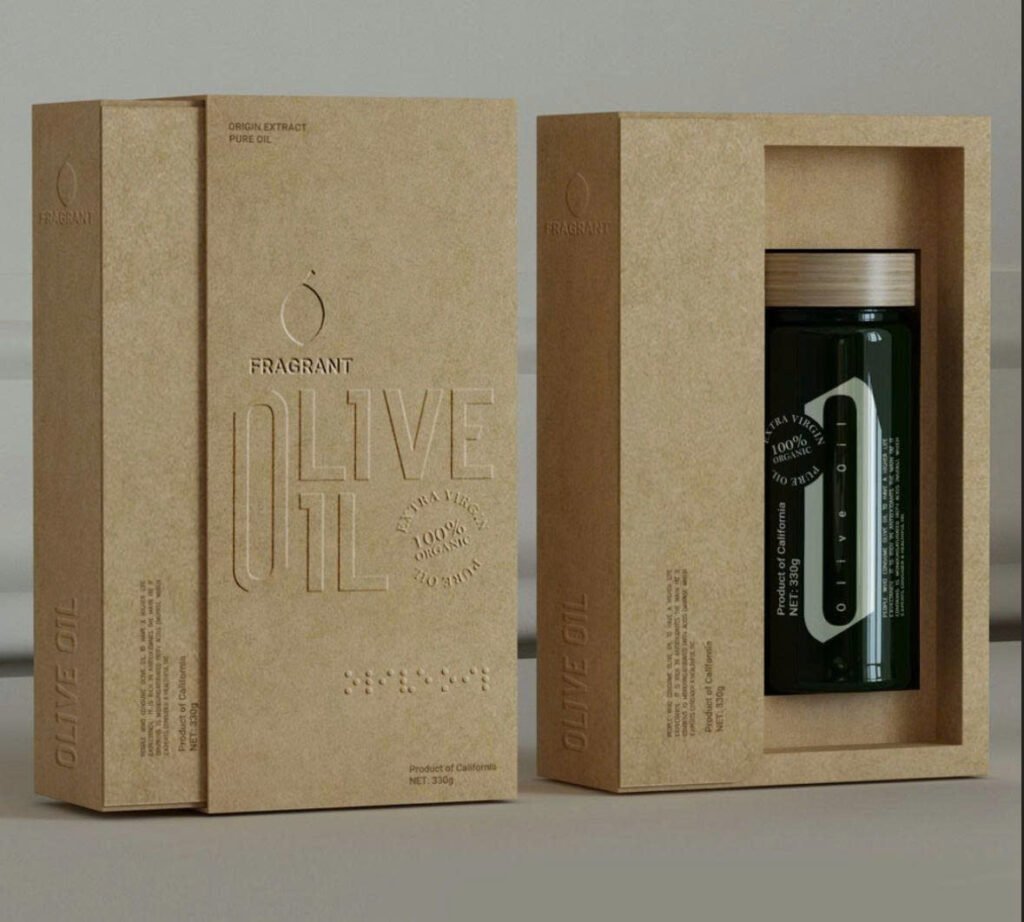
Packaging that looks good on the shelf may not maintain its condition during transportation. Problems such as stuck pumps, cracked caps, or deformed bottles may only appear after the product has passed through multiple transit warehouses. These are issues that a standard leak test at the factory may not fully reveal.
Real-world transportation conditions are always different from those in a testing environment. Temperatures can fluctuate throughout the day and night, while products may go through multiple transportation stages before reaching customers. With low-quality packaging or a design that is not suitable for these conditions, these changes can make problems much more likely to occur.
Don’t just test the packaging at the factory. Also check:
- Have you tested a small batch along the actual transportation route?
- Does the packaging remain intact after transportation?
- Does the product still function properly when it reaches the customer?
Mistake #4 — Spreading Resources Across Too Many SKUs Instead of Testing a Hero Product
Many new brands want to launch multiple SKUs at once to quickly cover different customer segments. However, the more SKUs you launch, the more your working capital and marketing budget are spread out. More importantly, sales data also becomes fragmented, making it harder to identify which products actually have potential.
A safer approach is to start with one hero product. Produce a small batch, track sales and market feedback, and then decide whether to expand the product range based on actual data rather than initial assumptions.
Only expand the product range when:
- The selected SKU has shown clear demand signals.
- The test batch has generated enough sales data and customer feedback.
- The decision to expand the product range is based on actual results rather than initial expectations.
Group 3 — Legal & Compliance Risks
Legal issues are often only discovered when a product is close to its launch date. At this point, if documents are still missing or claims are not appropriate, resolving them becomes much more difficult and costly. The mistake below usually does not affect product quality, but it can result in a listing being taken down, a delayed launch plan, or even prevent the product from being legally sold in the target market.
Mistake #5 — Underestimating the Legal Complexity of Each SEA Market
Legal risks when launching cosmetics in Southeast Asia generally come from two main areas:
- Ingredients and claims: Each market has its own regulations on permitted active ingredients, concentration limits, and advertising content. Claims such as “completely treats acne” or “whiter skin in 7 days” may be considered medical claims and go beyond what is permitted for cosmetics.
- Regulatory documents: Many brands only start preparing documents and certifications when the launch date is approaching, even though these procedures often take several months to complete.
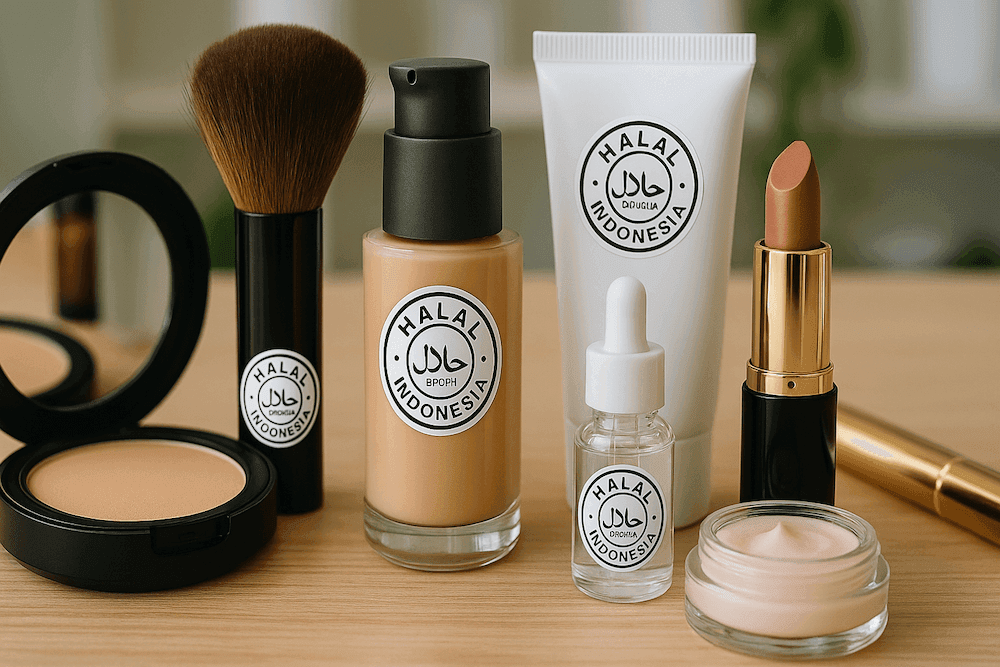
Regulations can also differ significantly between countries, and Indonesia is a typical example. Starting from October 17, 2026, all cosmetics marketed in Indonesia must have Halal certification. This is no longer a marketing advantage but a legal requirement for the product to be legally sold.
Before finalizing your launch plan, confirm that:
- The ingredients and claims comply with the regulations of the target market.
- The necessary documents and certifications have been prepared with enough time.
- There are no country-specific legal requirements that need to be completed before the product goes on sale.
Group 4 — Pricing & Commercialization
Mistake #6 — Using an Outdated Pricing Formula Without Accounting for Current Marketplace Costs
Many brands still use a familiar pricing formula: setting the retail price at around 4–5 times the cost of goods sold (COGS). This approach used to work fairly well, but it no longer reflects the actual cost of selling on today’s e-commerce platforms.
Since February 2026 alone, Shopee has added a 5% technical support fee in Singapore, Malaysia, Thailand, and Vietnam, on top of existing transaction and commission fees. Meanwhile, TikTok Shop’s commission in Vietnam has also increased from around 2–3% to 12.5% in less than two years. As a result, a pricing formula built one or two years ago may no longer reflect current actual costs (according to aggregated data on e-commerce selling costs in Southeast Asia in 2026).
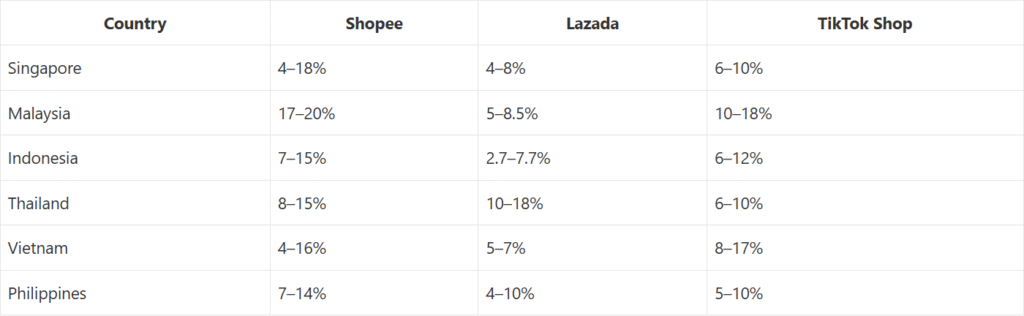
The problem usually does not appear immediately after launch. It is only when brands start offering vouchers, joining promotional campaigns, or increasing their advertising budgets that profit margins gradually get squeezed. In some cases, every order sold may actually be generating a loss.
Your final selling price needs to account for:
- Whether the cost structure has been updated based on the current fees charged by each marketplace.
- Whether the selling price still leaves room for profit when vouchers or promotional campaigns are applied.
- Whether costs such as advertising, transaction fees, and other additional expenses have been included.
Mistake #7 — Launching Without Social Proof or Putting All Your Budget Into a Few Major KOLs
A new product is almost always at a disadvantage when it does not yet have user reviews. No matter how good the product quality is, Shopee and TikTok Shop will generally give it lower visibility than similar products that already have a large number of reviews. Therefore, launching without preparing social proof usually means slower-than-expected growth in the early stage.
At the same time, many brands put most of their budget into a few major KOLs. This approach can create reach, but it does not necessarily generate enough reviews and user-generated content (UGC) for the algorithm to consider the product trustworthy. These signals also contribute to the product’s visibility on the marketplace.
From the very first days, you should prepare:
- A plan to build reviews and social proof for the first few days of sales.
- A reasonable budget allocation across KOLs, KOCs, and seeding activities.
- Enough UGC content to support product visibility from the early stage.
Conclusion
No brand can avoid every mistake on its first launch. What matters is knowing which risks can be checked in advance and prioritizing them while the cost of fixing them is still low.
Most of the 7 mistakes in this article occur quite early in the process, but are often only recognized once the product is already live and starts affecting sales or customer experience. Reviewing them before production will not eliminate risk completely, but it will help you understand which risks you are accepting and prepare for them in advance.
Leave a Reply