

When preparing to raise capital, founders often focus on revenue and growth rates. But for investors, those numbers only reflect part of the business picture. They also want to know how much each order contributes to profit, whether customers return to make repeat purchases, and whether the brand can maintain its growth momentum as the market changes.
To evaluate these issues, investors can combine the brand’s internal data with publicly available ecommerce data. These two data sources help them verify the claims made in the pitch deck, assess the brand’s competitive position, and identify areas that require further clarification during the due diligence process.
What Investors Look for in a Beauty Brand’s Ecommerce Data
Investors typically examine two types of data:
- Internal data: Financial reports, order data, payment reports from marketplaces, customer data, and cohort analysis.
- Publicly available market data: Selling prices, displayed sales volume, customer reviews, product catalogs, and search rankings for the brand and its competitors.
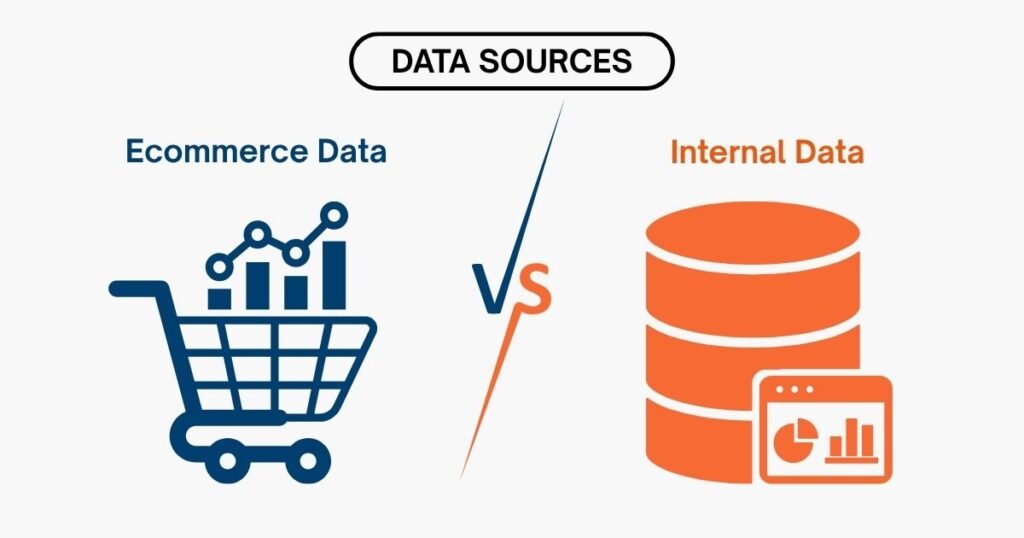
Internal data reflects the brand’s actual business performance. Market data helps investors assess how the brand is competing on ecommerce platforms and whether market claims align with observed trends.
According to Bain & Company, private equity firms use web data (such as selling prices, product catalogs, discount levels, and customer reviews) alongside traditional research methods during the business due diligence process.
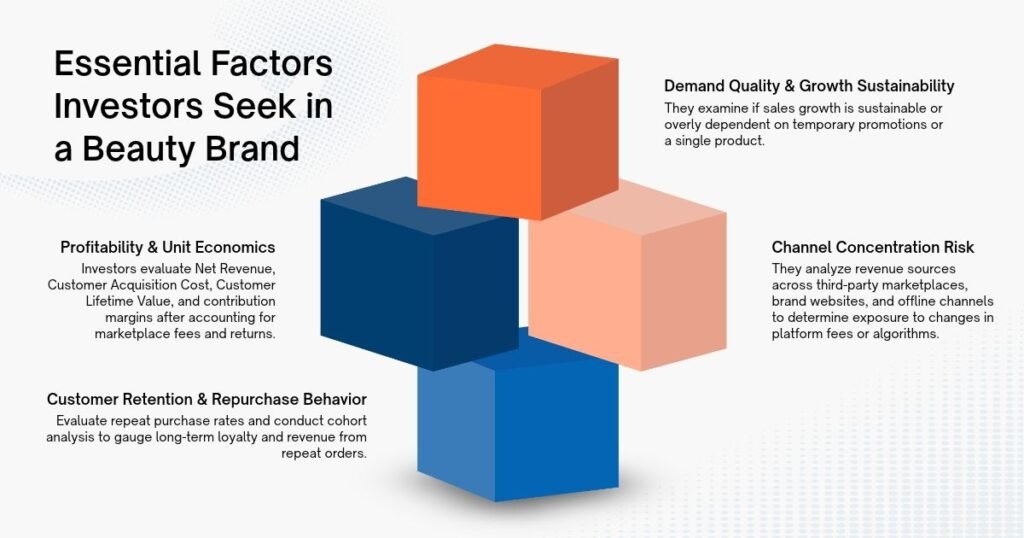
For founders, preparation involves not only presenting attractive metrics in the pitch deck but also providing data with clear sources and consistent calculations. Four aspects that require special attention are profitability, repurchase behavior, reliance on sales channels, and the quality of growth.
Assess Profitability: From GMV to Unit Economics
GMV (Gross Merchandise Value) reflects the total transaction value recorded over a specific period, as defined by the platform or measurement system. This metric indicates the scale of sales but is not synonymous with a brand’s actual revenue or profit.
A brand may report a high GMV but have a low net amount remaining after deducting brand-sponsored discounts, canceled orders, returns, and marketplace fees. Cost of goods sold, advertising, and operating expenses also continue to affect business results.
The hypothetical example below illustrates how these deductions can reduce the amount remaining from GMV:
Item |
Value |
Initial GMV |
100 |
Brand-sponsored discounts |
-20 |
Cancellations and returns, assumed to be 10% of 80 |
-8 |
Marketplace and payment fees, assumed to be 12% of 72 |
-8.64 |
Remaining before cost of goods sold and advertising |
63.36 |
Under this assumption, 100 units of GMV leave 63.36 units after the illustrated deductions. This is not yet profit. The actual calculation depends on the definition of GMV, how vouchers are accounted for, the handling of order cancellations and returns, as well as each platform’s payment mechanism.
What Should Founders Prepare?
Compare order data with payment reports from the marketplace and bank statements, where appropriate. At the same time, prepare metrics such as CAC (Customer Acquisition Cost), LTV (Customer Lifetime Value), return rates, and contribution margins by channel to explain customer acquisition costs and business performance.
Market data such as price history and discount levels helps founders understand how their brand is competing on price. However, this data cannot independently verify profitability or CAC; these metrics must be substantiated by internal records.
See 12 Beauty Ecommerce KPIs Every Brand Should Track to learn how to define and calculate key business metrics.
Assess Customer Retention: Repeat Purchase Rate and Cohort Analysis
When it comes to skincare and other products used regularly, investors often examine repurchase behavior to assess customer retention after the first purchase.
Two concepts that need to be distinguished are the repeat purchase rate and cohort analysis. The repeat purchase rate measures repurchasing according to a specific definition. Cohort analysis tracks the behavior of a group of customers who share common characteristics, such as first-time buyers within the same month.
Founders also need to distinguish between the repeat customer rate and the revenue generated by subsequent orders. These two metrics reflect different aspects and cannot be used interchangeably.
ODDITY (the parent company of IL MAKIAGE) defines the net revenue repeat purchase rate in its SEC filings by dividing the revenue from a cohort’s subsequent orders by the revenue from that same cohort’s first order.
For example, a cohort generates USD 1,000 in revenue from its first order and USD 700 from subsequent orders over 12 months. Using this calculation, the rate is 70%. This figure does not mean that 70% of customers returned to make a purchase; it reflects revenue from subsequent orders relative to the initial revenue.
What Should Founders Prepare?
- Definition and measurement period: Clearly state whether the metric reflects the percentage of customers who repurchase or revenue from repeat orders, the customer group being tracked, and the observation period.
- Sales channel scope: Distinguish data from marketplaces from data on the brand’s website, app, or CRM.
- Cohort trends: Track 3-, 6-, and 12-month milestones if they align with the purchasing cycle. You can also analyze the discount level on the first order to see whether customers who came from a promotional program continue to make purchases.
Public ecommerce data may show sales volume and product reviews, but it cannot determine how many times a specific customer has repurchased. To demonstrate retention, founders need order data or internal customer reports with consistent definitions.
Assess Channel Concentration Risk: Marketplace Dependency
When revenue is concentrated in a single sales channel, a brand is vulnerable to changes in the platform’s fees, policies, or algorithms. These changes can increase sales costs or reduce customer reach.
Selling on multiple marketplaces does not necessarily equate to effective channel diversification. If the majority of revenue still comes from the same group of platforms, the brand may continue to face concentration risk. The number of storefronts, therefore, does not fully reflect the level of independence among sales channels.
Investors want to understand where revenue comes from, how much each channel contributes, and whether the brand can sustain operations if one channel becomes less effective.
What Should Founders Prepare?
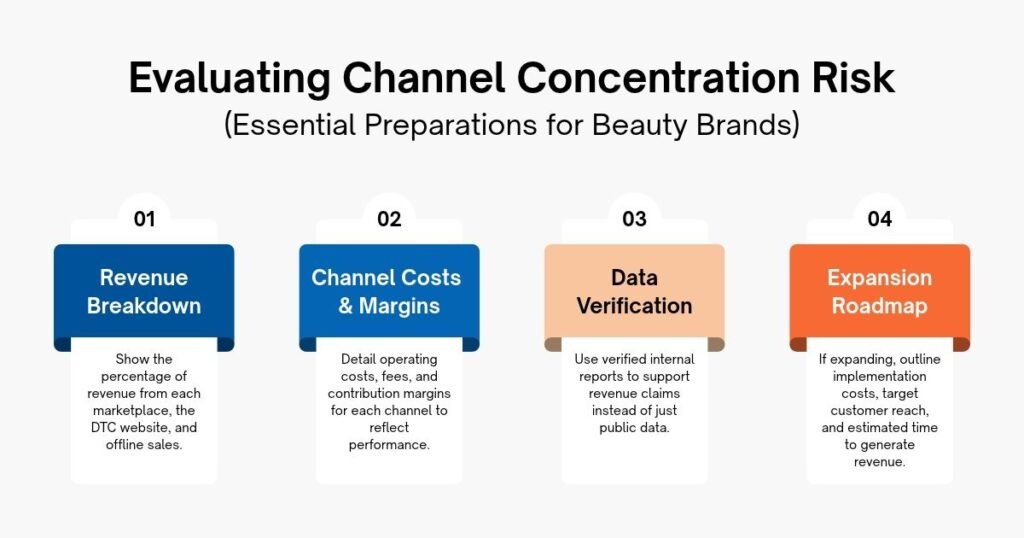
Present the revenue breakdown by marketplace, the brand’s own website (DTC), and offline channels, while clearly outlining the costs associated with each channel. If the brand is planning to expand into a new channel, explain the implementation costs, customer reach potential, and the estimated time required to generate revenue.
Market data helps assess the brand’s presence and the competitive landscape on marketplaces. To demonstrate the actual revenue share of each channel, founders need to cross-reference internal business reports.
Evaluate Demand Quality: Sustainable Growth vs. Promotion-Driven Sales
Rapid sales growth alone is not enough to prove that demand will be sustained over the long term. Investors need to understand where the growth momentum is coming from, how sales perform after the peak period, and whether the brand is overly reliant on a single flagship product or promotional campaigns.
Growth Beyond the Peak
After a period of strong growth, investors can monitor sales to see whether sales continue to decline, stabilize, or rebound. They can also examine the revenue share of the hero SKU and the contribution of products launched most recently.
A flagship product that contributes significantly to revenue is not automatically a sign of risk. What matters is whether the brand has a source of future growth and whether sales are growing faster than the category or merely following the general trend.
Market data helps track displayed sales volume, prices, and search rankings across different periods. The ability to analyze long-term trends depends on the availability of historical data, so brands should start collecting data early rather than waiting until they are preparing to raise capital.
Founders can refer to the article Ecommerce Sales Trends in 2026 to learn how to track sales trends in the market.
Demand Beyond Promotions
A brand can boost sales through deep discounts, voucher campaigns, livestreams, or increased advertising. Investors often compare sales results across periods with varying levels of promotional activity to understand the extent to which sales depend on these activities.
If sales drop sharply when promotions end, that is a signal to investigate further, but it is not enough to conclude that organic demand is weak. Seasonality, advertising, visibility, and competitor activity can also influence the results.
Founders should compare sales figures against promotional and advertising costs over the same period. Publicly available ecommerce data may show selling prices, discount levels, and displayed sales volume; however, advertising budgets, costs of brand-sponsored vouchers, and the effectiveness of individual campaigns must be substantiated by internal data.
What External Ecommerce Data Can and Cannot Verify
Publicly available market data helps verify a brand’s position and claims related to the competitive landscape. However, this data cannot replace financial records and internal operational data.
Information Group |
What Public Data Can Help Verify |
Data Required from the Brand |
Market size and scope |
Data sources, countries, categories, and sales channels used to estimate the market |
Internal data on channels not covered by the market data |
Competitive position |
Prices, displayed sales volume, product assortment, and search rankings compared with similar competitors |
Actual revenue and market share calculated using an appropriate methodology |
Customer signals |
Recurring themes in reviews, the number of reviews, and changes over time |
Customer data, repurchase behavior, and feedback from other channels |
Business performance |
Price trends and displayed sales volume across different periods |
Actual revenue received, profit, CAC, contribution margin, and advertising effectiveness |
Sales channel structure |
Brand presence on monitored marketplaces |
Actual revenue breakdown by marketplace, DTC, and offline channels |
There are two limitations to note when using public data. First, multiplying displayed sales volume by the listed price does not yield actual revenue, as this calculation does not fully account for transaction prices, discounts, canceled orders, and returns. Second, reviews do not represent the experience of all customers.
When including market data in a pitch deck, founders should clearly state the source, scope, and calculation method so that investors understand what the numbers represent and the extent to which they can be compared with internal data.
How to Prepare Ecommerce Data for Beauty Brand Due Diligence
During the due diligence process, investors need to be able to cross-reference each metric with its corresponding data source. Founders should standardize their recording and calculation methods before including figures in their pitch deck, so that questions focus on business performance rather than unexplained discrepancies.
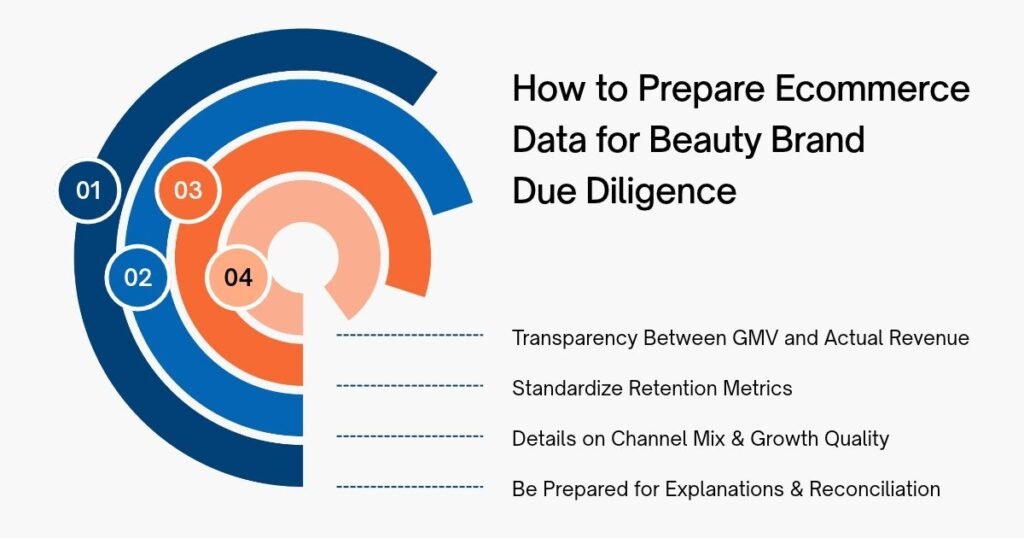
Data Founders Need to Substantiate
Before raising capital, founders should review the following data categories:
- GMV and actual revenue received: Clearly define the terms and explain how discounts, order cancellations, returns, and marketplace fees are handled. Cross-reference the figures with payment reports and bank statements where appropriate.
- Repurchase data: Standardize the definition of the repeat purchase rate or the cohort analysis method, including the tracking period and scope of sales channels.
- Revenue breakdown and contribution margin: Clarify revenue and business performance by channel.
- Sales, promotions, and advertising: Present the figures side by side for the same period to explain results on sale days and regular days.
- Customer data from brand-owned channels: Clarify how the brand tracks customers through its website, app, CRM, or other owned channels.
Prepare for Independent Checks
In addition to preparing internal data, founders should be ready to explain points that investors may verify independently:
- Discrepancies between market data and internal data: Differences in scope, recording dates, or calculation methods may cause the two sources not to align perfectly. Founders need to be able to explain the reasons.
- Consistency of public information: Selling prices, product assortments, and brand information on marketplaces should align with what is presented in the fundraising materials.
- Data history: Market data typically only covers the period since collection began, unless earlier archived sources are available. Continuous data collection helps brands analyze trends and explain changes over time.
If a beauty brand does not yet have ecommerce market data for these checks, founders can build a data collection system or choose a suitable alternative solution.
Easy Data provides structured ecommerce data that enables brands to analyze the market, monitor competitors, and build reports or dashboards. This data supports market assessment but does not replace financial reports, order data, or internal customer records during the due diligence process.
Leave a Reply