

If retailers wait until distributors start pitching products or notice that competitors are selling well before paying attention to a new category, they may have already missed the early opportunity to capture demand and gain a competitive advantage. To identify potentially high-growth beauty categories earlier, retailers need to look beyond their internal sales data.
Why Historical Sales Data Misses Emerging Beauty Categories
POS and inventory data help retailers identify which products sell well, whether sales are rising or falling, and which items need to be restocked. However, when looking for a new beauty category to add to their assortment, this data is not enough to assess potential opportunities in the beauty market, especially when retailers do not yet sell related products.
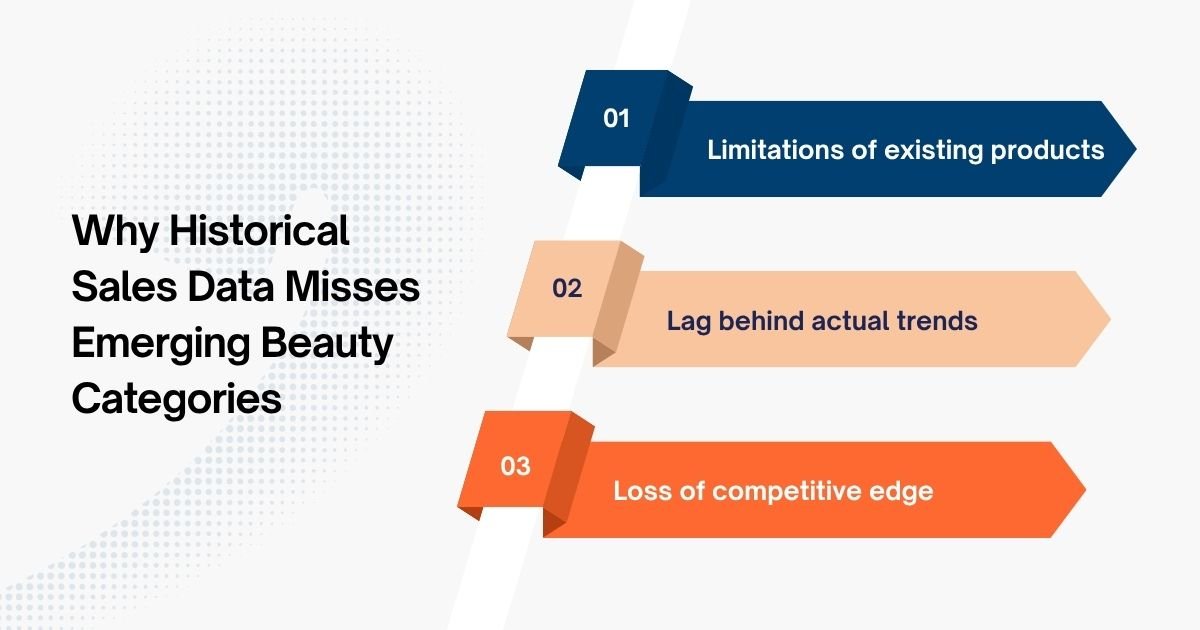
Consumers may start searching for an ingredient more frequently, creators may repeatedly introduce the same group of products, or the number of reviews on marketplaces may begin to increase. These changes can emerge before demand becomes clearly reflected in retailers’ sales figures.
Therefore, retailers need to combine internal sales data with external data, particularly from search, social commerce, and e-commerce platforms. These sources help retailers identify categories worth monitoring, even when their current assortment does not yet include products in those categories.
How to Tell a Beauty Trend From Structural Category Growth
Not every trending beauty product is worth stocking. A product may experience a rapid increase in sales because of viral content, but demand may not last long enough to create a business opportunity for the entire category.
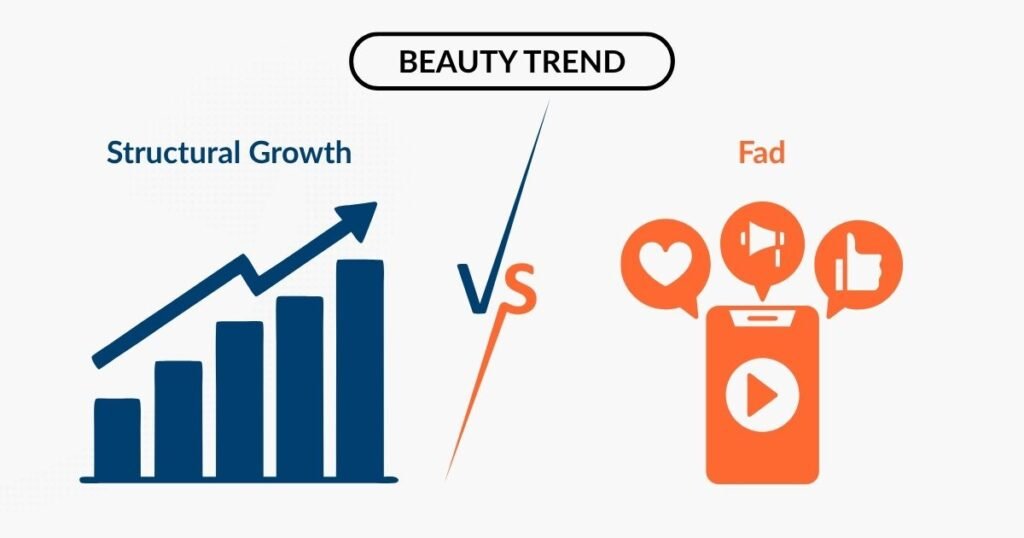
- Fad: Interest tends to focus on a specific product, video, or visual effect. Search and sales may rise quickly after a creator introduces the product, then decline as consumers move on to another trend. If searches mainly revolve around a product or brand name without extending to related ingredients, benefits, or needs, retailers should be cautious when assessing its long-term potential.
- Structural Growth: Interest spreads across multiple products, brands, or ways of addressing the same need. Consumers begin searching for related products, exploring routines, or comparing different options. This gives retailers a basis for checking whether demand is expanding across the category.
Skinification is an example of how a trend in skincare can extend into other product categories. According to Circana, skincare ingredients and benefits are being incorporated into haircare, makeup, and body care. However, this crossover alone is not enough to conclude that every product group is growing. Retailers need to examine search, listing, and sales data for each group to identify where real opportunities exist.
Signals That Validate High-Growth Beauty Categories
No single metric is enough to confirm a high-growth beauty category. The signals below are most useful when tracked and compared with one another.
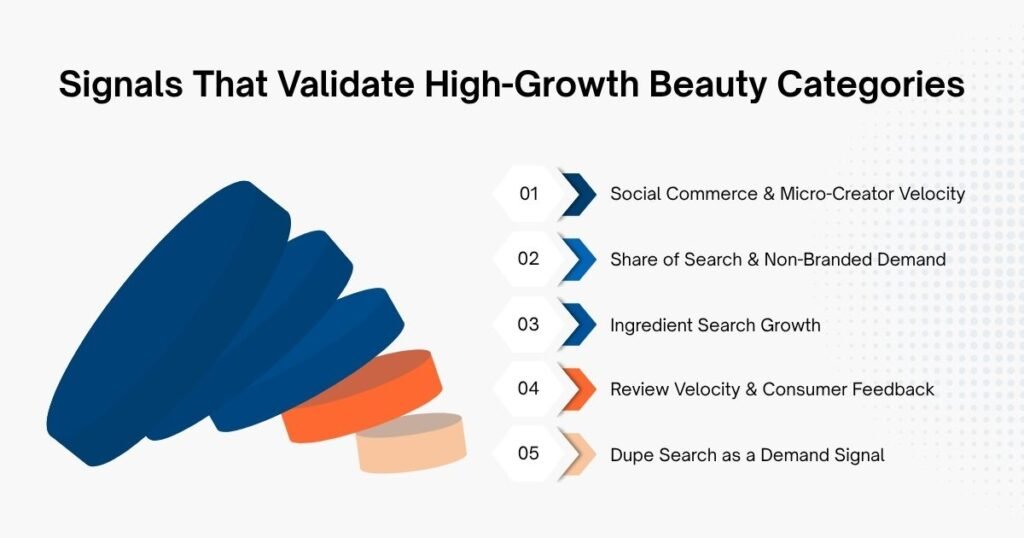
1. Social Commerce & Micro-Creator Velocity
Social media often introduces consumers to new beauty products before they become widely available in retail. Content from micro- and nano-creators can also reveal which niche audiences are interested in a particular concern or product group.
Beyond total views, retailers should track:
- The number of new pieces of content related to the category.
- How quickly new creators begin discussing it.
- Engagement on content covering similar topics.
- The number of different brands and products being mentioned.
- How interest moves from content to search and purchase.
Learn more: How to Choose a Profitable Beauty Niche Using Market Data
A high view count does not necessarily mean that interest is spreading widely. If most views come from a few viral videos, attention may still depend on those specific pieces of content. In contrast, when multiple independent creators begin discussing a category within the same period, retailers have more reason to monitor whether interest continues to expand.
2. Share of Search & Non-Branded Demand
Search data helps retailers distinguish interest in a specific brand from broader consumer demand. A sharp increase in a brand’s search volume may be driven by a campaign or viral moment, while searches for a category or a specific need may reflect interest that extends beyond a single brand.
Non-branded search is particularly useful when researching new categories, because consumers may look for a solution to a problem without yet knowing which brand to buy from. Retailers should monitor whether searches for the category and related needs are increasing steadily or rising only for a short period.
3. Ingredient Search Growth
In beauty, interest in an ingredient sometimes emerges before consumers become familiar with a specific product or brand. When search interest in an ingredient increases, retailers can follow that signal to identify related products and categories.
Learn more: How to Discover Trending Skincare Ingredients Before Everyone Else
Some questions to investigate include:
- How many products use this ingredient?
- Which brands are incorporating it into their products?
- Which categories do these products belong to?
- What is the typical price range?
- Are the number of listings and new products increasing?
- Which benefits are driving consumer interest in this ingredient?
If the ingredient begins appearing in more products and categories, retailers can assess whether it presents an opportunity to expand their assortment or is simply attracting temporary attention. Search interest is a starting point for research, not the sole basis for an inventory decision.
4. Review Velocity & Consumer Feedback
Search reveals what consumers are looking for. Reviews provide additional insight into the post-purchase experience, from what consumers like to the problems that products have not resolved.
When evaluating a new category, retailers should monitor review growth alongside the number of products receiving feedback. These changes should be tracked over time and compared with listing activity, because reviews may increase due to campaigns or review-incentive programmes rather than reflecting rising market demand.
Review content also helps retailers identify:
- What do users like?
- Which problems are mentioned repeatedly?
- Which product claims attract attention?
- Which needs remain unmet?
- Are positive or negative reviews more prevalent?
If many users mention the same need but existing products do not address it well, retailers may identify a product gap within a growing category. This is a lead for further research, not standalone proof that the category will grow.
5. Dupe Search as a Demand Signal
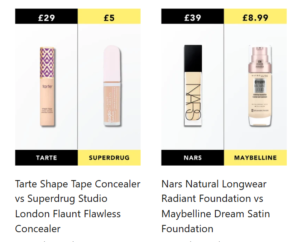
Searches for dupe beauty products do more than reflect interest in alternative products. They also reveal which factors consumers consider when comparing a product with the original, such as benefits, ingredients, texture, packaging, brand, and price.
These criteria help retailers better understand which product attributes attract attention, especially when buyers want similar benefits at a different price point. The key is to monitor which product groups are seeing increased dupe searches, in which markets, and which product attributes those searches focus on.
How Continuous Market Monitoring Creates an Early Advantage
To track a beauty category over time, retailers need to regularly update marketplace data, from search demand, product listings, and SKU growth to pricing, reviews, seller activity, and social content. Comparing these signals helps retailers identify whether interest is spreading across multiple products and brands, rather than relying on an isolated growth spike.
Collecting data from multiple sources manually can require considerable time and resources, especially when retailers need to monitor multiple categories and markets at once. Easy Data supports the collection and organisation of marketplace data into raw datasets or dashboards, helping retailers track products, sellers, prices, listings, and market changes.
When a category shows notable signals, retailers can investigate further at the product level: which SKUs are attracting demand, what the typical price range is, and which sellers are becoming more active. Combining category monitoring with SKU-level research helps retailers assess specific opportunities more clearly before deciding to expand their assortment.
Final Thought
Retailers do not need to wait until a beauty category becomes popular before starting their research. Monitoring search, social content, listings, and reviews helps them detect changes earlier, then assess whether interest is spreading across multiple products and brands.
Combining these signals with internal sales data helps retailers screen opportunities, find suitable suppliers, and consider assortment expansion based on a broader range of evidence rather than relying solely on current sales.
Leave a Reply