

Introduction
Black Friday planning starts with a defined market, product range and campaign period. This guide was originally published for the 2024 event; it is a planning framework, not a report of measured Shopee Black Friday 2024 results. No event-wide sales dataset accompanies it. Use your own authorized seller reports to decide which prices, stock levels and promotions you can support.
The eight sections below retain that planning focus and add source checks and a fictional campaign reconciliation. Platform documentation was checked on 4 October 2026. Current Singapore and Malaysia guidance is identified where used; it does not establish which features or reporting definitions were available in 2024, or in every Shopee market.
- Introduction
- 1. Harnessing E-Commerce Insights for Success.
- Why Black Friday Shopee Data Matters
- 2. Consumer Trends from Shopee Data
- Omnichannel Shopping Behavior
- The Rise of Mobile Shopping
- 3. Leveraging Black Friday Shopee Data for Pricing Strategies
- Dynamic Pricing on Shopee
- Competitor Analysis with Shopee Data
- 4. Optimizing Product Listings
- High-Performing Keywords
- Visual Content Optimization
- 5. Personalizing Marketing Campaigns with Black Friday Shopee Data
- Email Campaigns Based on Data Insights
- Social Media Ads Informed by Shopee Data
- 6. Managing Inventory with Shopee analytics
- Predicting Demand
- Real-Time Stock Monitoring
- 7. Enhancing Customer Experience with Black Friday Trends
- Streamlining Checkout Processes
- Proactive Customer Support
- 8. Post-Black Friday Analytics
- Evaluating Campaign Performance
- Retargeting Opportunities
- Conclusion
1. Harnessing E-Commerce Insights for Success.
Start by separating your shop’s operational records from public marketplace observations. An order export can support your own order analysis; a public product page cannot reveal a competitor’s profit, advertising conversion rate or warehouse inventory. Record the market, capture time, timezone, currency, product variant and source for each observation. Keep unavailable values missing rather than converting them to zero.
| Source | Useful for | Limit |
|---|---|---|
| Your seller records | Own orders, costs and stock reconciliation | Availability, fields and refresh timing depend on the authorized report. |
| Public listing observations | Visible product and offer comparisons | No private buyer history, competitor margin or verified warehouse inventory. |
| Your website analytics | Measured visits and checkout events on your site | Does not automatically observe activity inside Shopee. |
Why Black Friday Shopee Data Matters
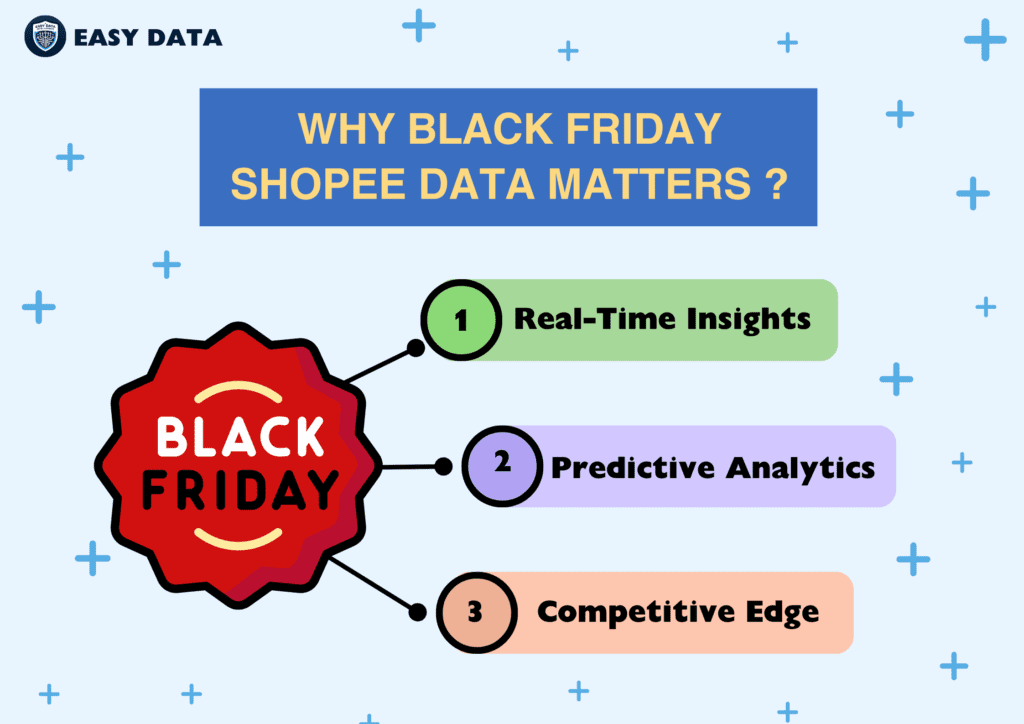
- Current trading: Use timestamped shop reports to monitor your own orders and available stock. A report refresh interval is not a guarantee of an instantaneous feed.
- Planning: Compare equivalent periods and variants, record stockouts and test forecast assumptions. Historical patterns do not remove uncertainty about the next event.
- Offer comparison: Observe authorized public listing information and its conditions. Competitor profit, actual warehouse stock and buyer journeys remain outside that evidence.
2. Consumer Trends from Shopee Data
Define a question before collecting data: did a particular offer improve retained orders at an acceptable contribution, or did a listing change reduce repeated size questions? Compare the same variants and equal-length periods. Record stockouts, promotion eligibility and advertising changes because they can explain an apparent change in demand.
Omnichannel Shopping Behavior
Buying across categories is different from moving between channels. A basket containing a phone and a case supports a cross-category observation; it does not prove a journey from social media to Shopee. Use aggregate basket patterns available in your own reports to propose a relevant bundle, then measure its take-up and retained margin.
Treat cross-device and cross-channel journeys as unknown unless an authorized measurement system actually connects them. Do not join buyers by guessed identities. A social campaign’s outbound clicks, Shopee ad clicks and shop orders have different scopes and should not be added together as unique people or a single conversion funnel.
The Rise of Mobile Shopping
There is no verified source here for a claim that more than 70% of Shopee sales are mobile. A device-share statement needs a named country, period, metric and denominator. Where your reports expose device information, distinguish mobile visits from mobile orders and revenue; otherwise record the split as unavailable.
Check your listing on the local Shopee app and mobile web: product text, variant selection, legible images, delivery information and voucher conditions. Shopee controls its checkout interface and available payment methods. For a website you operate separately, our mobile-commerce guide explains device comparisons and checkout measurement without treating visits as sales.
3. Leveraging Black Friday Shopee Data for Pricing Strategies
Price monitoring is useful only when offers are comparable. Match the product model, variant, pack size, condition and delivery destination. Capture displayed price, shipping, seller-funded discount and any conditional voucher separately. A crossed-out list price or a personalized voucher is not necessarily the price every buyer can pay.
Dynamic Pricing on Shopee
Set a minimum contribution and an approval rule before changing a price. Check the current campaign terms and tools in your local Seller Centre; do not assume universal automatic repricing or permission to alter a committed promotion. A practical review sequence is:
- Calculate unit contribution after the discounts you fund, product cost, platform charges, fulfilment and expected returns.
- Check the comparable delivered offer and campaign restrictions before approving a change.
- Record the old and new price, effective time, eligible variant and reason; review retained orders and contribution after settlement.
For a smartphone bundle, compare the exact storage variant, warranty and included accessories. A cheaper headline offer may omit the case or have a higher delivery charge. Test a bundle only after calculating its additional cost; record the start time and avoid changing the image, ad budget and price simultaneously if you want to interpret the result.
Competitor Analysis with Shopee Data
Use public observations to describe visible offers, not to claim knowledge of a competitor’s internal performance. Save the source and observation time so a colleague can reproduce the comparison. Recheck changed or unavailable listings before acting; a collection failure is not evidence of a stockout.
- Compare like-for-like offers before deciding whether a lower price, a bundle or no change is appropriate.
- Treat a visible availability message as an observation at that time, not a measurement of warehouse stock or future replenishment.
4. Optimizing Product Listings
Review titles, attributes, images and delivery promises before increasing traffic. Make each variant’s differences clear and keep promotion text consistent with the offer buyers can actually redeem. Use support questions and your own report trends to prioritize a specific listing problem rather than adding generic sales slogans.
High-Performing Keywords
Shopee Malaysia’s product-detail guidance recommends informative, concise titles with relevant product details and warns against irrelevant keyword spam. Describe the brand, model, key feature and size or quantity where applicable. This advice is not a disclosure of Shopee’s organic ranking algorithm or a guarantee of visibility.
For example, an accurate title such as “Brand X USB-C cable, 1 m, 60 W” answers product questions more directly than inserting unrelated “Black Friday Deal” phrases. Only state specifications you can substantiate. If a keyword report is available, record its market, period and whether it describes advertising or organic search before comparing results.
Visual Content Optimization
Use images that accurately show the product and selected variant, with readable dimensions and included items. A short demonstration may answer a specific customer question, but this guide has no verified experiment showing that video or 360-degree views universally outperform static images.
Evaluate a proposed image change against a defined outcome, such as fewer incorrect-variant enquiries or an improvement in retained orders per comparable visit. Keep price and availability in the comparison. A before-and-after difference alone cannot show that the image caused a sales change.
5. Personalizing Marketing Campaigns with Black Friday Shopee Data
Plan campaigns around relevant products and permitted audiences. Aggregate product performance can guide an offer without exporting buyer identities. Establish the purpose, source and permissions for any contact list before using it, and keep marketplace transaction data separate from an independently collected newsletter audience.
Email Campaigns Based on Data Insights
Shopee Singapore’s privacy policy, section 8.7, limits sellers’ use of buyer data and outside-platform contact, with specified consent requirements. Check the applicable local terms. Receiving an order’s contact details does not by itself give you permission to add that buyer to an email campaign.
- For your own website newsletter, use contacts collected for that purpose with the required permissions and an effective unsubscribe process.
- For marketplace customers, use approved in-platform communications within the local rules; do not assume an order export permits off-platform cart reminders.
Document which channel may contact the audience, how permission was obtained and how exclusions are maintained. Do not promise access to identifiable abandoned carts or buyer segments unless the relevant account and approved tool actually provide it.
Social Media Ads Informed by Shopee Data
Social advertising and marketplace advertising can use different audiences and attribution rules. Verify the integrations, campaign eligibility and permitted data use for your account before planning retargeting. A public Shopee listing does not supply a list of everyone who viewed it or their demographic profiles.
- Keep each platform report separate, including its time window, currency and attribution settings.
- Do not add attributed orders across platforms and call the sum unique sales. Reconcile authorized order records before making a cross-channel claim.
6. Managing Inventory with Shopee analytics
Plan inventory by SKU or variant using your own stock and order records. Separate physical stock, reservations, damaged units and expected receipts. A promotion should have an allocation and an owner who can pause it when the available quantity or dispatch capacity is exhausted.
Predicting Demand
Use comparable trading periods as a starting point, then document differences in price, ad spend, stock availability and fulfilment capacity. Sales during an out-of-stock period understate potential demand. Create low, base and high demand scenarios instead of treating last year’s total as a reliable forecast.
A fictional stock check illustrates the distinction: 120 physical units minus 15 reserved units and 5 damaged units leaves 100 currently available units. An expected delivery of 40 units is not ready stock until received and checked. If replenishment takes longer than the sale, a reorder alert cannot rescue that event’s fulfilment.
Real-Time Stock Monitoring
Use an update schedule that matches your order rate and system capabilities. Record when the stock source was refreshed and whether channel reservations are included. Verify any integration’s synchronization delay and alert delivery before relying on it; this article does not establish a universal real-time stock notification feature.
At each checkpoint, reconcile new reservations, cancellations, physical dispatches and receipts. Assign a person to investigate discrepancies and adjust the sale allocation through the approved workflow. Keep a change log so overselling or a sudden sales drop can be traced to an actual stock decision.
7. Enhancing Customer Experience with Black Friday Trends
Customer experience work should focus on what the seller controls: accurate product information, realistic dispatch commitments, correct parcels and timely support. Categorize repeated questions and delivery problems without exposing buyer details in a public analysis. Use those categories to improve the listing and fulfilment checklist.
Streamlining Checkout Processes
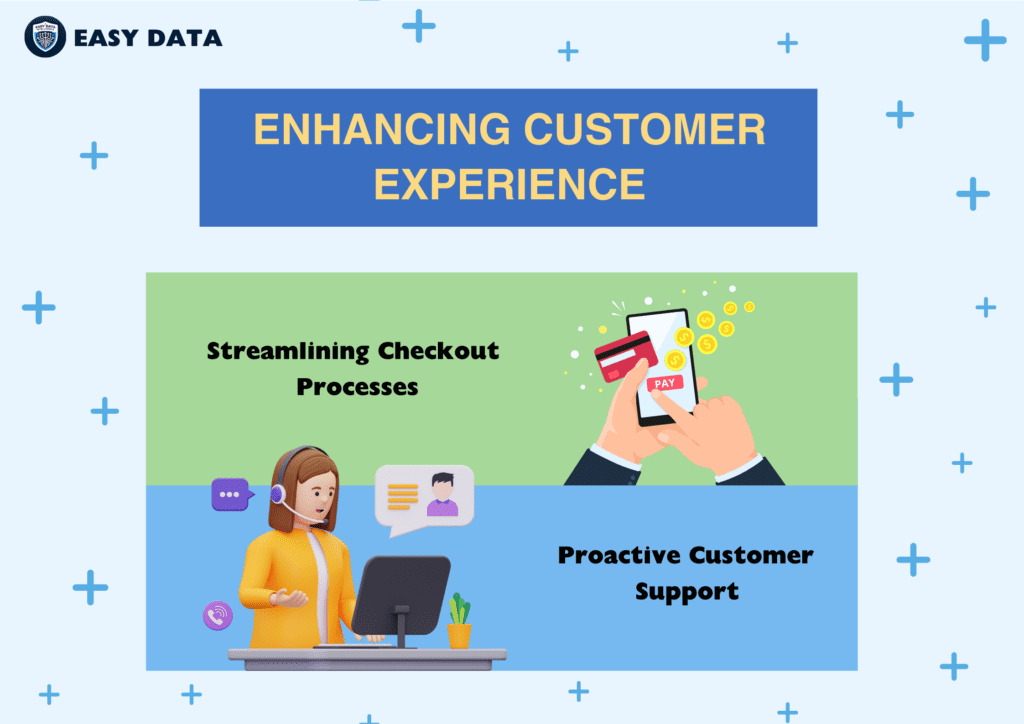
Shopee checkout is a platform-controlled flow. Sellers cannot treat it like their own website and simply remove checkout fields or add payment methods. Check the buyer-facing route in the relevant market and account context, including variant availability, shipping restrictions and voucher eligibility.
If a problem is reproducible, record the device, app or browser version, time and visible error, then use the appropriate support channel. Do not infer a payment-stage dropout rate from public listings or total shop orders. On your own website, measure a defined checkout funnel separately from marketplace activity.
Proactive Customer Support
Prepare support coverage for the campaign hours and a short set of accurate answers about variants, dispatch and returns. State response times you can meet. Log unresolved cases with access restricted to the staff who need them, and escalate repeated fulfilment problems before promising more stock or faster delivery.
8. Post-Black Friday Analytics
Reconcile the campaign after orders have had time to cancel or refund. Keep the event’s order cohort distinct from the date on which a refund was processed. Document the reporting cutoff and revisit unsettled orders; otherwise a recent campaign can look artificially stronger than a fully settled one.
Evaluating Campaign Performance
The current Shopee Singapore ad-metric definitions distinguish orders, conversions and units. Placed and confirmed orders can later be cancelled or refunded. Ad ROAS divides the corresponding attributed GMV by campaign expense, while the listed conversion rate uses conversions divided by clicks. Record the report’s attribution window and whether it covers the promoted item or the wider shop. These definitions are not proof of profit or unchanged 2024 reporting.
- Orders: State whether they were placed, confirmed, dispatched or retained after the reporting cutoff. Use unique order IDs within the permitted export.
- Average order value: Divide the defined revenue total by the matching order count; do not mix net revenue with gross orders.
- Costs: Report advertising, product and fulfilment costs alongside revenue. A revenue-to-ad-spend ratio does not deduct these costs.
Worked example — entirely fictional: Assume 100 orders, one unit per order, at 20 currency units each. Twenty orders are fully reversed, leaving 80 retained orders. All 100 belong to one illustrative campaign cohort with 400 in ad spend. Assume each retained unit costs 10, and fees plus fulfilment cost 3 per retained order; reversed orders incur no unrecovered costs in this simplified example.
| Measure | Calculation | Result |
|---|---|---|
| Gross order value | 100 × 20 | 2,000 |
| Net retained revenue | 80 × 20 | 1,600 |
| Retained average order value | 1,600 ÷ 80 | 20 |
| Revenue / ad spend, before reversals | 2,000 ÷ 400 | 5.0 |
| Revenue / ad spend, after reversals | 1,600 ÷ 400 | 4.0 |
| Contribution after stated costs | 1,600 − 800 − 240 − 400 | 160 |
This is a bookkeeping illustration, not an exported Shopee ROAS report or an experiment proving incremental sales. Fixed costs, taxes, partial refunds, unrecovered return charges and differing attribution cohorts can change the result. Use the actual fee and settlement records. For another reconciliation workflow, see our ecommerce tracking guide.
Retargeting Opportunities
Use only audience tools and data uses permitted for the account. Assess a follow-up campaign with a separate budget, dates and reporting scope; do not count its orders again as incremental Black Friday sales. Suppress people who opted out and avoid importing marketplace buyer contacts into unrelated advertising audiences without the required permissions.
Conclusion
Keep a compact campaign record: source and capture time, matched offer, contribution floor, sellable stock, approved audience, reporting definitions and settlement cutoff. That record makes the next decision auditable. The fictional calculations above illustrate checks you can reproduce with your own authorized data; they are not Shopee market results or a promise of higher sales.
Ready to start scraping Shopee data? Visit easydata.io.vn to learn more about our data scraping solutions and book a demo today!
Leave a Reply