

There are many beauty analytics platforms on the market, but not every platform is suitable for every beauty brand. Each tool has its own strengths, while each brand’s analytics needs, scale of operations, and budget vary. So how should you choose and use a platform to meet your specific needs without wasting your budget?
Choose a Platform Based on Your Current Priorities
Before searching for a tool, identify which issues need to be addressed most urgently. This helps brands focus their budget on the features that are truly essential, rather than paying for a system with many features that won’t be fully utilized.
You can refer to the following guidelines for selecting a platform based on specific needs:
Current Need |
Recommended Platform Type |
Key Metrics to Monitor |
Track revenue, costs, and profit |
Profit and performance analytics |
Sales, costs, profit margins, SKU performance |
Understand customer repurchase behavior |
Customer analytics |
Purchase history, repeat purchases, LTV |
Evaluate ad effectiveness |
Marketing analytics |
Ad spend, attribution, conversion |
Monitor competitors and market fluctuations |
Market intelligence |
Competitor products, pricing, promotions |
Research products and industry trends |
Product and trend research |
Product listings, reviews, category trends |
It’s not necessary to invest in multiple sets of tools at once. Start with the issue that’s having the greatest impact on your business operations, then add other solutions as the need actually arises.
Should You Use One Platform or Combine Multiple Platforms?
After identifying its needs, a brand should consider whether to use a specialized platform or combine multiple tools. This depends on the number of use cases to be addressed and whether the platforms under consideration provide the same type of data.
Use One Specialized Platform for Your Priority Needs
If a brand has only one or two key analytical needs, using a specialized platform is often the more sensible choice.
For example, a skincare brand wants to understand which products have a high repurchase rate and which customer segments deliver higher value. In this case, a customer analytics platform capable of tracking LTV, purchase history, and repeat purchases would be a better fit than investing in a system with many unnecessary features.
This approach helps businesses focus their budget on the right needs while reducing the time required to learn and manage multiple systems.
Combine Platforms When You Need Different Types of Data
When a brand needs to analyze multiple data sets that cannot be sourced from a single platform, combining platforms can provide a more comprehensive view.
For example, a beauty brand that operates both its own website and sells on Shopee and TikTok Shop may need to track two types of data:
- Internal business data: Revenue, advertising costs, profit, and customer repurchase behavior from systems to which the brand has data access.
- External marketplace data: Competitors’ products, selling prices, promotional programs, and industry trends on e-commerce platforms.
Learn more: How Beauty Brands Use Market Intelligence to Stay Ahead of Competitors
In this scenario, the brand can use an analytics platform to analyze internal business operations and combine it with a market intelligence platform to research the external market. These two sets of data serve different purposes. When leveraged together, they help the brand better understand both its own business performance and market fluctuations.
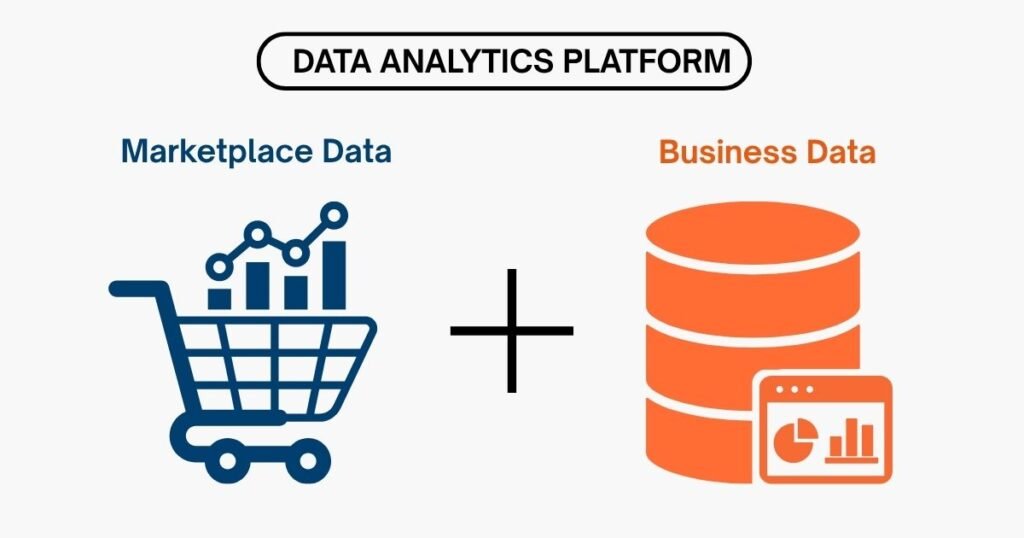
However, using multiple platforms does not necessarily mean the analysis will be more effective. Before investing, determine what additional information each platform provides that the other tools do not. If two systems have overlapping functions but do not add analytical value, that expense may be unnecessary.
Choose a Platform That Fits Your Brand’s Size and Budget
In addition to analytics needs, the scale of operations and time commitment also influence how brands choose a platform.
For Small and Growing Beauty Brands
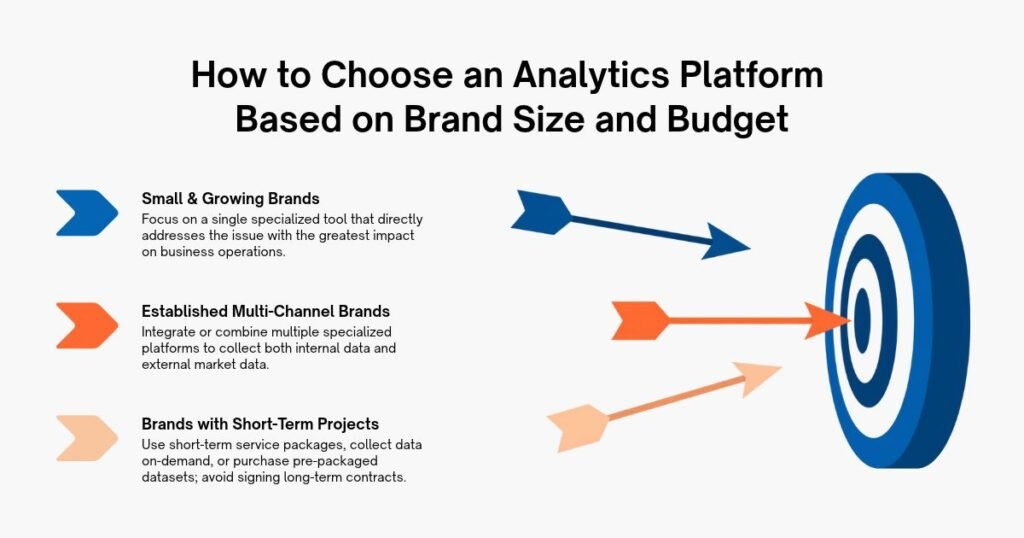
For small or growing brands, budgets often need to be allocated across multiple activities such as product development, marketing, and operations. Rather than investing in multiple platforms at once, brands should choose specialized tools that address the issues with the greatest impact on their business operations.
For example, if a business is focusing on growing its presence on a marketplace, competitor monitoring tools (which track competitors’ prices, best-selling products, and promotional activities) may be more useful than in-depth analytical reports that aren’t yet necessary.
As business operations expand, brands can invest in additional, appropriate tools rather than having to invest in an overly complex system from the start.
For Established Brands Operating Across Multiple Channels
Brands that have expanded across multiple channels often have to manage multiple data sources and involve various departments in the decision-making process.
For example, the marketing team needs to track ad performance, the sales department focuses on revenue and profit, while the market research team requires data on competitors and industry trends.
In this scenario, integrating multiple platforms may be necessary. However, businesses should prioritize solutions that offer integration capabilities or data export features so that departments can use consistent information, avoiding a situation where each team works on a separate system and struggles to compare results.
For Brands With Short-Term Research Projects
Not all analytical needs are ongoing throughout business operations. Sometimes, a brand only needs data for a specific period to conduct market research, evaluate competitors, or prepare for a new product launch.
For example, before launching a new line of sunscreen, a brand will need product research tools capable of analyzing retail prices, competing products, key ingredients, and customer feedback over a specific period.
If the need is limited to a single project like this, signing up for a long-term platform subscription may not be the optimal choice. Brands can consider short-term usage plans, on-demand data collection services, or pre-built datasets, depending on the scope of the research.
This is also a way for businesses to access the necessary data without having to sustain costs for tools they don’t use regularly.
What to Check Before Investing in a Beauty Analytics Platform
After identifying their needs, intended use, and budget, brands still need to evaluate several practical factors before deciding to invest. A platform with many features may not be the right fit if the data comes from the wrong sources, the cost exceeds the budget, or it’s difficult to integrate with existing systems.
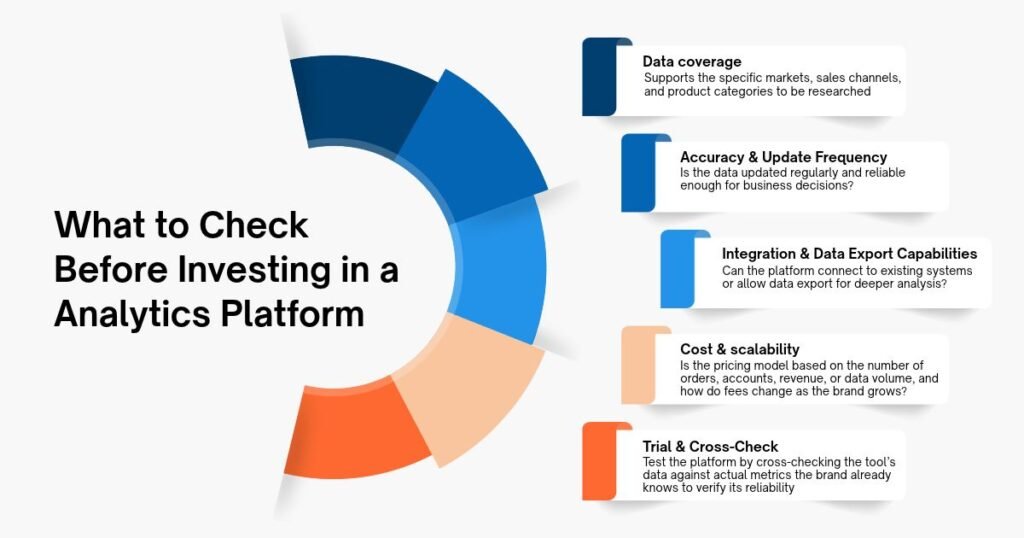
- Data coverage: Does the platform support the specific data sources, marketplaces, countries, and product categories that the brand needs to analyze? For example, brands operating in Southeast Asia should pay special attention to the platform’s ability to collect data from Shopee, Lazada, and TikTok Shop.
- Data accuracy and update frequency: How often is the data updated? How are the metrics calculated? Is this information reliable enough to inform business decisions?
- Integration and data access: Can the platform connect to existing systems? Does it support data export or APIs when the business needs to conduct further analysis?
- Pricing and scalability: Are costs based on the number of orders, users, revenue, or data volume? As the scale of operations increases, do the fees change significantly?
- Trial and support: Is there a trial option using real data? Does the provider offer support during setup and use?
In particular, don’t rely solely on what the provider shows in the demo. Try cross-checking some information the brand already knows, such as a channel’s revenue or the selling price of a product group.
If the results don’t match up or the provider fails to clearly explain how the data is collected and processed, you should investigate further before using the platform. A beauty data platform is only truly valuable when the data it provides helps the brand make reliable decisions.
Final Thoughts
Simply owning many analytical tools doesn’t necessarily give a brand a competitive edge. Sometimes, a platform that’s tailored to the right needs at the right time can deliver far greater value than a massive system that’s rarely used. Let your business needs drive your investment decisions, rather than letting the number of features on a platform dictate how much you spend.
Leave a Reply