

In 2026, ecommerce shipping is no longer just an operational detail; it’s a decisive growth lever. The difference between a 2-day delivery and a 5-day delivery can directly impact conversion rates, customer retention, and overall brand perception. Yet most businesses still operate in the dark, lacking access to real ecommerce data insights that reveal how competitors actually perform across marketplaces.
This guide will help you understand what ecommerce shipping data really is, where it comes from, and most importantly: how to turn it into a competitive advantage.
What Is Ecommerce Shipping Data?
Ecommerce shipping data is real-world delivery information collected from online marketplaces, including delivery time, shipping fees, fulfillment rates, and logistics performance across sellers and competitors.
Most people think of shipping data as internal logistics metrics. In reality, the most valuable ecommerce shipping data comes from marketplace-level insights, which reflect how products are actually delivered to customers across platforms like Shopee, Lazada, or TikTok Shop. This includes:
- How fast competitors deliver
- What shipping fees do they charge
- How often do delays happen
- What customers complain about
When you connect these signals, shipping stops being a backend operation and becomes something much more strategic. It becomes a lens through which you can understand competitive positioning, pricing pressure, and customer expectations in real time.
Why Shipping Data Matters in Ecommerce Performance
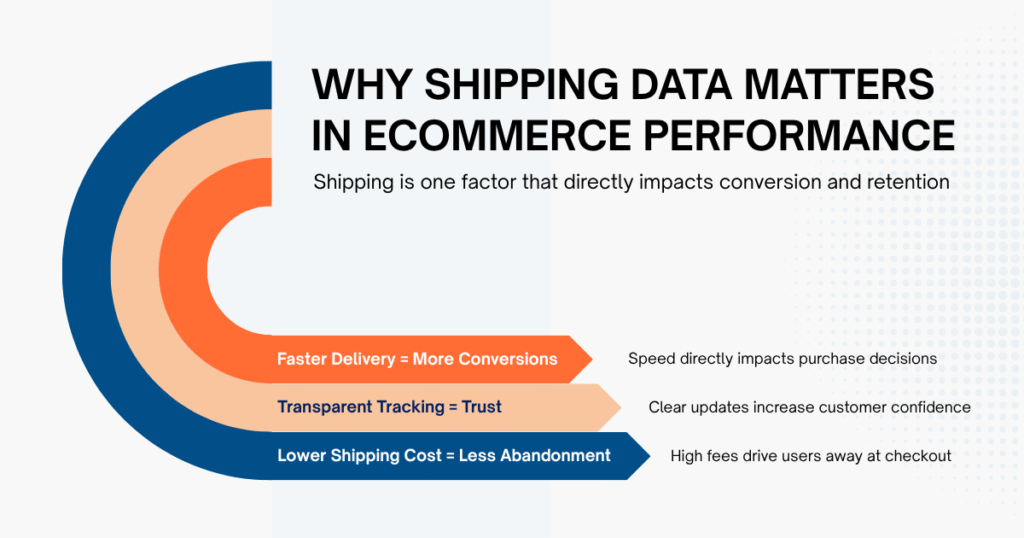
Shipping is one of the few variables that directly influences both conversion and retention. When you analyze real shipping data ecommerce, patterns start to emerge:
- Faster delivery → higher conversion rates
- Transparent tracking → higher trust
- Lower shipping cost → lower cart abandonment
What makes this even more critical is the competitive context. Customers don’t evaluate your delivery experience in isolation. They compare it (consciously or not) with every other seller they encounter on the same platform.
The real challenge isn’t just optimizing your logistics on its own. It’s about knowing how your shipping performance compares to your competitors in the same category, region, or price segment. Without ecommerce fulfillment data, you’re basically guessing:
- Are your delivery times as good as your competitors’?
- Are you charging too much for shipping?
- Are your competitors doing better than you in certain areas?
This is exactly why leading ecommerce teams are shifting toward data-driven decisions instead of relying on internal dashboards alone.
Types of Ecommerce Shipping Data You Should Track
Not all ecommerce shipping data is equally useful. The goal is to focus on metrics that directly influence decision-making and competitive positioning.
| Data Type | What It Includes | Why It Matters |
| Delivery Time Data | Average delivery time, fastest vs slowest, regional differences | Helps benchmark speed and identify where you’re losing to competitors |
| Shipping Fee Data | On-time delivery rate, cancellations, and failed deliveries | Reveals pricing pressure and opportunities to optimize margins |
| Fulfillment Performance | Reviews, complaints, and delivery satisfaction | Indicates operational reliability and customer experience quality |
| Customer Feedback Signals | Reviews, complaints, delivery satisfaction | Adds qualitative insight behind the numbers |
These metrics seem simple on their own. But when you look at them together, they give you a bigger picture: how shipping affects long-term customer behavior and retention. For instance, a slightly higher shipping cost might not stop people from buying if their items arrive much faster. On the other hand, small delays can have a big impact on customer trust if competitors deliver faster all the time.
Where Ecommerce Shipping Insights Really Come From
To truly understand shipping performance, you need to look beyond internal systems. The most valuable insights come from external, real-world data sources.
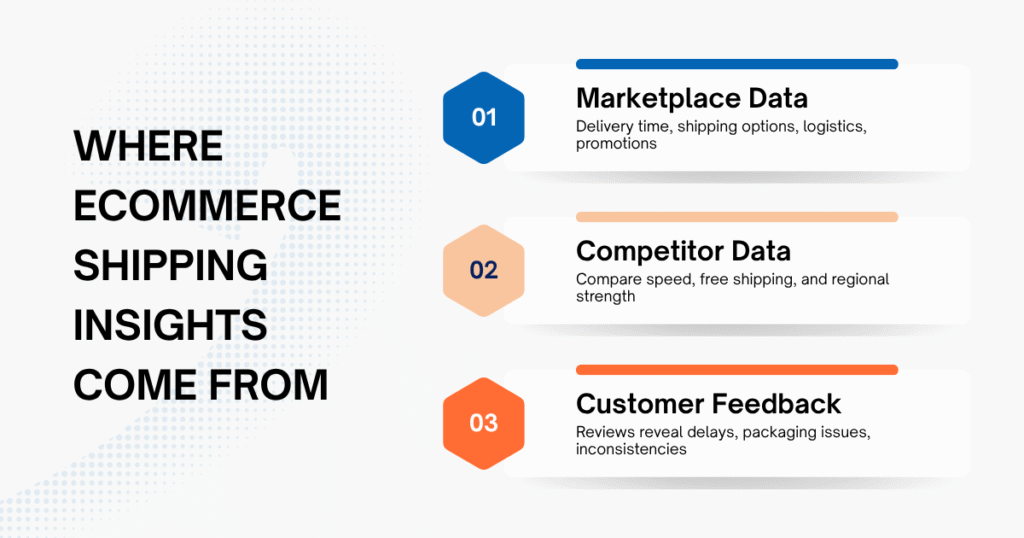
Marketplace Data
This is the richest source of ecommerce shipping data. Every product listing includes important details such as:
- Estimated delivery time
- Shipping options
- Logistics partners
- Promotions like free shipping and vouchers
By tracking this data, you can:
- Compare yourself to competitors
- Find sellers with fast shipping
- Understand pricing strategies
Competitor Shipping Data
Looking at data from competitors shows:
- Who delivers products the fastest
- Who offers free shipping
- Who is strongest in specific regions
This turns ecommerce delivery data into useful competitive intelligence.
Customer-Side Data (Reviews & Complaints)
Sometimes the best insights come from what customers say, not just numbers. Reviews can show:
- Delays that are not obvious
- Poor packaging
- Delivery times that are not consistent
This adds context to basic shipping performance metrics in ecommerce.
How to Track Ecommerce Shipping Data
Tracking shipping data is not just about collecting numbers; it’s about finding the right approach based on your scale and goals.
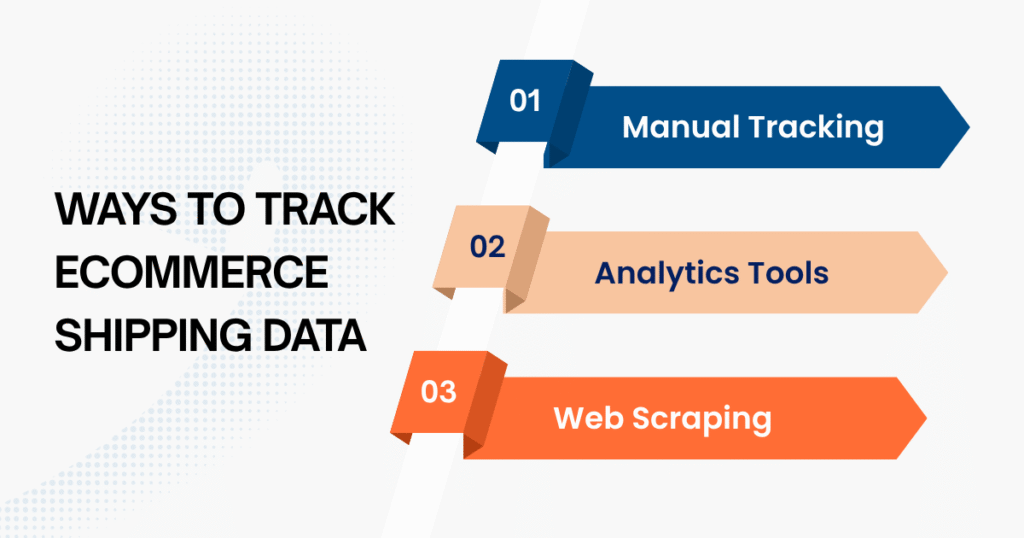
Manual Tracking
This method involves:
- Checking competitor listings
- Recording delivery times
- Monitoring shipping fees
It works for small-scale analysis, but becomes inefficient and inaccurate quickly.
Using Analytics Tools
Some tools offer:
- Shipping dashboards
- Performance tracking
- Logistics insights
However, most tools focus on your own data, not your competitors’, which limits their strategic value.
Using Web Scraping
This approach is different. With web scraping, you can:
- Extract ecommerce shipping data from marketplaces
- Track competitors on a large scale
- Collect real-time data all the time
Instead of guessing, you get access to real-time marketplace data that shows actual performance.
How to Analyze Shipping Data to Beat Competitors
Collecting ecommerce shipping data is only the first step. The real advantage comes from how you turn that data into decisions that improve performance and help you outperform competitors.
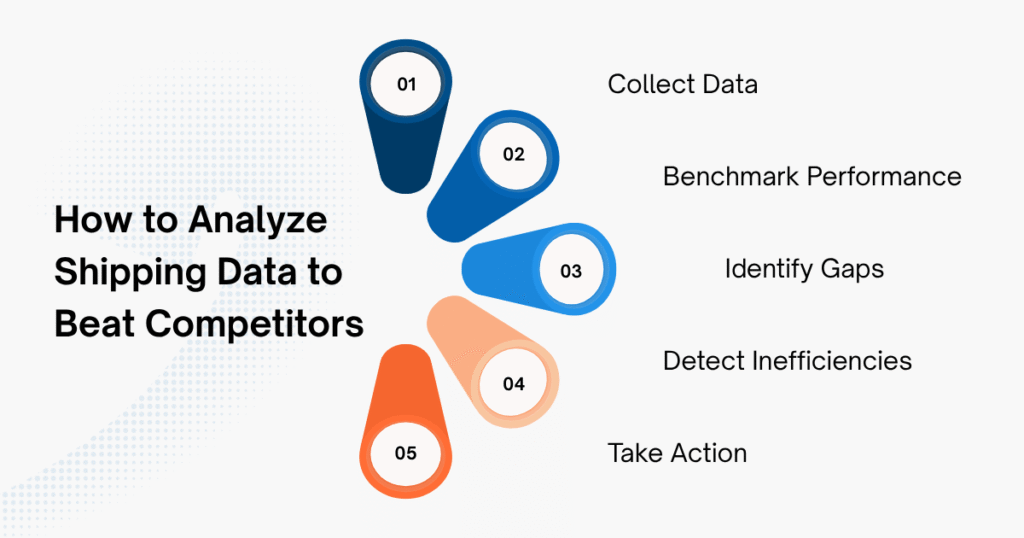
Step 1: Collect Shipping Data at Scale
To get meaningful insights, your ecommerce shipping data needs to reflect the actual market, not just a few observations.
Start by focusing on top competitors within your category, then expand to best-selling products where shipping directly impacts conversion. Make sure to segment your shipping data by key regions, since delivery time and cost often vary significantly.
More importantly, track data continuously instead of collecting it once. This helps you capture trends like seasonal delays or changes in competitor shipping strategies.
Step 2: Benchmark Delivery Performance
Once you have enough ecommerce shipping data, the next step is to understand where you stand. Compare your delivery time and shipping fees against competitors in the same segment. Instead of looking at raw numbers, group sellers into performance tiers (fast, average, slow) to clearly see your position.
Benchmarking shipping performance ecommerce helps redefine what “competitive” actually means in your market.
Step 3: Identify Competitive Gaps
With benchmarks in place, your shipping data will start revealing patterns. You may find that competitors deliver faster in certain regions or offer lower shipping fees on high-demand products. These gaps are not random; they often reflect deeper advantages in logistics or pricing strategy.
Each gap you identify is an opportunity to differentiate delivery performance strategically.
Step 4: Detect Inefficiencies
At this stage, use your ecommerce shipping data to analyze your own performance. If your delivery time is slower than that of competitors, the issue may come from fulfillment or logistics partners. If your shipping fees are higher, it could indicate inefficient pricing or cost structures.
By comparing internal performance with marketplace shipping data, you move from guessing to diagnosing specific problems.
Step 5: Turn Insights into Actions
Based on your analysis, you can adjust shipping pricing, optimize logistics partners, or improve fulfillment strategies in underperforming regions. Focus on changes that directly impact conversion and customer experience.
Over time, this process becomes iterative. As you implement improvements, you continue tracking shipping data to measure impact and refine your strategy further.
Real Use Cases of Ecommerce Shipping Data
In practice, businesses use ecommerce shipping data in several effective ways:
- Competitor benchmarking: Sellers compare delivery times with top competitors and adjust their logistics strategy to stay competitive.
- Regional optimization: Growth teams find areas where delivery is slower and improve fulfillment or inventory placement.
- Pricing strategy: Businesses set shipping fees based on what customers expect to reduce cart abandonment.
- Customer experience improvement: Teams use customer feedback to fix common delivery issues and improve satisfaction.
Across these use cases, a clear pattern emerges: shipping data affects revenue, conversion, and retention, not just daily operations.
Challenges in Ecommerce Shipping Data Collection
Despite its importance, accessing reliable ecommerce shipping data remains a major challenge.
- Shipping data is often spread across different platforms, making it hard to get a complete picture
- It’s difficult to see what competitors are doing, which makes it hard to compare and improve
- Tracking data manually can quickly become outdated
- Most tools used internally do not provide updates in real time
As a result, many businesses end up making decisions based on incomplete or outdated information, leading to missed opportunities and suboptimal performance.
Why Web Scraping Is the Best Way to Get Ecommerce Shipping Data
Ecommerce web scraping is unique because it captures real marketplace behavior at scale. Instead of using internal data or estimates, scraping lets you:
- Access competitor shipping data
- Monitor changes in real time
- Build a complete dataset across platforms
This turns ecommerce shipping data into valuable competitive intelligence.
For serious companies, investing in custom ecommerce data solutions is now essential. With a tailored approach, you can track delivery time changes for thousands of listings, watch how competitors change shipping fees during promotions, or identify which sellers excel in fulfillment speed.
This is exactly the kind of capability that Easy Data focuses on through ecommerce data scraping service, helping businesses access structured, real-time marketplace data without having to build complex infrastructure internally.
Conclusion
Ecommerce shipping data is not just about logistics; it’s about growth, strategy, and customer experience. Delivery speed, pricing, and reliability shape how customers choose between sellers. To gain an edge in 2026, companies need to understand the broader market, including competitors and changing customer expectations, using real ecommerce shipping data to make informed decisions.
Leave a Reply