

The Beauty category has consistently been one of the highest-revenue categories on Shopee. Even a single keyword like “lipstick” can generate thousands of searches every day. This is why many people choose the Beauty category when starting their Shopee business.
However, many beginners make the same mistake from the very beginning: they see a product going viral on social media and immediately decide to source and sell it, without checking whether that viral attention actually translates into real purchase demand on Shopee.
In this article, Easy Data will guide you through the process of analyzing the Beauty market on Shopee, from understanding key metrics and reading actual marketplace data to applying these insights to make better business decisions.
Core Metrics for Beauty Market Analysis on Shopee
Before accessing the Shopee Seller Center, define the questions you want to answer. Each eCommerce analytics metric offers insights into the customer purchase journey. Understanding these metrics helps you identify areas for optimization, rather than searching through data aimlessly.
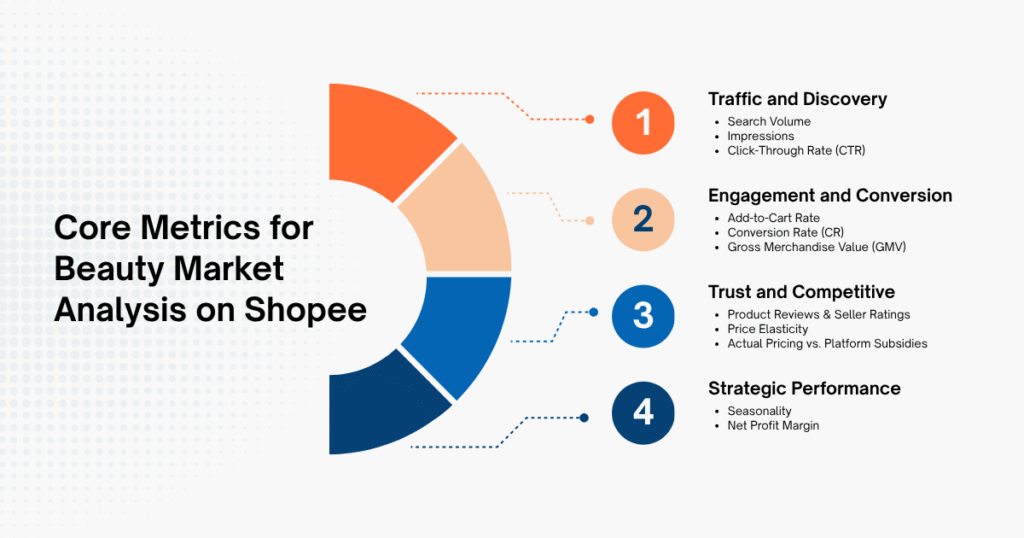
Search Volume
This is the first metric you should look at because it answers the most important question: “How many people are actively searching for this product on Shopee?”
If a product is trending heavily on social media but has almost zero search volume on Shopee, it is often a sign that real purchase demand has not yet formed. The trend may simply be a temporary spike in attention rather than actual buying interest.
Learn more about how to discover search trends on Shopee
Impressions & Click-Through Rate (CTR)
Impressions show how many times your product has appeared in front of potential customers.
CTR (Click-Through Rate) shows how many people are interested enough to click and view the product after seeing it. In other words, CTR is a key indicator of how attractive your product thumbnail, main image, and title are to shoppers.
Add-to-Cart Rate
This is an intermediate metric that beginners often overlook, but it is where potential bottlenecks become easier to identify.
- Many product views but low add-to-cart rate → the price, product information, or value proposition may not be convincing enough.
- High add-to-cart rate but low purchase completion → the issue may come from shipping fees, checkout experience, or return policies.
Conversion Rate (CR)
Conversion Rate measures the percentage of orders generated from total store visits. For the Beauty category on Shopee, a CR of 2%–3% or higher is generally considered a healthy performance level.
GMV (Gross Merchandise Value)
GMV represents the total value of completed orders. However, looking at GMV alone can easily lead to misleading conclusions if you do not break it down by individual product variations (SKUs).
A product that appears to be a “best seller” may actually be driven by a large number of low-priced trial-size purchases, rather than strong demand for the full-size product.
Product Reviews & Seller Ratings
Product Ratings reflect customer trust in the product itself, while Seller Ratings represent customer trust in the store overall. Beauty shoppers are often highly concerned about counterfeit products, so these two metrics can become a critical factor influencing the success or failure of a store.
Price Elasticity
Price Elasticity measures how sensitive customer demand is when prices change. Shopee Beauty shoppers are generally price-sensitive. They tend to stay within a suitable price range rather than remain loyal to a specific brand.
Seasonality
Seasonality refers to changes in customer demand at different times of the year. The Beauty category usually sees stronger demand during wedding seasons, year-end holidays, Lunar New Year, and especially during Shopee’s major campaign periods such as large-scale sales events.
Detailed Guide: How to Read and Utilize Beauty Market Data on Shopee
If you are just starting your Beauty market research on Shopee, there is no need to worry. Most of the essential data is already available in Shopee Seller Center.
You only need to know which sections to check first, how to interpret key metrics, and how to combine this information with competitor analysis on the same marketplace. With these basic steps, you can gain an initial understanding of the market landscape and make better early-stage business decisions.
Inside Shopee Seller Center
1. Business Insights
This is the first section you should check because it provides the most important performance metrics of your store, including GMV, number of orders, Conversion Rate (CR), and traffic sources by day, week, or month.
Even when your goal is market research, these insights help you understand how a category is performing and identify which metrics should be monitored when benchmarking against competitors.
Among these metrics, Conversion Rate (CR) is especially important and is calculated using the following formula: CR = Number of Orders ÷ Number of Visits
For example, if a store receives 1,000 visits and generates 50 orders: CR = 50 ÷ 1,000 = 5%
For the Beauty category on Shopee, this is considered a strong conversion rate because it is above the common benchmark range of 2%–3%.
2. Marketing Center → Shopee Ads
This section helps you evaluate how attractive a product is to potential buyers. You can monitor metrics such as Impressions, Clicks, CTR, and CPC to understand whether customers are seeing and showing interest in your products.
A healthy CTR on Shopee is generally expected to be 1% or above. If your CTR is below 0.8%, do not rush to increase your advertising budget. Instead, optimize your product presentation first by improving your main image, title, or pricing, as these factors directly influence whether customers decide to click and explore your product.
3. Search Ads → Keyword Tool
If you are researching a new product or category, this is one of the first tools you should use. Simply enter a core keyword such as “cosmetics” or “sunscreen”, and you can view the search volume over the past 30 days, while also discovering more niche keywords that shoppers are actively searching for.
This is also a simple way to check whether a social media trend has actually converted into real search demand on Shopee.
On Competitor Product Pages
Analyze Product Variations (SKU Analysis)
Do not simply look at the number “5,000 sold” and immediately conclude that a product is performing well. Click into each product variation, such as size, volume, or color, to analyze the details.
In many cases, a large portion of sales may come from low-priced trial-size versions, while the full-size product may only generate a few hundred orders.
Analyzing each SKU carefully helps you identify which products are actually driving revenue.
Analyze Actual Pricing vs Platform Subsidies
When comparing prices with competitors, do not only look at the displayed price on Shopee. Separate the discount amount contributed by the seller from the subsidies provided by the platform, such as Voucher Xtra or Freeship Xtra programs.
If a product can only maintain a competitive price because of platform subsidies, that pricing strategy may not be sustainable in the long term.
Learn more: How to Monitor Beauty Product Prices Like Top Brands
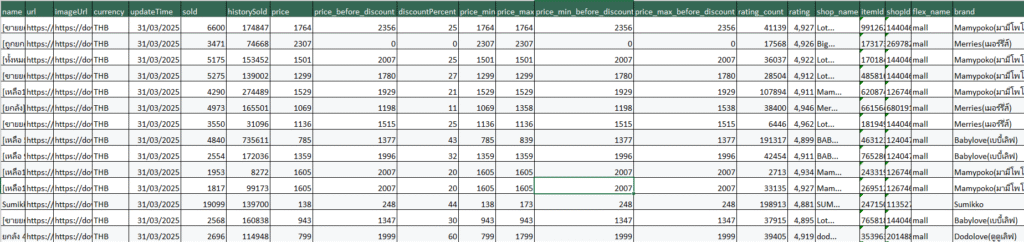
Easy Data Tip: Create a weekly “Top 10 Competitor Tracking” sheet. Simply record information such as:
- Store name
- Shopee Mall or Regular Shop status
- Selling price
- Rating
- Number of reviews
- Best-selling SKU
This allows you to track market changes more clearly over time.
When benchmarking competitors, always compare: Shopee Mall vs. Shopee Mall and Regular Shop vs. Regular Shop, because these two groups have completely different cost structures and operating models.
Learn more: Guide to Analyzing Beauty Competitors on Shopee in 5 Steps
Understanding the Relationship Between TikTok and Shopee When Analyzing the Beauty Market
A common characteristic of the Beauty industry in Southeast Asia is cross-platform shopping behavior. Many users watch product reviews or beauty swatches on TikTok first, then move to Shopee to learn more information and complete their purchase.
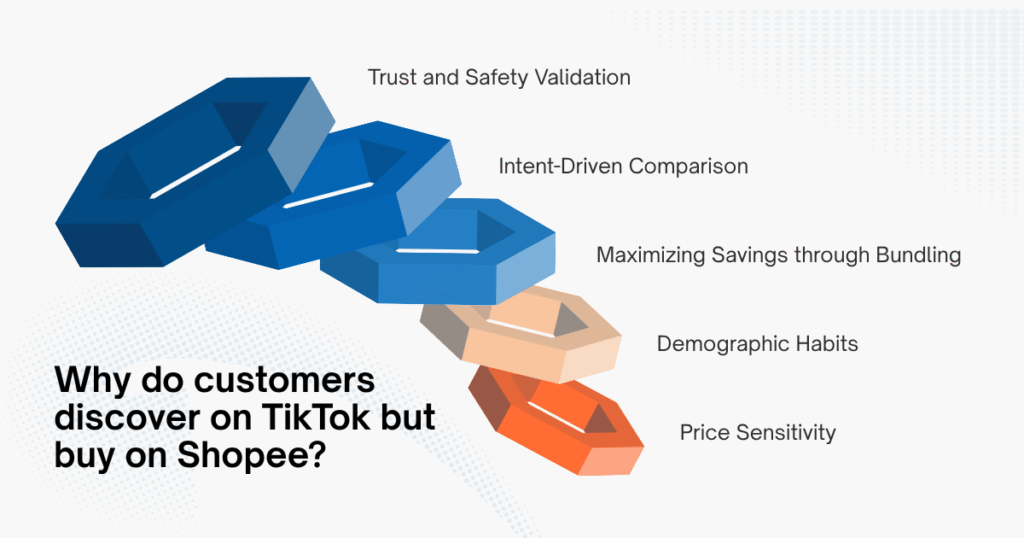
Why do customers discover products on TikTok but purchase on Shopee?
- Shopping behavior by age group (Gen Z and Millennials): Gen Z users tend to purchase directly on TikTok Shop when they are attracted by engaging content or instant promotions. Meanwhile, Millennials are more likely to return to Shopee to compare products, read reviews, and choose a suitable purchasing option.
- Product reviews build trust: Beauty products have a direct impact on skin health, so customers usually spend more time evaluating before making a purchase. After watching content on TikTok, many users visit Shopee to read reviews from previous buyers, check real product images, and consider customer feedback before making a decision.
- The habit of purchasing multiple products in one order: Shopee users often combine multiple products in the same order, such as toner, facial cleanser, cotton pads, or sunscreen, to take advantage of vouchers and free shipping promotions.
| TikTok Shop (Social Commerce) | Shopee (Search Commerce) |
| Impulse-driven shopping | Intent-driven shopping |
| Common metrics: Views, Likes, Engagement | Common metrics: Impressions, CTR, CR, GMV |
| Content helps generate interest | Buyers usually compare information before making a decision |
Key takeaway: A product can receive millions of views or high engagement on TikTok but still have limited search demand on Shopee. Therefore, before importing products or scaling your business, you should always check Shopee Search Volume to validate actual purchase demand.
Tip for Beginners: Combine TikTok and Shopee Data to Evaluate Business Opportunities
You can think of TikTok as a place to discover trends, while Shopee is where you validate whether those trends have turned into actual purchasing demand.
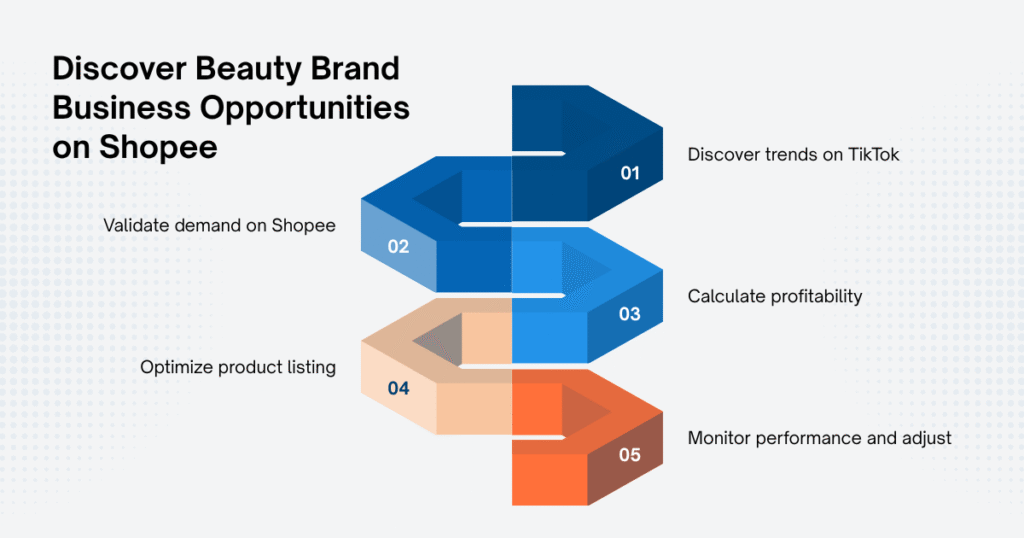
Phase 1: Market Research and Getting Started
- Step 1 (TikTok Creative Center): Monitor the Trends section in the Beauty category to identify popular hashtags, active ingredients, or product categories that are gaining attention, such as collagen, niacinamide, or facial cleansing devices.
- Step 2 (Validate on Shopee): Convert these hashtags into search keywords and check them through Shopee Ads Keyword Tool. If a keyword has strong search volume but the number of sellers is not yet too high, this could indicate an existing market opportunity.
- Step 3 (Evaluate profitability): Calculate your expected margin after deducting product costs, platform fees, and shipping expenses. For bulky or fragile products, you should also consider additional operational costs before deciding to stock inventory.
Goal: Complete your product listing, run small-budget advertising tests, and collect initial orders and reviews to evaluate performance.
Learn more: Guide to Finding Trending Beauty Products Before Your Competitors
Phase 2: Optimization and Performance Improvement
After collecting initial data, return to Business Insights to identify which metrics need improvement. Common scenarios:
- CTR below 0.8%: Try changing the product image, title, or product presentation.
- High Add-to-Cart Rate but CR below 2%: Consider creating product bundles, applying vouchers, or joining Shopee promotional programs to improve conversion rate.
Goal: Maintain a stable conversion rate of 2% or higher and gradually increase order volume.
Phase 3: Scale or Discontinue Products
- For products with strong performance (positive ROI, stable CR): You can increase advertising budgets or collaborate with KOCs on TikTok to drive additional traffic back to your Shopee store.
- For underperforming products (low ROI, high return or cancellation rate): Consider stopping ads or clearing inventory to focus resources on products with stronger potential.
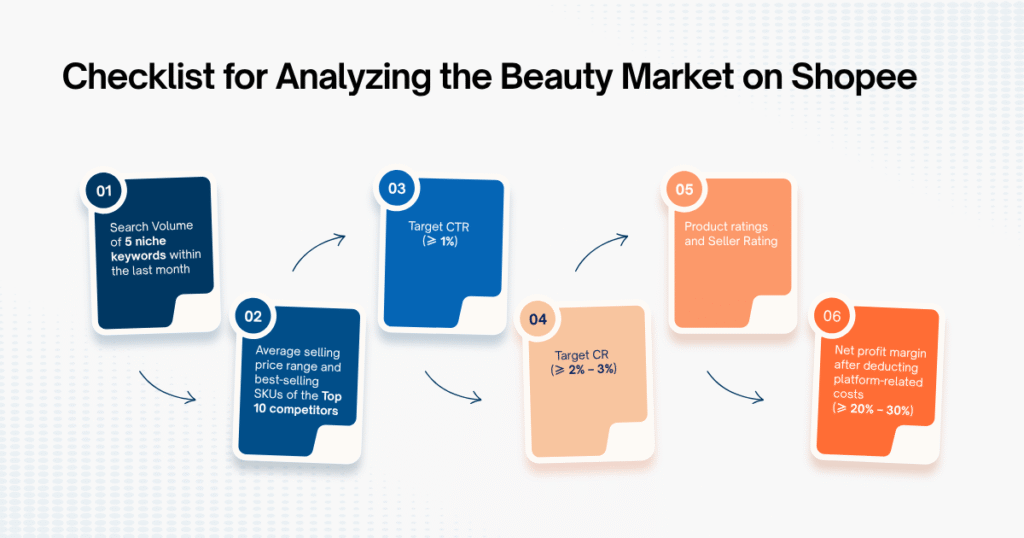
Checklist for Analyzing the Beauty Market on Shopee
To make sure you do not miss any important metrics when conducting market research, save the checklist below:
Conclusion
Analyzing the Beauty market on Shopee is not complicated if you start with the right data. By understanding the meaning of key metrics and knowing how to combine data from Shopee and TikTok, you can build a foundation to evaluate market opportunities, select suitable products, and make data-driven business decisions instead of relying on assumptions.
However, as your product portfolio expands and the number of competitors increases, manually tracking each store, SKU, or price change requires significant time and becomes difficult to maintain in the long term.
If you want to monitor the Beauty market on Shopee more continuously and systematically, Easy Data can help you automate Shopee data collection, analyze competitors, and build a market monitoring system tailored to your category, product scale, and business objectives.
Leave a Reply