
Most data-driven businesses encounter two common options: data providers and data marketplaces. Although both offer datasets, they serve entirely different needs. This article breaks down the key differences to help you understand the real value of each model before making any data investment decisions.
What Is a Data Marketplace?
A data marketplace is an online platform where multiple sellers upload, list, and distribute datasets for buyers to search and select based on their needs. These marketplaces do not directly collect data; instead, they act as intermediaries that aggregate datasets from many sources into a shared catalog.
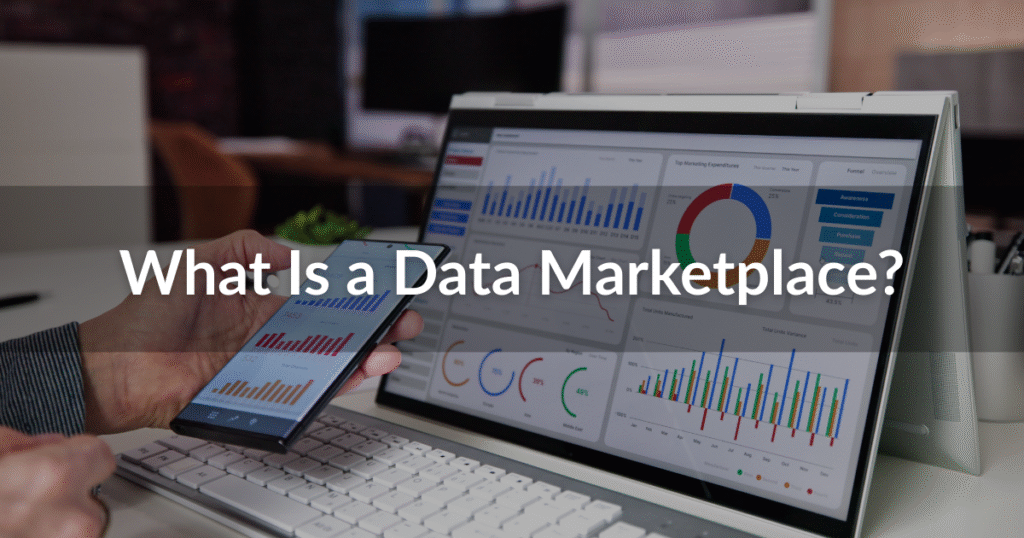
The main advantage of a data marketplace lies in convenience and variety, ranging from broad aggregated datasets to specialized ones such as demographic, financial, or e-commerce datasets. However, because the data depends on multiple vendors, its quality, update frequency, and structure are often inconsistent.
What Are Data Providers?
Data providers are entities that specialize in collecting, processing, and supplying data directly to clients (typically at scale and with high depth). Unlike data marketplaces, data providers are the actual “source” of the data, giving them full control over quality, freshness, schema structure, update frequency, and dataset completeness.
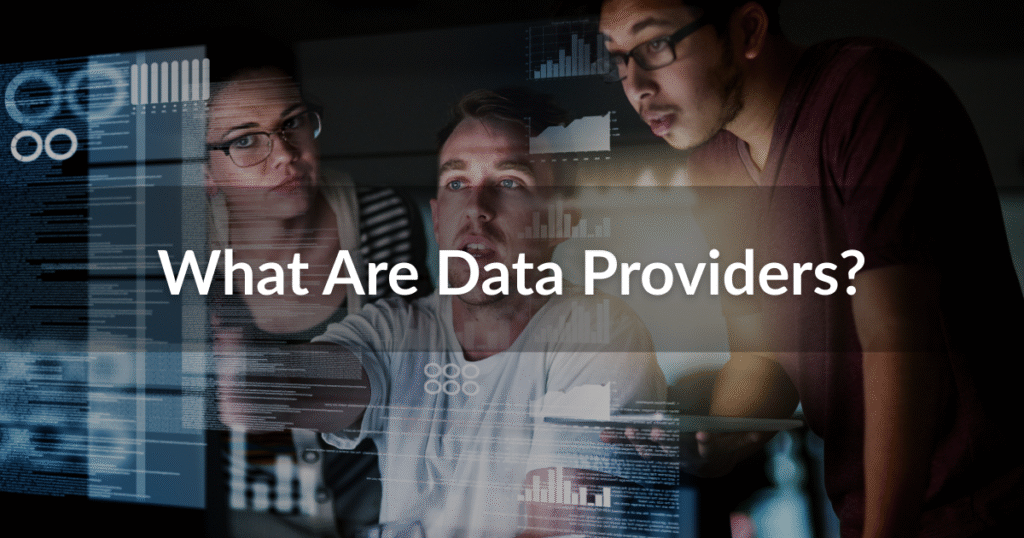
For businesses developing professional data products, direct access to clean, standardized, continuously updated data is critical, and data providers make this possible. Additionally, working with data providers allows businesses to request data customization, expand fields, optimize pipelines, or upgrade dataset delivery methods – capabilities that data marketplaces typically cannot offer.
Learn more: Top 5 Best Shopee Data Providers in Southeast Asia 2025
Key Differences Between Data Providers and Data Marketplaces
Between data marketplaces (functioning as “data bazaars” offering large, diverse, ready-made datasets) and data providers (which generate deep, industry-specific data), there are major differences in data depth, update capability, customization, scalability for product development, and long-term cost logic. These are core criteria that determine the effectiveness of data use and directly affect the quality of a company’s data products.
| Criteria | Data Providers | Data Marketplaces |
| Depth & Granularity of Datasets | Provide industry-specific, highly detailed datasets (raw e-commerce data, SKU-level data, product-version data, deep historical data). | Offer diverse data but usually in aggregated form, lacking the granularity needed for specialized product development. |
| Data Freshness & Update Frequency | Continuously updated in real time or on custom schedules set by the business. | Updated in batches or depending on each vendor’s upload schedule; freshness is inconsistent. |
| Customization Capability | Fully customizable (data structure, crawl frequency, depth, categories, etc.) ideal for building products. | Little to no customization; businesses must use datasets as-is. |
| Scalability for Product Development | Supports large-scale operations and continuous data feeds for AI, dashboards, BI, or data tools. | Limited scalability due to dependency on available marketplace datasets. |
| Pricing Logic | Flexible pricing based on volume, API calls, update frequency – optimized for long-term use. | Pricing is usually per dataset purchase or fixed subscription – less optimal for continuous or high-volume usage. |
Data Providers vs. Data Marketplaces: Which is the Perfect Choice for Your Business?
There is no “one-size-fits-all” solution for all data-driven companies. Each business has its own characteristics and development stages, so choosing a data solution is naturally flexible.
When You Should Choose a Data Marketplace
In some cases, a data marketplace is the better option – especially when the goal is simply to quickly acquire available datasets for research, market checks, or early-stage model experimentation. Marketplaces are also useful during the exploration phase, when you want to compare multiple data sources before committing to a long-term solution.
Popular data marketplaces:
- Datarade: Home to over 1,500 data providers and millions of datasets spanning finance, marketing, healthcare, consumer data, and more.
- AWS Data Exchange (Amazon): Offers thousands of third-party datasets across many sectors within the Amazon ecosystem.
- Knoema: Provides access to billions of time-series data points from various sources – ideal for analytics, reporting, and multi-dimensional research.
- Thordata Dataset Marketplace: Offers “cleaned and pre-structured” datasets in ready-to-use formats like JSON and CSV.
However, the strengths of marketplaces mainly apply to short-term or exploratory use. For large-scale data products or systems requiring stable data pipelines, marketplaces often fall short.
When Data Providers Are the Better Choice
Data providers are the optimal choice when a business needs a stable, specialized, and customizable data source to support large-scale data product development. If you are building reporting platforms, dashboards, AI models, e-commerce analytics tools, or any solution requiring high-granularity, continuously updated, and scalable data, data providers are almost the only model that fits these requirements.
Unlike data marketplaces – where datasets are hard to customize and lack continuity, data providers let businesses design the data structure, update frequency, category scope, and depth according to their real needs. This ensures companies obtain not just “sufficient” data but “fit-for-purpose” data for long-term, competitive data products.
Notable data providers:
- Easy Data: One of leading raw e-commerce data providers in Southeast Asia offering advanced, customizable e-commerce data scraping services with high accuracy, scalability, and compliance for large-volume projects
- Bloomberg: A major financial data provider offering realtime data, deep historical records, company reports, risk analytics, and a large API ecosystem.
- Zillow Data: A key real-estate provider offering home price data, transaction history, market trends, and valuation indices (Zestimate).
- Data.ai (App Annie): A top Mobile Intelligence provider offering app data, downloads, MAU/DAU, rankings, and user behavior insights.
- Brandwatch: Provides social listening data, behavior analytics, sentiment analysis, and digital consumer intelligence—an example of a deep social-data provider.
- Planet Labs: A leading satellite data provider offering daily imagery for AI, agriculture, mapping, and defense.
Naturally, these advantages come with higher costs compared to marketplace purchases. Businesses must also factor in the time required for providers to collect, process, and standardize datasets before delivery.
How to Evaluate Whether You Need a Data Provider or a Data Marketplace
Choosing between a data provider and a data marketplace becomes simpler when you clearly understand your actual data needs by assessing the purpose and scale of data usage:
- Is the data for short-term reference or long-term product development?
- Do you need granular, customizable, continuously updated data
- Does your data product or model need to scale over time?
If your answers lean toward short-term, initial experimentation, and broad research, then data marketplaces are a good fit.
If your answers point toward long-term, specialized, and scalable development, data providers are likely the optimal choice.
Conclusion
Choosing between a data marketplace and a data provider is not a question of cost, it is a question of the alignment and product vision. Building a strong, long-term, and competitive data solution is a universal aspiration for data-driven businesses, yet many are limited by “investment cost” and “execution capability.” Therefore, understanding and evaluating available data solutions is crucial. Hopefully, this article has been helpful.
Leave a Reply