
Web scraping for lead generation is no longer about collecting emails at scale. In 2026, it’s about identifying real business signals hidden inside public ecommerce data. As acquisition costs rise and traditional outreach loses effectiveness, companies are turning to marketplace intelligence to find growth-ready prospects. This article explores the data sources that truly power modern lead generation strategies.
Why Lead Generation Is Moving Toward Public Data Intelligence
If you’ve worked in B2B ecommerce for a few years, you’ve probably noticed a shift. Paid ads are more expensive. Cold emails get ignored. Purchased databases decay quickly, pushing companies toward data-driven lead generation strategies instead of mass outreach.
Meanwhile, ecommerce platforms are expanding at record speed (following broader global ecommerce growth trends that continue reshaping digital commerce worldwid). Millions of sellers are launching stores, adding SKUs, testing categories, and scaling into new markets. And most of this activity leaves public traces.
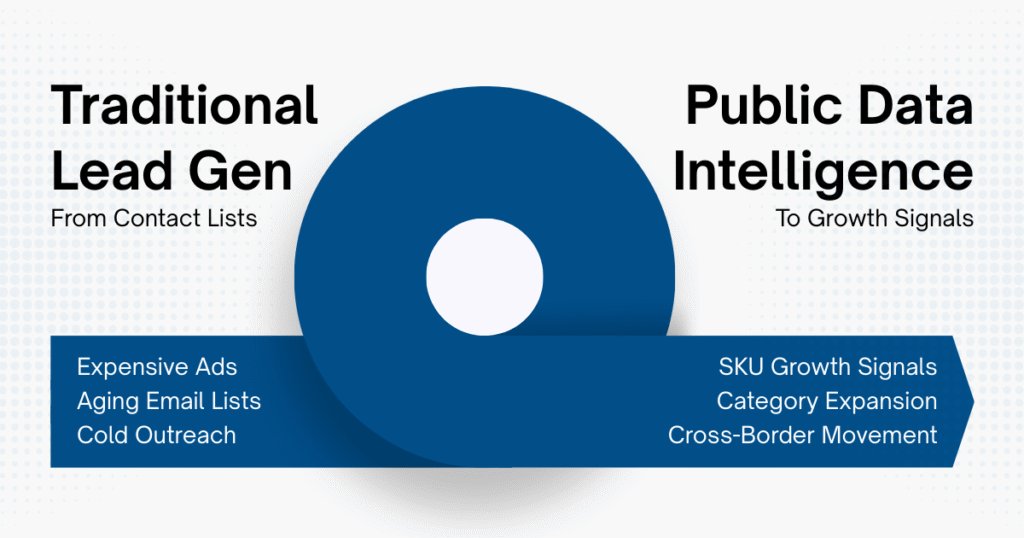
That’s where web scraping for lead generation becomes powerful. Instead of asking, “Who can I email?”, the smarter question becomes, “Which businesses are actively growing right now?” The difference is subtle, but critical.
What “Lead Generation” Really Means in an Ecommerce Scraping Context
In ecommerce, a lead isn’t just a contact record. A lead might be:
- A seller who just doubled their catalog size
- A Shopify brand installing fulfillment software
- A marketplace store expanding into cross-border selling
- A category with rapidly increasing seller density
In other words, a lead is a growth signal.
When used strategically, web scraping for lead generation surfaces these signals continuously (not once, but over time), so outreach becomes contextual and timely rather than random.
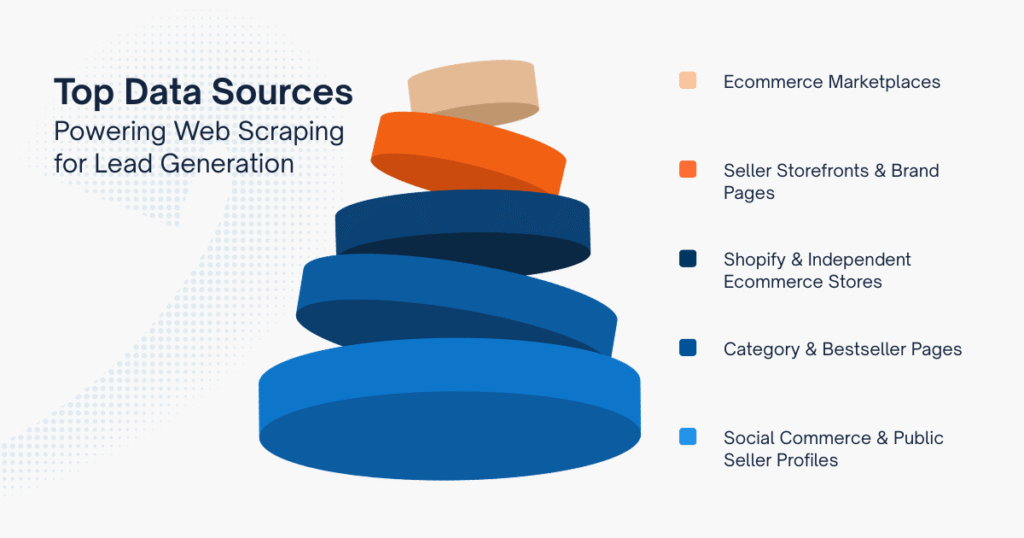
Top 5 Data Sources Powering Web Scraping for Lead Generation
Not all ecommerce data sources are equal. Some generate noise. Others reveal real commercial intent. When building a serious web scraping for lead generation strategy, the goal isn’t to scrape everything, it’s to focus on data environments where business activity is visible, measurable, and repeatable over time.
1. Ecommerce Marketplaces
Marketplaces remain the best starting point for web scraping for lead generation, as the data on these reflect real transactional behavior.
Platforms like Shopee, Lazada, TikTok Shop, and Amazon publicly display seller activity, product expansion, category positioning, and review growth. Unlike static business directories, marketplace data changes constantly and that movement is exactly what makes it valuable.
If a Shopee seller expands from 50 to 500 SKUs within months, or a TikTok Shop merchant suddenly gains thousands of reviews during campaign cycles, that’s not random fluctuation. That’s scaling behavior.
Through ecommerce web scraping, businesses can extract public data such as:
- Seller / store name
- Store URL
- Product categories
- Number of products
- Ratings & reviews
- Location (if publicly displayed)
On its own, this information looks simple. But when tracked consistently, it reveals:
- SKU growth velocity
- Category diversification
- Cross-border expansion (e.g., Amazon US → EU entry)
- Reputation acceleration
These signals are highly valuable for:
- SaaS targeting marketplace sellers
- Logistics, fulfillment, and cross-border services
- Marketing and automation platforms
Of course, web scraping for lead generation from this source must respect platform terms and only collect publicly available information.
2. Seller Storefronts & Brand Pages
Not all marketplace sellers invest in branding. Those who build structured storefronts on Shopee Mall, Lazada Flagship Stores, Amazon Brand Stores, or even standalone brand landing pages, usually signal higher operational maturity.
A seller who writes a detailed “About Us,” organizes categories professionally, and links social channels is thinking long-term.
Publicly accessible data from storefronts may include:
- Brand name
- About store information
- Contact links
- Social profiles
This layer of data helps distinguish casual resellers from structured businesses.
In practice, storefront signals are extremely useful for:
- Brand outreach campaigns
- Partnership and wholesale lead generation
- Agency targeting for long-term collaboration
In 2026, quality matters more than quantity. Storefront-level data allows web scraping for lead generation to move from volume-based prospecting to precision targeting.
3. Shopify & Ecommerce Platform Stores
If marketplaces show activity, Shopify and other ecommerce platforms reveal ownership.
Stores built on Shopify, WooCommerce, BigCommerce, or Magento are typically managed by founders or internal teams making direct decisions about software, services, and partnerships. That makes them especially attractive B2B leads.
Public data that can often be identified includes:
- Store domain
- Product catalog size
- Installed technologies (e.g., marketing apps, analytics tools)
- Public contact email
Store owners are usually decision-makers. If a Shopify store installs new fulfillment apps, expands its catalog, or redesigns its site, it signals investment and growth.
This makes Shopify and similar platforms ideal for:
- SaaS outreach
- Ecommerce service agencies
- Marketing automation providers
For many B2B companies, Shopify data becomes a core engine inside their web scraping for lead generation infrastructure.
4. Ecommerce Category & Bestseller Pages
Sometimes the strongest lead signal doesn’t come from a store page, it comes from category movement.
On platforms like Amazon Best Sellers, Shopee category rankings, or Lazada trending products, you can observe which stores are consistently climbing visibility positions. These pages often reveal:
- Top-selling stores by category
- Product performance signals
- Price range clusters
- Competition intensity within a niche
If a niche shows rising demand but limited professional sellers, that gap can become a targeted outreach opportunity. Because buyer intent is already validated in bestseller environments. This data supports:
- Niche-specific lead targeting
- Market expansion strategies
- Strategic category positioning
Instead of cold outreach, businesses can prioritize sellers operating in fast-moving verticals.
5. Social Commerce & Public Seller Profiles
Platforms like TikTok, Instagram Shops, Facebook Shops, and YouTube Shopping increasingly blur the line between content and commerce.
Public seller profiles on these platforms may reveal:
- Public seller information
- Engagement signals (likes, comments, shares)
- Links to marketplace or Shopify stores
Engagement velocity can signal momentum. A TikTok seller with rapidly increasing interaction and direct links to Shopee or Shopify likely indicates growth-stage behavior.
However, social data should not be treated as a primary lead source. It works best for:
- Brand research
- Lead enrichment
- Signal validation
It must also be handled carefully, ensuring only publicly available information is collected and no personal data boundaries are crossed.
Practical Ways of Web Scraping for Lead Generation in Ecommerce
Beyond identifying the right data sources, web scraping for lead generation in ecommerce is typically implemented through several practical methods. These approaches can be used independently or combined, depending on targeting goals.
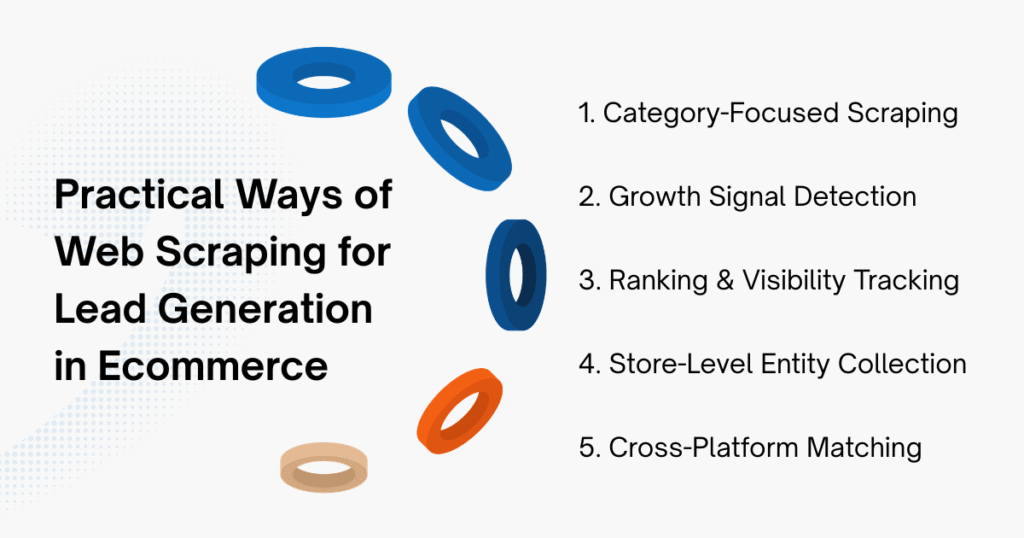
- Category-Focused Scraping: Extracting sellers within specific product categories to build niche-based prospect lists.
- Growth Signal Detection: Monitoring SKU increases, category expansion, or marketplace entry to identify scaling businesses.
- Ranking & Visibility Tracking: Scraping bestseller pages or category rankings to find sellers gaining traction.
- Store-Level Entity Collection: Gathering public store identifiers such as store names, URLs, and brand details to structure prospect databases.
- Cross-Platform Matching: Linking the same business across marketplaces and ecommerce platforms to validate maturity and expansion.
Learn more: Web Scraping Roadmap: How to Build Your E-commerce Data Strategy
In practice, however, these methods only become effective when data is collected continuously, normalized properly, and tracked historically.
Through supporting B2B companies across Southeast Asia, Easy Data has seen that one-time scraping rarely reveals real growth patterns. That’s why Easy Data’s ecommerce data scraping services are built around recurring collection, structured normalization, and historical tracking, helping businesses turn web scraping for lead generation into a reliable, long-term prospect discovery engine.
Final Thoughts
In 2026, web scraping for lead generation will no longer be about mass email collection. It will be about reading and understanding public data to identify businesses that are growing, expanding, or in need of services.When implemented correctly, with clear data structures and strategic direction, web scraping becomes a layer of intelligence that helps B2B businesses reach the right customers at the right time. And that is the real advantage.
.
Leave a Reply