

Shopee data collection is an essential process for developing in-depth business operations within the e-commerce industry. This article helps you gain a deeper understanding of the Shopee API (one of the most widely used Shopee data collection methods today), allowing you to identify the right data solution and enhance competitive strength in the e-commerce sector.
What Is Shopee Data Collection?
Shopee data collection refers to the process of gathering data from the Shopee platform through three main methods: official APIs, unofficial APIs, or Shopee data scraping techniques. The data collected may include product information, price history, sales performance, reviews, shop details, inventory, logistics, buyer behavior, and more (depending on the API source).
For businesses providing data reports, market research, data tools, AI/ML training data, etc., Shopee data collection gives them access to high-quality raw datasets. These datasets allow them to build commercial data products, support data-driven decisions for product strategy, marketing, and pricing, and enhance competitive advantages for B2B data companies thanks to their ability to track the full e-commerce landscape.
Understanding Shopee APIs
When discussing Shopee data collection, we cannot overlook the set of rules and protocols provided by Shopee that allow sellers and software developers to integrate their systems with the Shopee platform—its APIs.
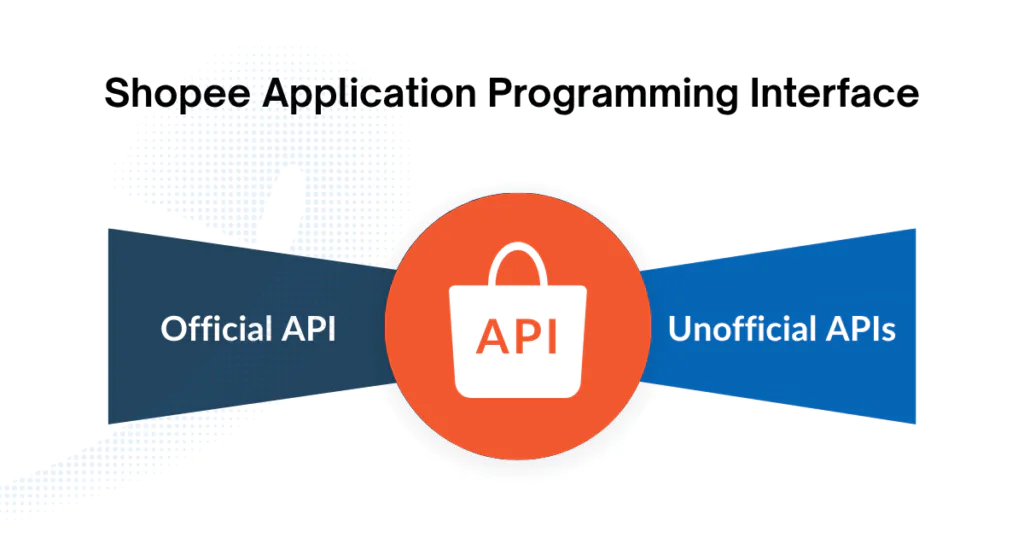
Shopee API is divided into two main groups: the Official Shopee Open API and Private/Unofficial API. They differ significantly in purpose, access rights, transparency, and legal risks. Therefore, when using them for Shopee data collection, careful consideration is required.
Official Shopee Open API
The Official Shopee Open API is the official data gateway provided by Shopee to sellers, merchants, brands, and certified partners to help them manage shop operations.
Users must register and authenticate using information such as Partner ID, Shop ID, API Key, and HMAC signature verification before they can connect and access data.
However, the Official API operates with strict limitations. The data it exposes is only related to the user’s own shop (such as product information, orders, inventory, or logistics). This ensures data security and compliance with Shopee’s data policies, but also creates major limitations for businesses needing marketplace-level or competitor-level data.
With restrictions on access scope, API rate limits, and no marketplace data, the Official API is suitable for internal seller operations rather than in-depth market analysis or large-scale data product development.
Unofficial / Private APIs
In contrast, Unofficial or Private APIs are endpoints extracted through reverse engineering from Shopee’s web interface or mobile app.
Although not officially published by Shopee, these APIs provide access to many types of data not supported by the Official API (such as public product data across the marketplace, category rankings, price history, full reviews, and estimated competitor sales).
Because of their broad data coverage and suitability for market intelligence, many data companies, AI firms, and market analysts use them to build reports, dashboards, or competitive analysis algorithms.
However, using Private APIs carries risks: endpoints may change at any time, they are not guaranteed to be stable by Shopee, and some use cases may raise legal concerns if data is accessed beyond the publicly available scope. For this reason, large enterprises often choose third-party data providers to maintain legality, stability, and comprehensive data coverage
Shopee Data Collection with APIs
The scope of Shopee data collection varies significantly depending on the API source. The Official API is limited to registered shop data, while Private APIs or data scraping can collect additional publicly available marketplace data.
What Data You Can Access with Official Shopee Open API
| Category | Detailed Description |
| Product Data | Product name, description, SKU, category, price, discounted price, stock, attributes, images |
| Order & Transaction Data (Seller Only) | Orders, order status, order time, payment, fees, order updates |
| Shop-Level Data | Shop profile, shipping information, shop settings, voucher lists |
| Inventory & Logistics | Variant-level stock, shipping tracking, parcel details, delivery methods |
What Data You Cannot Access with Official Shopee Open API
The Official Shopee Open API is designed to protect user data and restricts access to data strictly within a shop’s internal operations. Therefore, many types of important data for market analysis, competitor tracking, or in-depth research are not accessible. These include:
- Competitor data or marketplace-wide data (sales of other shops, full marketplace product lists, category statistics, top sellers, ranking charts)
- Full buyer personal data (only minimal information for order processing is provided; sensitive data such as email, phone number, and purchase history is hidden)
- Full review and rating data: The Official API only allows access to reviews related to the shop’s own orders and does not expose public marketplace-wide review data.
- Search and market insights (trending keywords, search volume, consumer trends, best seller rankings, industry competitiveness)
These limitations indicate that the Official Shopee Open API is a suitable method for Shopee data collection for shop operations, but it is insufficient for market intelligence, competitor analytics, or full-platform analysis solutions that B2B data businesses require.
What Data Developers Usually Extract Using Non-Official APIs
Non-Official APIs allow developers to access many types of public marketplace data that the Official Shopee Open API does not provide. This is valuable data for building reports, dashboards, market intelligence products, or AI datasets. However, these datasets are collected through reverse engineering or scraping, are not officially supported, and can change at any time.
Below are the data categories developers typically extract from Non-Official APIs:
| Category | Detailed Description |
| Public Product Data | Listed price, discounted price, price history, images, descriptions, attributes, variants, publicly visible stock |
| Estimated sales or competitor performance | Sales volume, rankings, shop activity indicators |
| Category and marketplace ranking data | Top sellers, trending categories, ranking positions, competitiveness metrics |
| Full review & rating data | Public reviews, review history, images/videos in reviews, full rating details |
| Public shop profile data | Rating score, followers, number of products, activity status, public shop description |
| Search and consumer behavior data | Public search data |
What Is the Best Approach for Shopee Data Collection?
Choosing the right Shopee data collection method depends on the data application and the level of comprehensiveness required.
The Official Shopee Open API is a legal, stable method suitable for sellers. However, the official API is severely limited, making it insufficient for businesses working on market intelligence, competitor analytics, data products, AI training, or full marketplace analysis.
On the other hand, Non-Official APIs provide marketplace-wide access but come with legal risks if not restricted to publicly available data.
Therefore, many businesses prefer using Shopee data collection solutions built and maintained by specialized e-commerce data providers – where public data is standardized, regularly updated, and ensured to be compliant.
Easy Data is a reputable provider offering comprehensive, legally compliant marketplace data from Shopee, Lazada, and TikTok Shop . They help partners focus on building data products, AI algorithms, and meaningful insights without worrying about technical limitations or platform changes.
Conclusion
Objectively, Shopee Data Collection with API provides a significant amount of valuable data. However, it is not the optimal method for all businesses due to limitations in data scale and legal risks. Depending on business size and objectives, enterprises should carefully choose the most suitable approach.
Leave a Reply