
Introduction
The demand for web scraping applications has surged as businesses strive to gain insights from vast online data sources. From e-commerce to finance, web scraping plays a crucial role in data-driven decision-making. This article explores the key applications of web scraping, the industries benefiting from it, and the best tools to use.
What is Web Scraping?
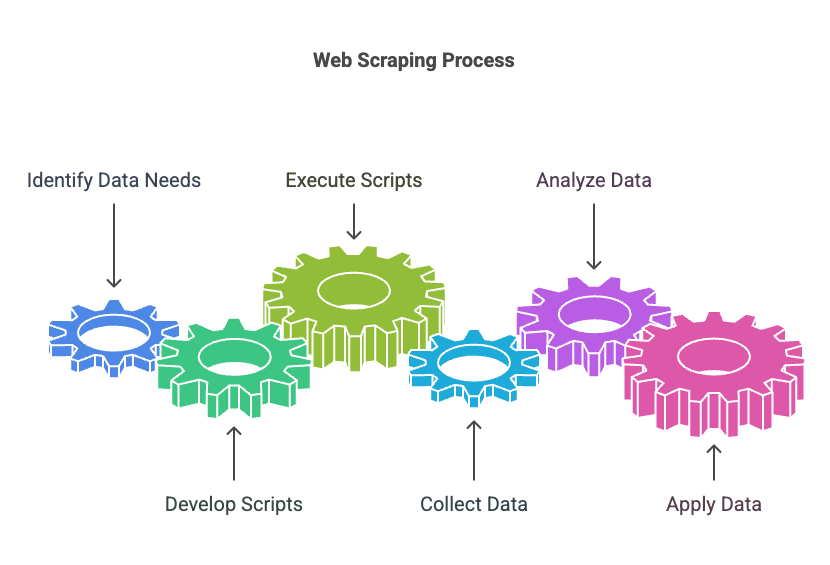
Web scraping is the process of extracting data from websites using automated scripts or software. It allows businesses to collect, analyze, and use data for various applications, improving efficiency and strategic planning.
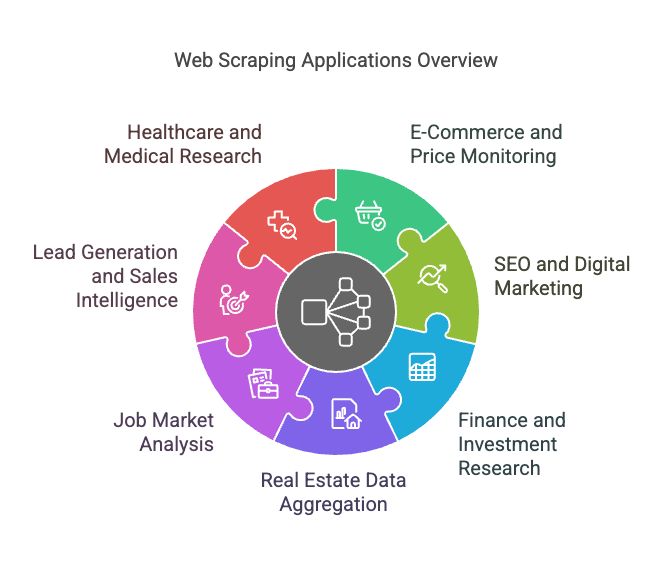
Top Web Scraping Applications in 2025
1. E-Commerce and Price Monitoring
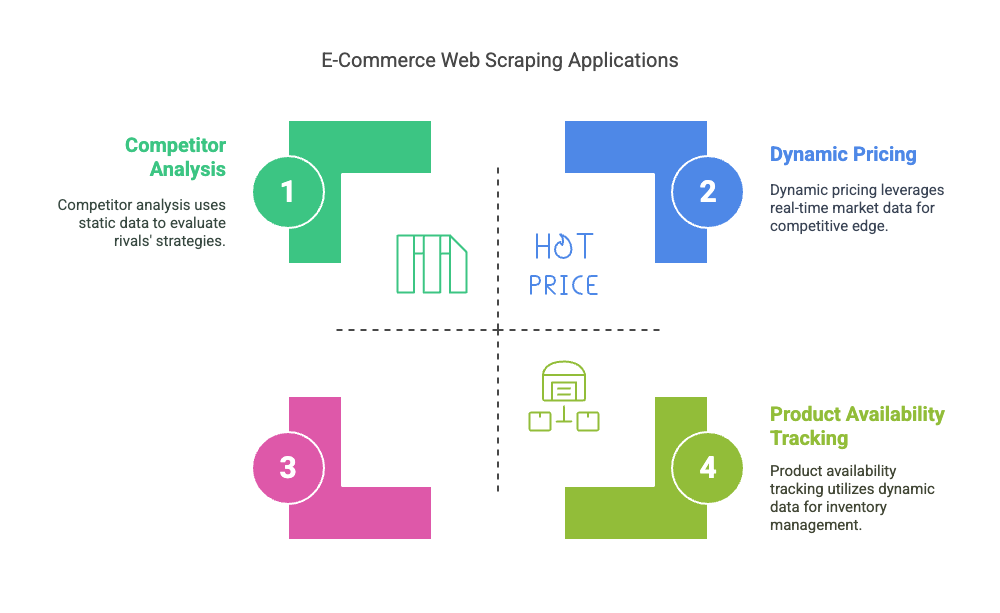
One of the most common web scraping applications is price tracking. E-commerce companies use scraping to monitor competitor prices, track product availability, and adjust their own pricing strategies.
- Competitor Analysis: Retailers scrape competitor websites to compare pricing strategies.
- Dynamic Pricing: Businesses use scraped data to optimize prices in real time.
- Product Availability Tracking: Scraping helps monitor stock levels across online stores.
2. SEO and Digital Marketing
Web scraping supports SEO experts and digital marketers in gathering essential data for content strategies and keyword research.
- Keyword Research: Extract search engine rankings and keyword trends.
- Backlink Analysis: Identify high-quality backlinks from competitor sites.
- Sentiment Analysis: Monitor brand mentions and customer sentiments on social media.
3. Finance and Investment Research
Financial analysts use web scraping to gather market trends, news, and investment insights.
- Stock Market Data: Extract real-time stock prices and financial reports.
- Cryptocurrency Trends: Scrape exchange platforms for price fluctuations.
- Financial News Aggregation: Collect economic updates from multiple sources.
4. Real Estate Data Aggregation
The real estate industry benefits from web scraping by gathering property listings, pricing trends, and market analysis.
- Property Listings: Scrape real estate platforms for new listings and historical pricing.
- Rental Market Insights: Track rental trends across different locations.
- Neighborhood Comparisons: Collect data on amenities, schools, and crime rates.
5. Job Market Analysis
Recruitment agencies and HR professionals use web scraping to analyze job postings and employment trends.
- Job Listing Aggregation: Scrape job portals for open positions.
- Salary Benchmarking: Compare salaries across industries and locations.
- Candidate Data Collection: Extract resume information for talent scouting.
6. Lead Generation and Sales Intelligence
Businesses use web scraping to generate leads and enhance their sales strategies.
- Customer Data Extraction: Scrape directories and social media for potential leads.
- Competitor Monitoring: Track competitor marketing strategies and client reviews.
- B2B Contact Information: Extract company emails and contact details.
7. Healthcare and Medical Research
Web scraping contributes to healthcare advancements by collecting research data, patient reviews, and drug pricing.
- Medical Research Data: Scrape scientific publications for the latest findings.
- Pharmaceutical Pricing: Compare drug prices from different vendors.
- Hospital Reviews: Collect patient feedback to improve healthcare services.
Best Web Scraping Tools for Businesses
Here are some essential tools for executing web scraping applications effectively:
Open-Source Libraries
- BeautifulSoup: Ideal for HTML parsing and simple scraping tasks.
- Scrapy: A robust framework for large-scale web scraping projects.
- Selenium: Best for scraping JavaScript-rendered websites.
- Puppeteer: A headless browser for complex scraping tasks.
Proxy and CAPTCHA Bypass Services
- Bright Data (formerly Luminati): Offers premium proxy solutions.
- ScraperAPI: Manages IP rotation and bypasses bot detection.
- 2Captcha: Solves CAPTCHA challenges automatically.
Data Storage and Processing Tools
- MongoDB: A NoSQL database for handling large datasets.
- PostgreSQL: A reliable relational database for structured data.
- AWS S3 & Google Cloud Storage: Secure cloud storage options.
Legal and Ethical Considerations
While web scraping applications offer immense benefits, businesses must adhere to ethical and legal guidelines.
Understanding Legal Risks
- Terms of Service (ToS): Many websites restrict scraping in their ToS.
- Robots.txt Compliance: Websites specify scraping permissions in their robots.txt files.
- GDPR & CCPA Regulations: Avoid scraping personal data without user consent.
Ethical Web Scraping Practices
- Respect Website Policies: Adhere to terms and conditions.
- Avoid Server Overload: Implement rate-limiting to prevent excessive requests.
- Use Official APIs: When available, APIs provide legal data access.
Conclusion
Web scraping applications in 2025 continue to revolutionize industries by providing valuable data insights. From e-commerce to finance, businesses leverage scraping to gain competitive advantages. For more insights and web scraping services, visit Easy Data.
Leave a Reply