
Introduction: The Powerful Use of Web Scraping for Business Growth
The use of web scraping has revolutionized the way businesses gather and analyze data. With the increasing amount of data available online, manually collecting and processing information has become impractical. Web scraping automates this process, allowing businesses to extract vast amounts of data from websites quickly and efficiently. Whether you’re in e-commerce, finance, research, or marketing, the use of web scraping can help you gain valuable insights, track competitors, and optimize decision-making. In this article, we’ll explore the various ways web scraping can be used across different industries to enhance business strategies and operations.
- Introduction: The Powerful Use of Web Scraping for Business Growth
- What is Web Scraping?
- Key Uses of Web Scraping
- How Web Scraping Works for Different Industries
- Advantages of Web Scraping
- Legal and Ethical Considerations in Web Scraping
- Conclusion: Harnessing the Power of Web Scraping for Business Success
What is Web Scraping?
Web scraping is the process of extracting data from websites using automated tools or scripts. These tools are designed to navigate websites, interact with the content, and collect specific data such as product listings, prices, customer reviews, and more. The collected data is then structured in a usable format like CSV, Excel, JSON, or a database for further analysis or integration into other systems.
Web scraping can be used for a variety of purposes, including market research, competitor analysis, lead generation, and more. By automating data collection, businesses can save time and resources while accessing valuable, up-to-date information.
Key Uses of Web Scraping
-
Market Research
One of the most common use of web scraping is for market research. Businesses scrape data from competitors’ websites to track product pricing, promotions, and customer sentiment. This helps companies understand current market trends, consumer preferences, and competitor strategies. With accurate market data, businesses can adjust their offerings and improve their market positioning. -
Competitive Intelligence
The use of web scraping for competitive intelligence is a valuable tool for businesses looking to monitor their competitors. By scraping competitor websites, businesses can analyze their competitors’ product listings, pricing strategies, and marketing tactics. This insight helps businesses make more informed decisions, whether it’s adjusting their pricing, improving their marketing efforts, or offering new products and services. -
E-commerce Price Monitoring
For e-commerce businesses, the use of web scraping to monitor product prices across various online platforms is essential for staying competitive. Web scraping tools can track price changes, identify discounts, and analyze pricing trends. This real-time data helps e-commerce businesses adjust their own pricing strategies to attract more customers and increase sales. -
Lead Generation
Web scraping is also used for lead generation. By scraping contact information from business directories, social media platforms, or job boards, businesses can generate targeted lists of leads for sales and outreach. This can significantly reduce the time spent on manual prospecting and increase the efficiency of the sales process. -
Sentiment Analysis
The use of web scraping extends to analyzing customer sentiment. By scraping customer reviews, social media posts, and forum discussions, businesses can gauge how customers feel about their products or services. This sentiment analysis helps companies identify strengths and weaknesses, enabling them to improve their offerings and customer experience. -
Real-Time Data Collection
Web scraping is ideal for real-time data collection, which is essential for industries that rely on up-to-date information. For example, in the financial industry, web scraping tools are used to gather real-time data on stock prices, market news, and company performance. This data is used by analysts and traders to make informed decisions based on current market conditions. -
Job Market Analysis
In the recruitment industry, the use of web scraping is crucial for tracking job listings and analyzing market demand. Recruitment agencies and businesses can scrape job boards like LinkedIn, Indeed, or Glassdoor to monitor job openings, required skills, salary ranges, and job trends. This insight helps businesses identify talent gaps and better plan their hiring strategies.
How Web Scraping Works for Different Industries
Each industry benefits from the use of web scraping in different ways. Here’s a breakdown of how web scraping is applied across various sectors:
- E-commerce: Collecting product data, tracking prices, monitoring stock availability, and analyzing customer reviews.
- Marketing: Gathering customer feedback, analyzing competitor campaigns, and tracking social media sentiment.
- Finance: Collecting real-time financial data, monitoring stock prices, and tracking market trends.
- Healthcare: Scraping medical research, clinical trials, and healthcare product data for analysis and decision-making.
- Real Estate: Collecting property listings, prices, and real estate market trends.
Advantages of Web Scraping
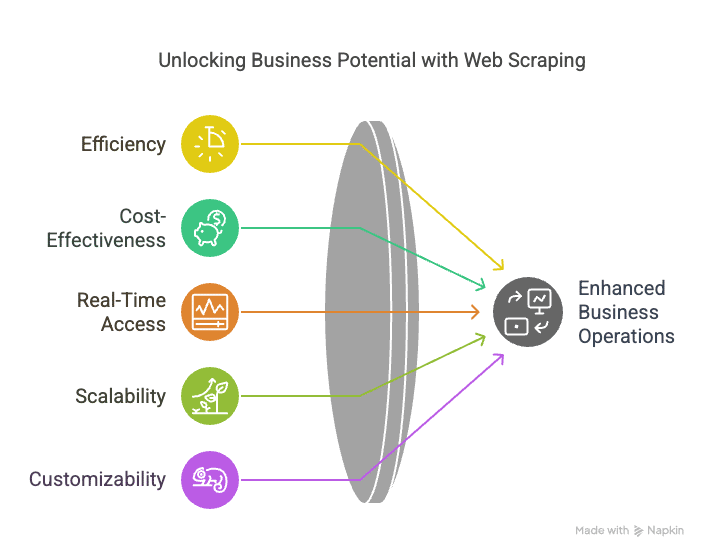
-
Time-Saving
Web scraping automates the process of data collection, saving businesses a significant amount of time compared to manual methods. By automating repetitive tasks, businesses can focus on analysis and decision-making rather than spending time gathering data. -
Cost-Effective
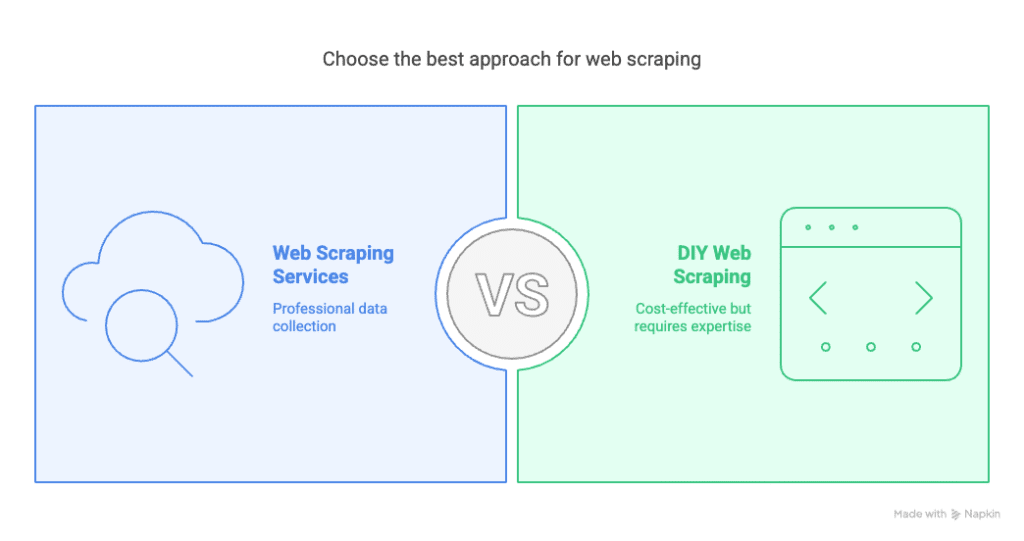
Compared to traditional methods of obtaining data, such as purchasing databases or conducting surveys, web scraping is much more affordable. Businesses can collect large amounts of data without having to invest in expensive research or data services. -
Scalability
Web scraping tools are highly scalable, meaning they can handle increasing amounts of data as your business grows. Whether you need to scrape a small number of websites or thousands of pages, scraping tools can be adapted to meet your needs. -
Data Quality and Accuracy
Web scraping tools ensure that the data collected is accurate and structured, which is essential for analysis. By automating the collection process, businesses can reduce the risk of human error and improve data accuracy. -
Customizable
Web scraping tools can be customized to fit specific data collection needs. Whether you need to track competitors’ pricing, gather product reviews, or monitor customer sentiment, web scraping tools can be tailored to your unique business requirements.
Legal and Ethical Considerations in Web Scraping
While web scraping offers many advantages, businesses must be mindful of legal and ethical considerations:
- Check Website Terms of Service: Always review the terms of service for the websites you plan to scrape. Many websites have terms that prohibit scraping.
- Respect Robots.txt: Websites often use the robots.txt file to specify which parts of the website can be scraped. Ensure that you follow these guidelines.
- Data Privacy: Ensure compliance with data privacy laws such as GDPR when scraping personal data from websites.
Conclusion: Harnessing the Power of Web Scraping for Business Success
The use of web scraping is essential for businesses looking to gather actionable data, monitor market trends, and improve decision-making. By automating data collection, businesses can save time, reduce costs, and gain valuable insights that help them stay competitive. Whether you are in e-commerce, marketing, finance, or research, web scraping can enhance your strategies and operations, enabling you to make data-driven decisions.
For more information on how Easy Data can help with your web scraping needs, visit EasyData.io.vn.
External Links
Leave a Reply