
In the rapidly evolving world of e-commerce, scraping Shopee terms of service has become a hot topic for businesses aiming to gather market insights. However, navigating the legal landscape is crucial to avoid violations. Easy Data provides ethical, compliant data extraction services that respect platform rules, ensuring safe and efficient access to valuable information. This article delves into key legal considerations, risks, and best practices for Shopee data scraping.
What is Data Scraping?
Data scraping, also known as web scraping or web harvesting, is the automated process of extracting information from websites. It involves using software tools, scripts, or bots to collect data such as product prices, reviews, descriptions, and seller details from platforms like Shopee. This technique is widely used in competitive analysis, price monitoring, and market research.
At its core, scraping mimics human browsing but does so at a much faster scale. Tools like Python libraries (e.g., BeautifulSoup or Scrapy) or specialized services can parse HTML structures to pull structured data. While scraping public data is common, it raises questions about legality, especially when platforms have specific restrictions.
Why is scraping popular on Shopee? As one of Southeast Asia’s leading e-commerce platforms, Shopee hosts millions of products across categories like fashion, electronics, and groceries. Businesses scrape this data to track trends, optimize pricing, or enhance inventory management. However, without proper understanding, it can lead to legal issues.
Types of Data Scraping
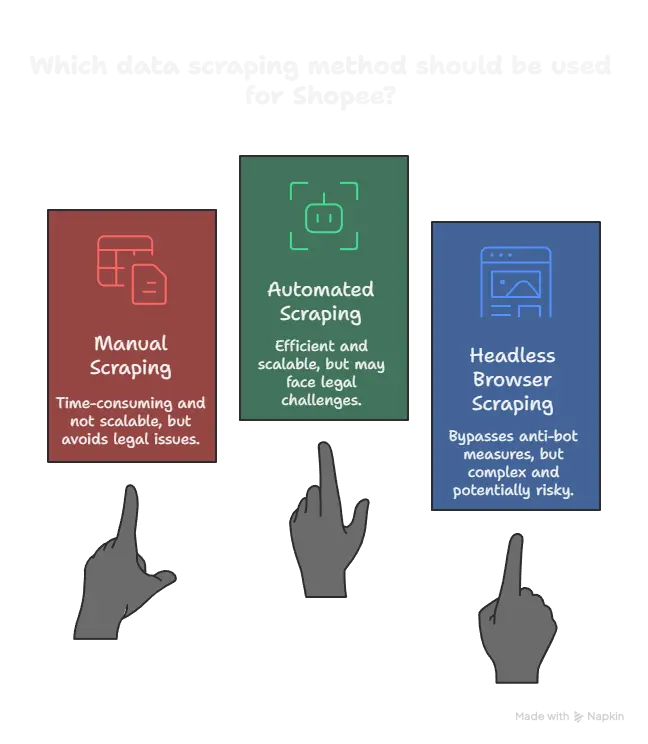
- Manual Scraping: Involves copying data by hand, which is time-consuming and not scalable.
- Automated Scraping: Uses bots or APIs to fetch data efficiently.
- Headless Browser Scraping: Simulates full browser interactions to bypass anti-bot measures.
Understanding these methods is essential before diving into Shopee’s specific rules. For those who are looking for a Shopee data scraper, check our article on: Shopee Data Scraper for E-Commerce Market Analysts
Overview of Shopee’s Terms of Service Regarding Scraping
Shopee’s terms of service (ToS) play a pivotal role in determining the permissibility of data scraping. These terms outline user obligations and prohibit certain activities to protect the platform’s integrity and user data. According to Shopee’s guidelines, both crawling and scraping are strictly prohibited without authorization. This includes using automated tools to extract product images, descriptions, or other content, as it can affect sellers by enabling unauthorized duplication or competitive misuse.
Key prohibitions in Shopee’s ToS include:
- Unauthorized access to the site using robots, spiders, or similar technologies.
- Extracting data for commercial purposes without explicit permission.
- Bypassing security measures or overloading servers, which could violate anti-circumvention clauses.
For developers, Shopee’s Open Platform has its own terms, emphasizing that API usage must comply with data protection policies. Violating these can result in account suspension, IP bans, or legal action. It’s advisable to review the latest ToS on Shopee’s official site, as they may vary by region (e.g., Singapore, Vietnam, Indonesia).
Shopee’s Robots.txt and Anti-Scraping Measures
Shopee’s robots.txt file, a standard web protocol, signals which parts of the site crawlers should avoid. While not legally binding, disregarding it can indicate bad faith in court. Typically, it disallows scraping of user profiles, search results, or dynamic content. Shopee also employs advanced anti-bot systems, like CAPTCHA and rate limiting, to deter automated access.
Respecting these elements is crucial for ethical scraping. Services that ignore them risk being flagged as malicious.
Key Legal Frameworks Affecting Shopee Scraping
Beyond Shopee’s internal rules, broader laws govern data scraping. These vary by jurisdiction but focus on protecting intellectual property, privacy, and fair competition.
Copyright and Intellectual Property Laws
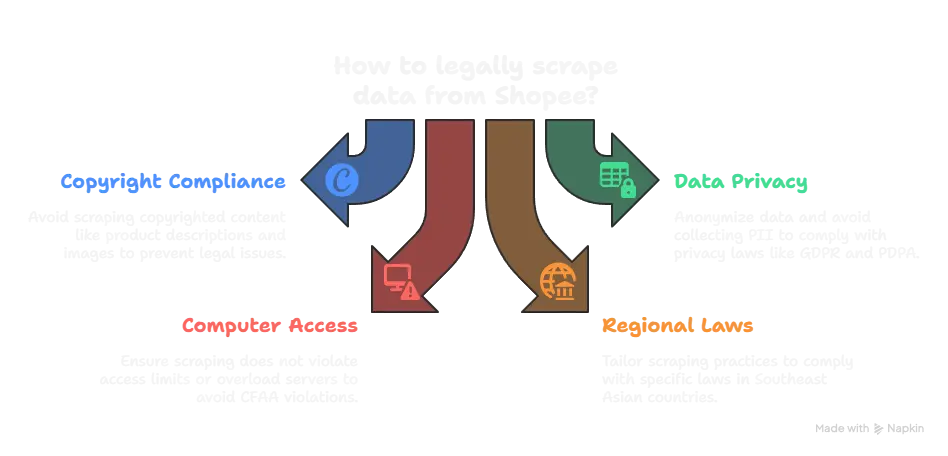
Shopee’s content, including product listings and images, is often protected by copyright. Scraping and repurposing this data without permission could infringe on intellectual property rights. For instance, under the U.S. Digital Millennium Copyright Act (DMCA), platforms can issue takedown notices for unauthorized use.
In Southeast Asia, where Shopee operates primarily, laws like Singapore’s Copyright Act or Vietnam’s Intellectual Property Law prohibit unauthorized reproduction. Sellers’ product descriptions are considered creative works, making bulk scraping a potential violation. To stay legal, focus on public, factual data like prices, which may not qualify for copyright protection.
Data Privacy Laws
Scraping personal data raises red flags under privacy regulations. The General Data Protection Regulation (GDPR) in Europe applies if scraping involves EU users, requiring consent for data processing. Similarly, Singapore’s Personal Data Protection Act (PDPA) and Indonesia’s data laws mandate protecting personally identifiable information (PII) like names or addresses.
Shopee emphasizes user privacy in its policies, prohibiting scraping of sensitive data. Violators could face fines up to millions, as seen in GDPR enforcement cases. Always anonymize data and avoid PII to comply.
Computer Fraud and Abuse Act (CFAA) and Similar Laws
In the U.S., the CFAA criminalizes unauthorized computer access, which courts have interpreted to include scraping that violates ToS. Landmark cases like hiQ Labs v. LinkedIn clarified that scraping public data isn’t always a CFAA violation, but exceeding access limits is.
Analogous laws in Asia, such as Malaysia’s Computer Crimes Act, target unauthorized system interference. If scraping overloads Shopee’s servers, it could be deemed a cyber offense.
Regional Variations in Southeast Asia
Shopee’s multi-country presence means laws differ:
- Vietnam: The Law on Cybersecurity prohibits unauthorized data collection.
- Indonesia: Electronic Information and Transactions Law addresses data misuse.
- Philippines: Data Privacy Act mirrors GDPR principles.
Businesses must tailor scraping practices to local regulations for cross-border operations.
Risks and Consequences of Illegal Scraping
Ignoring Shopee’s ToS or laws can lead to severe repercussions. Platform-wise, Shopee may block IPs, suspend accounts, or pursue civil suits for damages. Legally, fines, injunctions, or criminal charges are possible, especially for large-scale operations.
Reputationally, exposed scraping can damage brand trust. For example, sellers affected by scraped content might report violations, leading to marketplace bans. In extreme cases, data breaches from scraping could trigger regulatory investigations.
To mitigate risks:
- Conduct legal audits before scraping.
- Use rate-limited tools to avoid detection.
- Document compliance efforts.
Ethical and Legal Ways to Access Shopee Data
Not all data access requires scraping. Shopee’s Open API allows authorized developers to fetch data compliantly, covering products, orders, and analytics. Registration and adherence to rate limits are required.
Third-party services offer ethical alternatives. Easy Data, for instance, specializes in Shopee scraping while prioritizing compliance with terms and regulations like GDPR and CCPA. They focus on public, non-PII data, ensuring users avoid legal pitfalls.
Other options include:
- Partnering with Shopee affiliates for shared data.
- Using public datasets or aggregators.
- Manual data collection for small-scale needs.
These methods provide insights without the risks of unauthorized scraping.
Best Practices for Compliant Data Collection
To ensure your scraping activities align with legal standards:
- Review ToS Regularly: Check Shopee’s updates on scraping prohibitions.
- Respect Robots.txt: Avoid disallowed paths to demonstrate good faith.
- Limit Scope: Target only public, factual data; anonymize any personal elements.
- Use Ethical Tools: Opt for services like Easy Data that embed compliance features.
- Seek Permissions: Contact Shopee for approval on large-scale projects.
- Monitor Legal Changes: Stay informed on evolving laws in operating regions.
- Document Processes: Keep records of compliance to defend against claims.
By following these, businesses can leverage the Shopee dataset responsibly, fostering innovation without legal hurdles.
Conclusion
In summary, while scraping Shopee terms of service offers valuable e-commerce insights, it demands strict adherence to legal and ethical guidelines to prevent violations. Easy Data stands out as a reliable partner, delivering compliant data solutions that respect platform rules and privacy laws. By prioritizing best practices, you can harness data effectively and sustainably in this competitive market.
Leave a Reply