
In today’s fiercely competitive digital market, businesses increasingly depend on ecommerce data analytics to decode customer behaviors, optimize product listings, and outpace rivals. Harnessing accurate raw data is the foundation for making informed decisions, boosting sales, and streamlining business operations. But how exactly can businesses acquire high-quality, actionable raw data for their ecommerce analytics initiatives? This detailed guide explores the best methods available, offering practical tips and deep insights to help both new and established online brands unlock next-level business intelligence.
What is eCommerce Data Analytics?
Ecommerce data analytics refers to the systematic process of collecting, processing, and interpreting raw data generated by online transactions and customer activities. This involves sifting through sales reports, user interactions, traffic patterns, product reviews, and more to uncover actionable insights for improving business performance. Data analytics in ecommerce is essential for increasing revenue, enhancing customer experiences, and tracking the effectiveness of digital marketing campaigns. By embracing ecommerce data analytics, businesses gain a competitive edge and can respond swiftly to evolving market trends.
How to Use Data Analytics to Improve E-Commerce Business
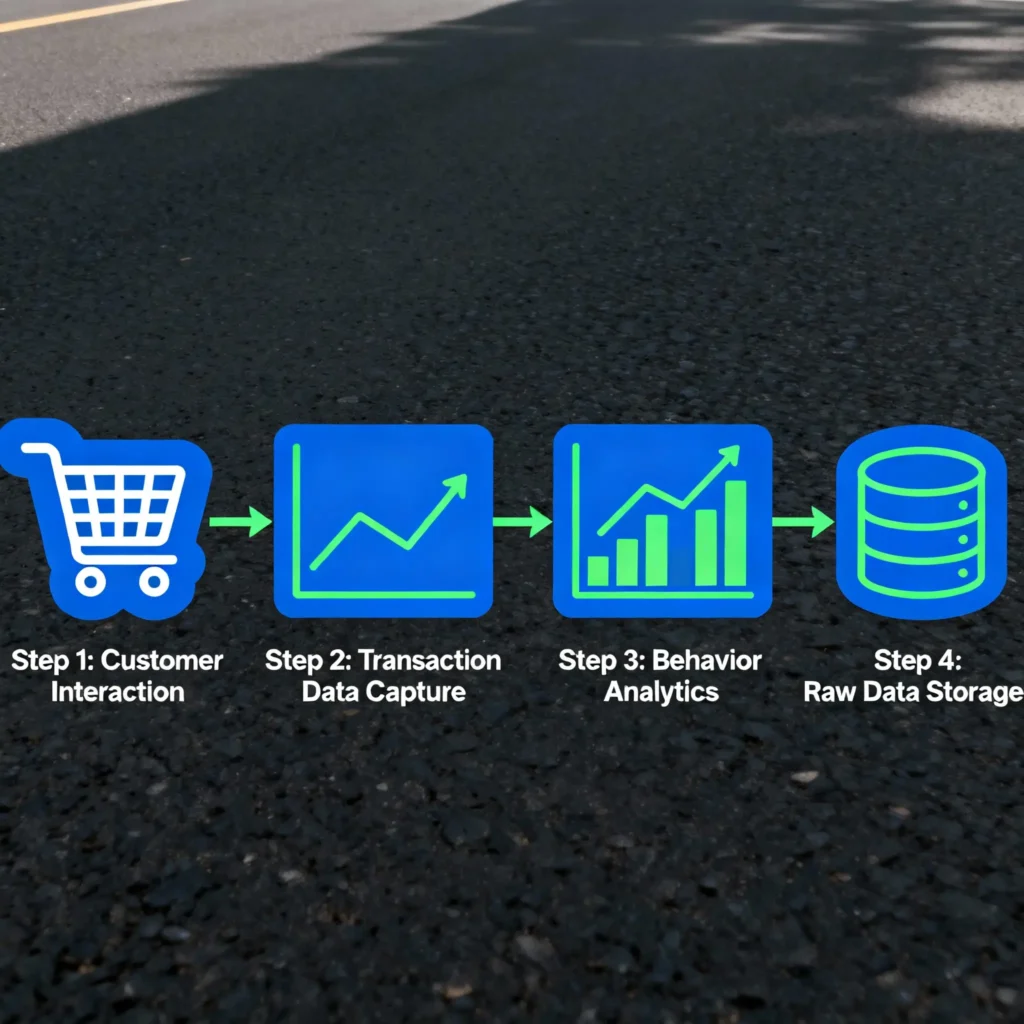
1. Identify Key Metrics that Matter
To effectively leverage ecommerce data analytics, businesses must first pinpoint the key performance indicators (KPIs) that align with their goals. These core metrics drive day-to-day decisions and long-term strategies by highlighting strengths and weaknesses in operations.
Common key metrics include:
- Conversion Rate: Measures the percentage of visitors who complete a desired action, such as making a purchase.
- Average Order Value (AOV): Reflects the average amount spent per transaction, offering clues about upsell and cross-sell opportunities.
- Cart Abandonment Rate: Reveals lost sales opportunities, allowing businesses to target customers who didn’t complete purchases.
- Customer Lifetime Value (CLTV): Estimates the total revenue a business can expect from a single customer over their entire relationship.
By consistently tracking these KPIs using ecommerce data analytics, businesses can make targeted improvements and drive sustainable growth.
2. Track Customer Journeys Across Channels
Understanding how customers interact with your brand across multiple channels is crucial in today’s omnichannel landscape. Ecommerce data analytics enables businesses to map out entire customer journeys, from the first click on an ad to post-purchase engagement.
Key activities to track include:
- Social media interactions
- Email campaign clicks
- Website navigation paths
- Mobile app usage
- In-store touchpoints (for hybrid businesses)
With robust analytics, businesses can personalize outreach, optimize user experiences, and reduce friction at each stage, uplifting overall conversion rates.
3. Use Predictive Analytics for Smarter Decisions
Predictive analytics, a vital branch of ecommerce data analytics, leverages machine learning and historical data to forecast future trends, customer behavior, and purchasing patterns. This empowers companies to anticipate demand, optimize inventory, and tailor marketing strategies.
Benefits include:
- Dynamic pricing adjustments
- Personalized product recommendations
- Inventory optimization to prevent stockouts or overstock
- Enhanced fraud detection through anomaly spotting
By integrating predictive analytics into their workflow, ecommerce brands can stay proactive and safeguard their bottom line.
The 3 Best Ways to Collect Raw Data for eCommerce Analytics
Gathering reliable raw data is the cornerstone of effective ecommerce data analytics. Here are the three best approaches, each tailored for different business needs and technical capacities.
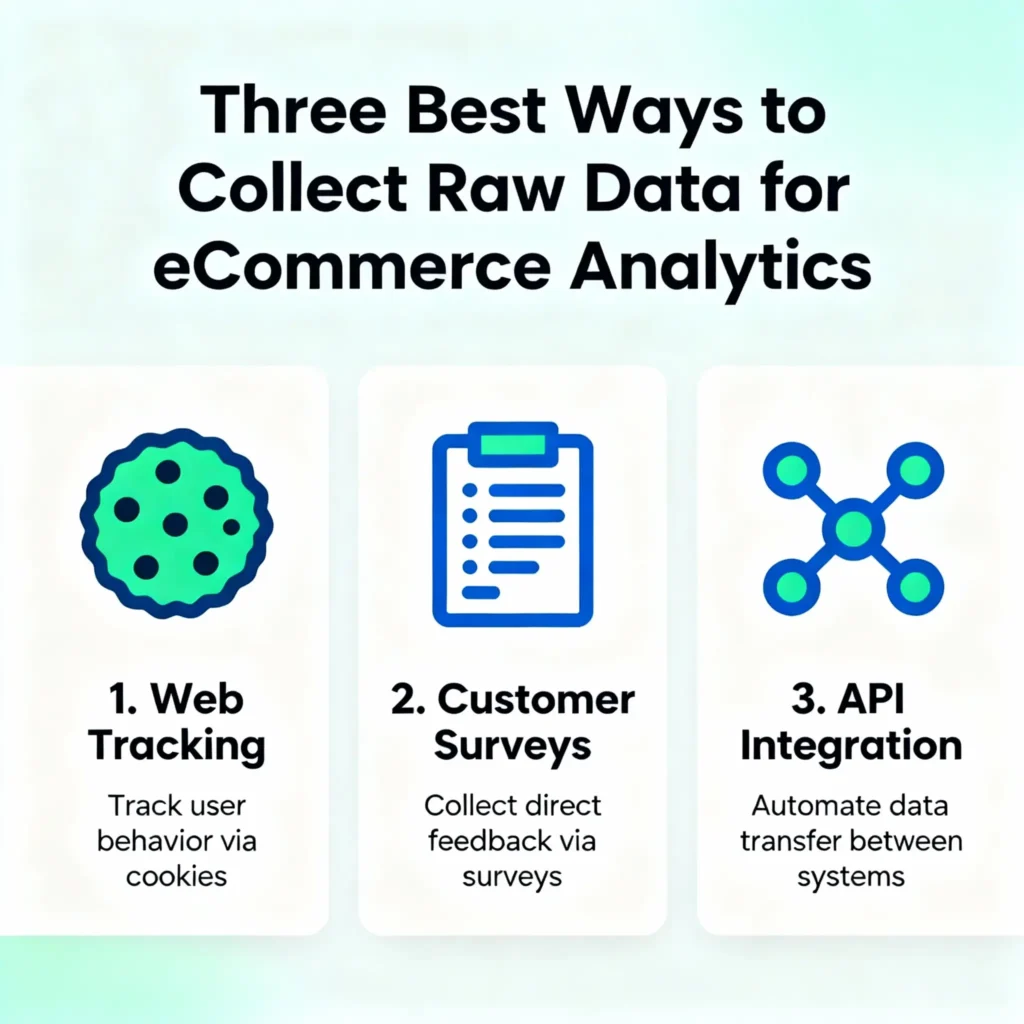
1. Use Web Scraping to Collect Marketplace Data
Web scraping is a powerful method for automatically extracting data from marketplace platforms like Shopee, Lazada, Amazon, and Tiki. Businesses deploy automated bots that crawl product listings, prices, customer reviews, ratings, and competitive intelligence straight from competitors’ or partners’ public pages.
Types of data available via web scraping:
- Product titles, descriptions, and specifications
- Prices and promotional discounts
- Number of reviews, review sentiment, and star ratings
- Seller details and stock availability
- Product rankings on search or category pages
Web scraping offers flexibility, letting businesses customize data extraction according to changing analytic goals. However, some best practices must be followed:
- Respect robots.txt and platform terms of service: Avoid scraping prohibited sections or causing server strain.
- Use structured data where possible: Many marketplaces provide structured product markup for easier parsing.
- Ensure legal and ethical compliance: Adhere to data protection laws and avoid unauthorized or sensitive data extraction.
Leveraging web scraping effectively feeds robust raw data into your ecommerce data analytics pipeline, fueling smarter business decisions.
2. Use Official eCommerce APIs
Many major ecommerce platforms (Shopee, Lazada, TiktokShop, Amazon, etc.) provide official APIs that allow authorized access to updated, high-quality raw data. APIs are sets of rules and protocols enabling applications to fetch or send precise information between systems.
Benefits of using official APIs for data collection:
- Real-time data availability: Access up-to-the-minute listings, orders, and inventory.
- High reliability and accuracy: Data provided directly by the platform is less likely to have errors.
- Consistent formatting: APIs deliver data in standardized formats (such as JSON or XML), making integration with analytic tools seamless.
- Better security and compliance: Using official endpoints ensures data collection practices remain within platform guidelines.
Practical use cases include:
- Automatic sales tracking and financial reporting
- Real-time monitoring of inventory levels
- Synchronizing customer order data across systems.
- Syncing multi-channel sales performance analytics.
Adopting platform APIs streamlines the ecommerce data analytics process and minimizes manual data handling errors.
Learn more: Shopee Scraper vs Shopee API: Which Works Better?
3. Use Third-Party Data Providers
Third-party data providers (Data-as-a-Service, or DaaS companies) like Easy Data offer ready-made ecommerce datasets that save businesses the effort of building scraping tools or integrating APIs. Pre-build dataset or data scraping services for Shopee, Lazada, TikTok Shop or other ecommerce platforms provide aggregate, clean, enrich, and serve essential analytics-ready data on-demand.
Benefits of using third-party data providers:
- Ready-to-use raw datasets: No need to handle data cleaning or normalization.
- Plug-and-play integration: Connect directly with analytics dashboards or business intelligence tools.
- Cost and time efficiency: Pay for only the exact data needed; avoid the costs and risks of maintaining web scrapers or API integrations.
Popular ecommerce analytics datasets available:
- Multi-market product catalogs
- Historical sales, pricing, and availability trends
- Competitive product intelligence reports
- Consumer sentiment and review analysis
This approach is especially valuable for businesses lacking extensive technical resources or in need of large-scale data from diverse platforms.
DIY Scraping vs API Access vs Third-Party Providers
| Method | Data Freshness | Technical Setup | Cost | Data Coverage | Compliance & Support |
| Web Scraping | Moderate (depends) | High (build/maintain bots) | Low-Moderate | As targeted | Must self-manage |
| Official APIs | Real-time | Moderate (integration) | Typically free or low | High (platform-based) | Platform support |
| Third-Party Providers | Varies (often real-time or batch) | Low (plug & play) | Pay-per-data | Broad, multi-source | Professional support |
Choosing the right raw data collection strategy depends on a business’s analytics objectives, available resources, and technical skills. Integrating these methods lays a strong foundation for advanced ecommerce data analytics workflows.
Conclusion
Mastering ecommerce data analytics starts with acquiring accurate, high-quality raw data through reliable channels like web scraping, platform APIs, or reputable third-party providers. Each method—when properly implemented—enables businesses to unlock insights, drive innovation, and stay ahead of the market. To streamline operations and gain a clear competitive advantage, consider exploring comprehensive solutions from trusted partners like Easy Data, your go-to choice for ready-to-use ecommerce datasets and analytics resources.
Leave a Reply