

Introduction: Understanding the Difference Between Data Scraping and Web Scraping
The useful distinction is between the source you have and the method used to extract its fields. People sometimes use data scraping as a broad label, while web scraping specifically concerns extracting information from web pages. These labels alone do not tell you whether a project needs an API client, a file reader, an HTML parser or browser automation. This guide compares those choices and shows how to define a reliable e-commerce collection task.
- Introduction: Understanding the Difference Between Data Scraping and Web Scraping
- What is Data Scraping?
- What is Web Scraping?
- Key Differences Between Data Scraping and Web Scraping
- Advantages and Use Cases for Data Scraping
- Advantages and Use Cases for Web Scraping
- Conclusion: Choosing Between Data Scraping and Web Scraping
What is Data Scraping?
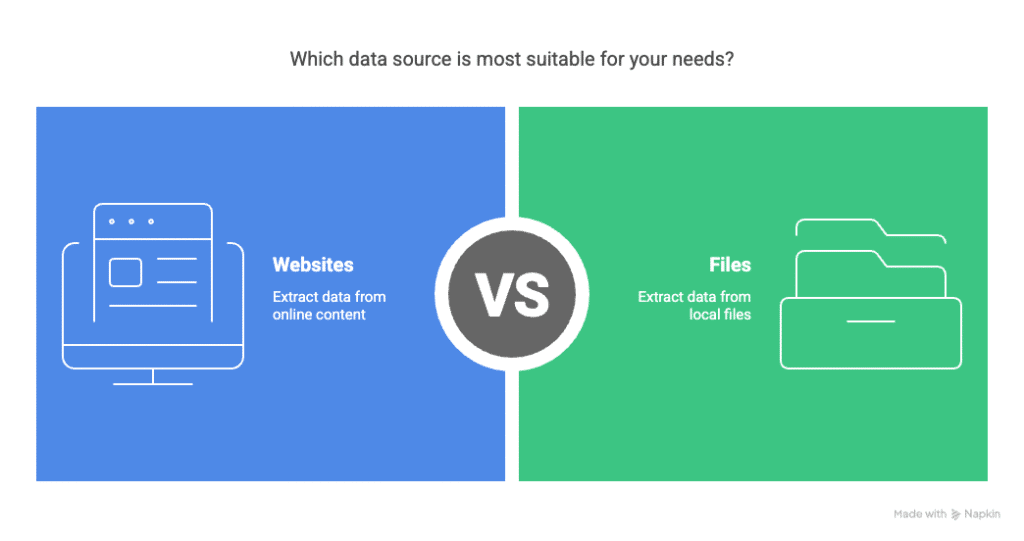
Data extraction is the broader activity of obtaining selected information from a source. The term data scraping is also used broadly, but an API integration, a database query and an import from a CSV file are distinct methods; calling all of them scraping hides important implementation differences. Choose the method based on the available interface and source format. The resulting records may be stored in CSV, Excel or a database.
Common source types and their usual extraction methods include:
- Web pages: Extract selected fields from HTML or a rendered page using selectors that match the relevant elements.
- Files: Use a reader for the actual format. For example, Python’s CSV module reads delimited rows; a scanned PDF may require a separate text-recognition step.
- APIs and databases: Use the documented API or an authorized database connection. Preserve the response schema and handle pagination or query limits. Requests’ HTTP and JSON examples illustrate an API-client building block, not a complete collection pipeline.
One project can combine these methods. For example, an analyst might import an internal order export and compare it with observed website prices. Keep the source and collection time of each record so that private transaction data is not confused with public listing information.
What is Web Scraping?
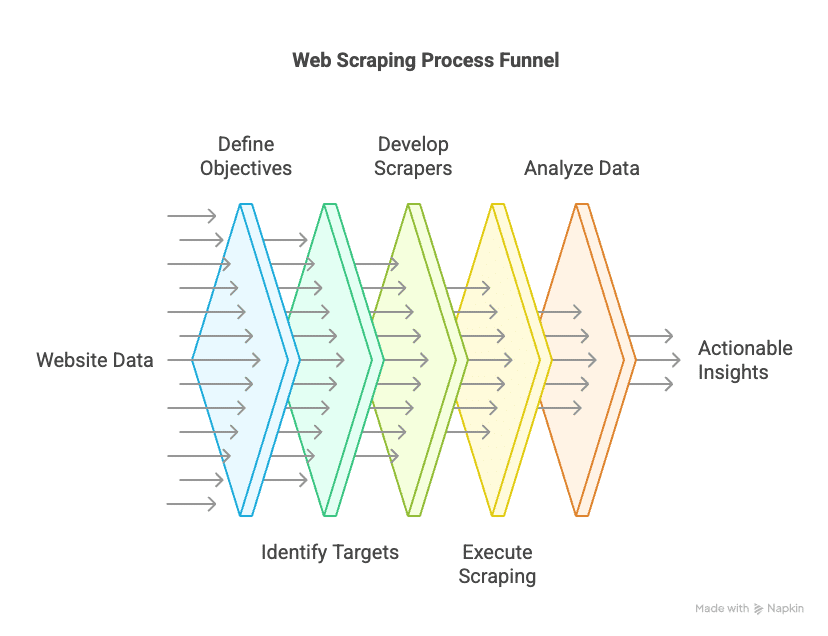
Web scraping extracts selected information from web pages, such as product names, displayed prices, review text or links. A parser can read returned HTML; some pages need browser interaction before the required elements appear. Scrapy’s documentation describes crawling websites and extracting structured data from their pages. The output becomes useful only after fields are identified, normalized and checked.
Web scraping is commonly used for:
- Competitor analysis: Scraping competitor websites to track prices, products, and services.
- Market research: Compare visible listings, reviews and availability over a defined sample and collection period. These observations do not reveal every customer’s behavior or a seller’s complete sales records.
- Business research: Extract relevant company or listing information from sources you are authorized to use; define the fields needed for the project before collecting contact details.
A page containing a product price does not automatically provide a ready-to-analyze dataset. You still need to identify the product and variant, distinguish a listed price from a voucher-dependent price, record the currency and observation time, and decide how to represent missing values. Our guide to business uses of web scraping connects these collection choices to market research, price monitoring and other project questions.
Key Differences Between Data Scraping and Web Scraping
-
Scope of Data Sources
Web scraping is a source-specific extraction method. A broader data-collection project may also use CSV exports, APIs or database queries. Start by checking whether an available export or documented interface already supplies the fields you need. -
Tools and Techniques
Beautiful Soup helps navigate and search parsed HTML or XML. Scrapy combines website crawling with extraction workflows. Selenium WebDriver controls a browser, which is a different role from parsing a saved HTML document. A CSV reader or API client is appropriate when the source already exposes records in that format. -
Use Cases
For your own order history, begin with the seller system’s export or authorized integration. For public competitor listings, identify the exact market, product URLs and fields to observe. The business question may be similar, but the sources describe different things: completed orders and advertised listings are not interchangeable. -
Data Types
Both file-based and web-based sources can contain structured fields and free text. HTML organizes a page, but prices, descriptions and links still need to be mapped into an explicit output schema. Check identifiers, currency, units, missing values and duplicates before comparing records. -
Challenges and Considerations
Website layouts, API schemas and file columns can all change. Authentication, pagination and request limits are not exclusive to one method. Record collection failures separately from genuine empty results, verify required fields, and stop or investigate when the source denies access rather than treating an error page as valid data.
Advantages and Use Cases for Data Scraping
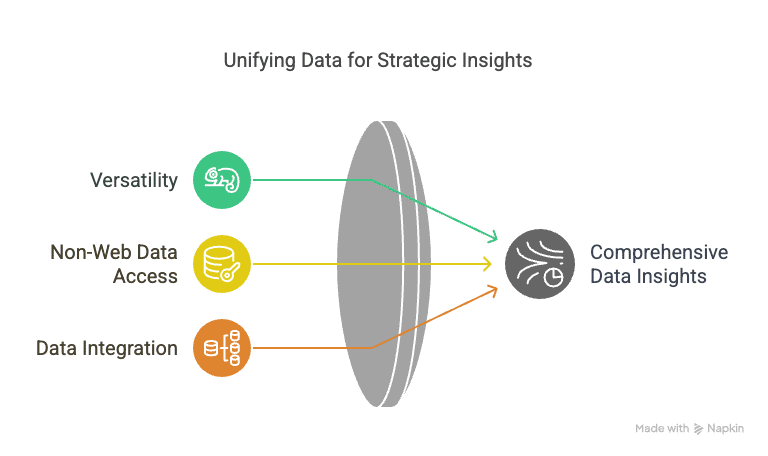
- Versatility: Data scraping can be applied to a wide range of data sources, making it useful in various industries, including marketing, finance, research, and more.
- Access to Non-Web Data: File readers and database queries can work with authorized local exports and internal records. A business directory or an API may itself be online, so neither is automatically an example of non-web data.
- Data Integration: It enables businesses to integrate data from multiple sources into one comprehensive system, providing a more holistic view of trends and insights.
Advantages and Use Cases for Web Scraping
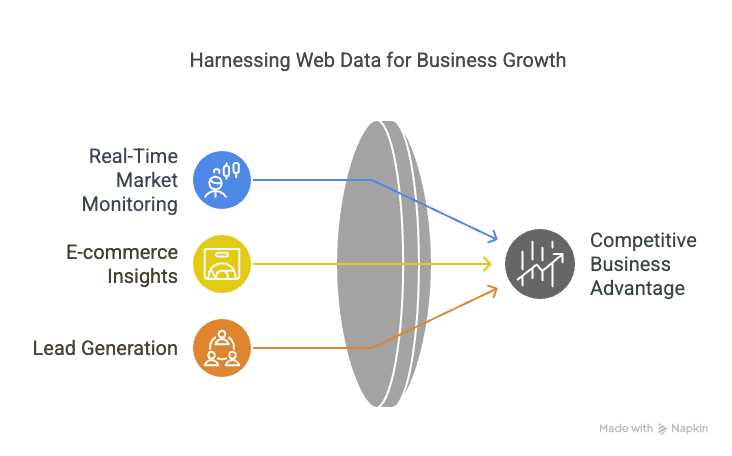
- Scheduled Market Monitoring: Repeated collection can track displayed prices, availability and promotions. Freshness depends on the source’s update frequency, the collection schedule, caching and successful processing. A daily snapshot should not be described as a live feed.
- E-commerce: Web scraping can be used to monitor product data, customer reviews, and market trends in the e-commerce industry, helping businesses stay competitive.
- Business Research: Directory and job-listing data can support company research when the source permits the intended collection and use. Collect only the fields needed for the research task; a published listing is not evidence of a completed sale or a qualified lead.
Conclusion: Choosing Between Data Scraping and Web Scraping
Choose the extraction method after defining the question, required fields and available source. An export or documented API may avoid unnecessary page parsing; web scraping can help when the required information is presented in pages you are authorized to collect. Whichever route you use, validate a small sample before scheduling a larger run.
Example collection brief: To compare advertised prices for the same product variant across selected Shopee listings, specify the market, listing and variant identifiers, currency, displayed price, collection timestamp and source URL. Keep voucher conditions and delivery charges in separate fields. Do not infer a competitor’s net revenue from these observations. Our Shopee data scraping service page describes the available collection scope; confirm the exact fields and schedule for your project.
External Links
Leave a Reply