

Big Data in eCommerce plays an increasingly important role in shaping how businesses understand customers, optimize operations, and drive growth. By analyzing large volumes of data from multiple sources—such as transactions, user behavior, and market trends—companies can make more accurate decisions and improve overall performance.
In 2025, the connection between Big Data and eCommerce will become even stronger. With advancements in AI and automation, businesses can use real-time insights to deliver personalized shopping experiences, predict consumer demand, and enhance supply chain efficiency. This article explores seven key Big Data eCommerce trends in 2025 that will transform how online retailers operate and compete in the global market.Learn more:Shopee Data Scraper for E-Commerce Market Analysts [Free Demo Available]
What is Big Data in eCommerce?
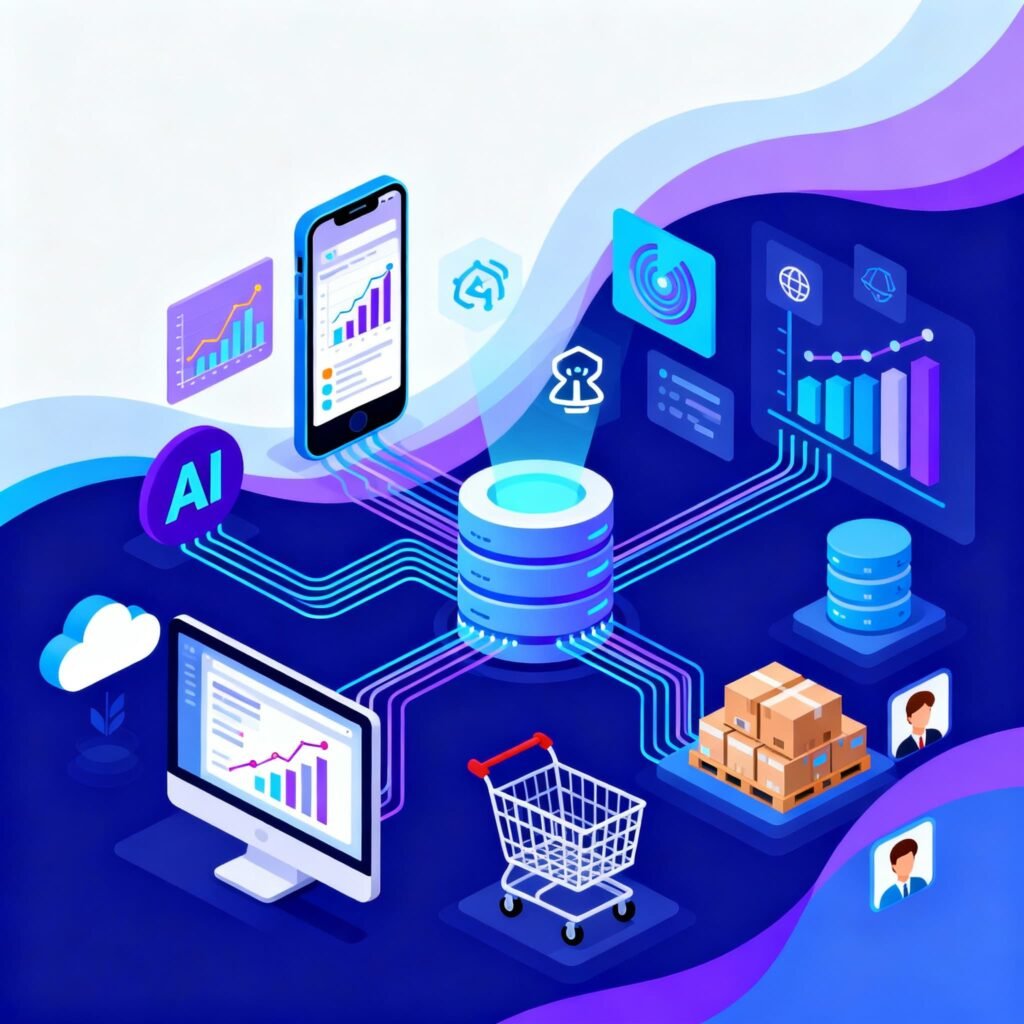
Big data in eCommerce refers to the collection, processing, and analysis of extremely large, fast-moving, and diverse datasets to drive business outcomes. In 2025, this includes:
- Behavioral data: product views, scroll depth, dwell time, add-to-cart, checkout steps, and repeat purchasing.
- Social commerce data: creator performance, live-stream metrics, UGC engagement, hashtag velocity, and share sentiment.
- Transactional data: orders, AOV(Average order value), SKU-level performance, returns, discounts, payment acceptance, and refund reasons.
- Operational data: inventory levels, lead times, fulfillment SLAs, shipping costs, delivery accuracy, and warehouse efficiency.
- Customer data: demographics, cohorts, LTV, churn risk, support interactions, and loyalty scores.
- Competitive and market data: price scraping, promo cadence, product availability, and review velocity.
Key technical layers to get Big Data in eCommerce?
- Data ingestion: APIs (e.g., TikTok Shop, shopee, lazada marketplaces), event streams (SDKs, server-side tracking), and batch uploads (CSV, S3 buckets), and data scraping services that extract real-time market and competitor insights.
- Data engineering: ELT/ETL pipelines, data warehouses/lakes, schema modeling (star/snowflake), identity resolution, and governance.
- Analytics and AI: SQL/BI dashboards, machine learning for predictions and recommendations, causal inference for tactics testing, and real-time orchestration with CDPs.
- Activation: personalization engines, dynamic pricing tools, marketing automation, inventory planning, and CX routing.
Big data empowers eCommerce to turn raw signals into precise, fast, and scalable decisions across the value chain.
Why Big Data Matters for eCommerce
Big data converts noisy cross-channel signals into action. The business outcomes are tangible:
- Faster trend detection: Spot viral demand early from platform creator-led surges, and live-stream conversion spikes to stock best-sellers and prevent stockouts.
- Higher conversion and AOV: Personalize product listings, bundles, and upsells based on browsing behavior and social proof, including creator-driven recommendations.
- Margin optimization: Use price elasticity models, discount attribution, and promo-response lift to improve contribution margin.
- Inventory precision: Align demand forecasts with supplier lead times, avoiding overstock and dead stock while maintaining service levels.
- Smarter marketing: Allocate budgets to high-yield creators and channels using multi-touch attribution and incrementality testing.
- Reduced churn: Predict and preempt customer attrition through tailored offers, CX prioritization, and proactive communications.
- Fraud and loss prevention: Detect anomalies in orders, payment flows, and returns with real-time flagging.
7 Big Data eCommerce Trends to Watch in 2025
As Big Data continues to shape every aspect of online retail, several emerging trends are redefining how eCommerce businesses collect insights, personalize experiences, and make data-driven decisions. Below are seven key Big Data eCommerce trends in 2025 that will influence everything from customer engagement to pricing, operations, and sustainability.
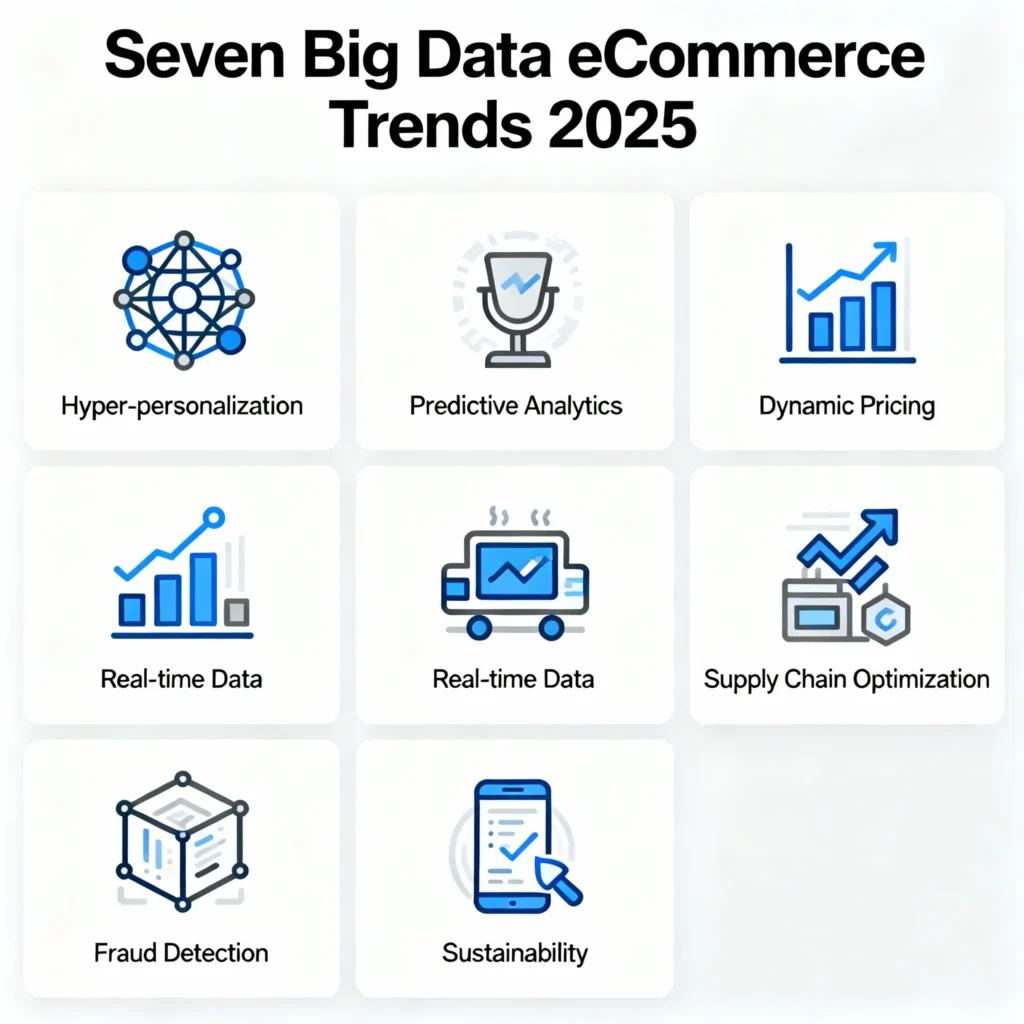
1. Hyper-Personalized Shopping Experiences
In 2025, personalization in Big Data eCommerce moves beyond simple “people who bought X also bought Y” logic. Retailers are merging behavioral, transactional, and contextual data to create individualized shopping journeys across channels.
How it works:
- Behavior-informed recommendations: Analyze browsing patterns, session activity, and purchase history to predict which products, bundles, or categories each user is most likely to buy.
- Context-aware experiences: Adjust homepage layouts, banners, and calls-to-action based on user intent, device type, referral source, or previous interactions.
- Real-time personalization: Use live session data and audience segments to swap product visuals, user-generated content, and copy dynamically.
- Lifecycle targeting: Personalize retention flows for new, repeat, and dormant customers—such as tailored replenishment reminders or loyalty offers.
- Price and incentive fit: Apply elasticity models to match promotions and discounts with each customer’s predicted sensitivity.
Implementation checklist:
- Unify user identity across web, app, CRM, and marketplace touchpoints.
- Create a feature store for personalization attributes (e.g., session intent, category depth, discount response).
- Automate omnichannel orchestration through a CDP and server-side event tracking.
Expected results: Higher engagement, improved conversion rates, increased add-to-cart behavior, and stronger customer loyalty.
2. Predictive Analytics for Smarter Decision-Making
Predictive analytics allows eCommerce businesses to move from reacting to anticipating customer needs and market shifts. Powered by Big Data, brands can model demand, customer lifetime value, and churn risk with greater accuracy.
Key use cases:
- Demand forecasting: Integrate sales velocity, historical seasonality, and campaign data to predict inventory needs.
- Churn prediction: Identify customers likely to disengage and re-engage them through targeted messaging or retention offers.
- Sales attribution: Predict which channels or campaigns will deliver the highest ROI based on past performance.
- Returns likelihood: Anticipate product categories or user segments prone to returns and optimize sizing guides or PDP content accordingly.
- Purchase timing: Estimate replenishment windows and automate reminders or reorder prompts.
Best practices:
- Use time-series or machine-learning models for demand prediction.
- Validate forecasts through backtesting and monitor data drift regularly.
- Connect predictions directly to automation tools—inventory planning, ad bidding, and pricing systems—for measurable impact.
Outcome: Faster decision-making, higher forecast accuracy, and reduced costs across marketing and operations.
3. Dynamic Pricing and Competitive Intelligence
Dynamic pricing is a powerful Big Data eCommerce application that helps retailers remain competitive and maximize margins in real time. By combining internal sales performance with external market data, businesses can adjust prices automatically based on demand and competition.
Modern pricing strategy:
- Event-driven adjustments: Respond to sudden traffic spikes or product popularity by optimizing prices or bundles instantly.
- Elasticity-based rules: Train pricing algorithms by customer segment, region, and product type to balance margin and conversion.
- Competitor monitoring: Use data scraping services to track competitor pricing, promotions, and stock availability.
- Geotargeted optimization: Adjust pricing based on logistics costs, regional demand, and local economic factors.
- Channel balance: Maintain fair pricing across marketplaces, wholesale, and DTC stores while honoring MAP policies.
Guardrails:
Maintain transparency, comply with regional pricing laws, and monitor sentiment to avoid user backlash.
Result: Stronger profitability, higher sell-through during demand peaks, and greater market adaptability.
4. Real-Time Data for Enhanced Customer Experience
Real-time data transforms customer experience (CX) by allowing instant responses to user interactions. From personalized chat prompts to live inventory updates, eCommerce brands are leveraging event-streaming architecture to remove friction and boost satisfaction.
Real-time applications:
- Smart merchandising: Dynamically reorder or highlight trending SKUs as product demand shifts.
- Contextual support: Trigger chat or help prompts based on browsing behavior or product type.
- Accurate inventory and delivery data: Display real-time stock levels, delivery estimates, and local availability.
- Transparent post-purchase updates: Provide proactive notifications about shipment progress or potential delays.
Tech stack essentials: Event streaming (e.g., Kafka or Kinesis), real-time data pipelines, and caching for low-latency experiences.
Outcome: A smoother buying journey, reduced cart abandonment, and increased customer trust.
5. Supply Chain Optimization and Demand Forecasting
Big Data eCommerce enables end-to-end visibility across the supply chain. Retailers can merge sales, logistics, and supplier data to improve demand forecasting, inventory allocation, and production planning.
Advantages:
- Early demand detection: Spot emerging product trends before they peak and adjust manufacturing or procurement.
- Multi-tier visibility: Synchronize supplier lead times, inbound shipments, and distribution center capacity.
- Smart allocation: Prioritize inventory for high-performing channels or regions with higher profitability.
- Adaptive safety stock: Adjust stock buffers based on product volatility or forecast uncertainty.
- Network optimization: Position inventory closer to demand centers to reduce delivery time and cost.
Result: Fewer stockouts, lower logistics expenses, and faster delivery—all improving both profit and customer satisfaction.
6. Fraud Detection and Data Security
With massive transaction volumes, Big Data eCommerce must prioritize fraud prevention and data protection. AI-powered anomaly detection and robust governance frameworks are essential to maintaining consumer trust.
Core security practices:
- Detect suspicious behavior such as duplicate orders, abnormal payment patterns, or account takeovers.
Use machine learning to flag high-risk transactions for manual review. - Tokenize or encrypt sensitive data both at rest and in transit.
- Regularly audit access permissions and maintain GDPR/CCPA compliance.
Outcome: Lower chargebacks, reduced fraud losses, and enhanced brand reputation through stronger data protection.
7. Sustainability and Ethical Data Use
Sustainability and data ethics are becoming central to modern Big Data eCommerce strategies. Retailers must balance performance optimization with environmental responsibility and privacy transparency.
Key priorities:
- Ethical data collection: Rely on first-party, consent-based data rather than opaque third-party tracking.
- Responsible AI: Regularly audit algorithms to prevent bias in recommendations, pricing, or marketing.
- Waste reduction: Use demand forecasting to minimize overproduction and markdown waste.
- Transparent communication: Clearly explain how data improves shopping experiences and delivery accuracy.
Benefits: Stronger brand trust, better compliance posture, and measurable contributions to sustainability goals.
How Big Data Will Transform the Future of eCommerce
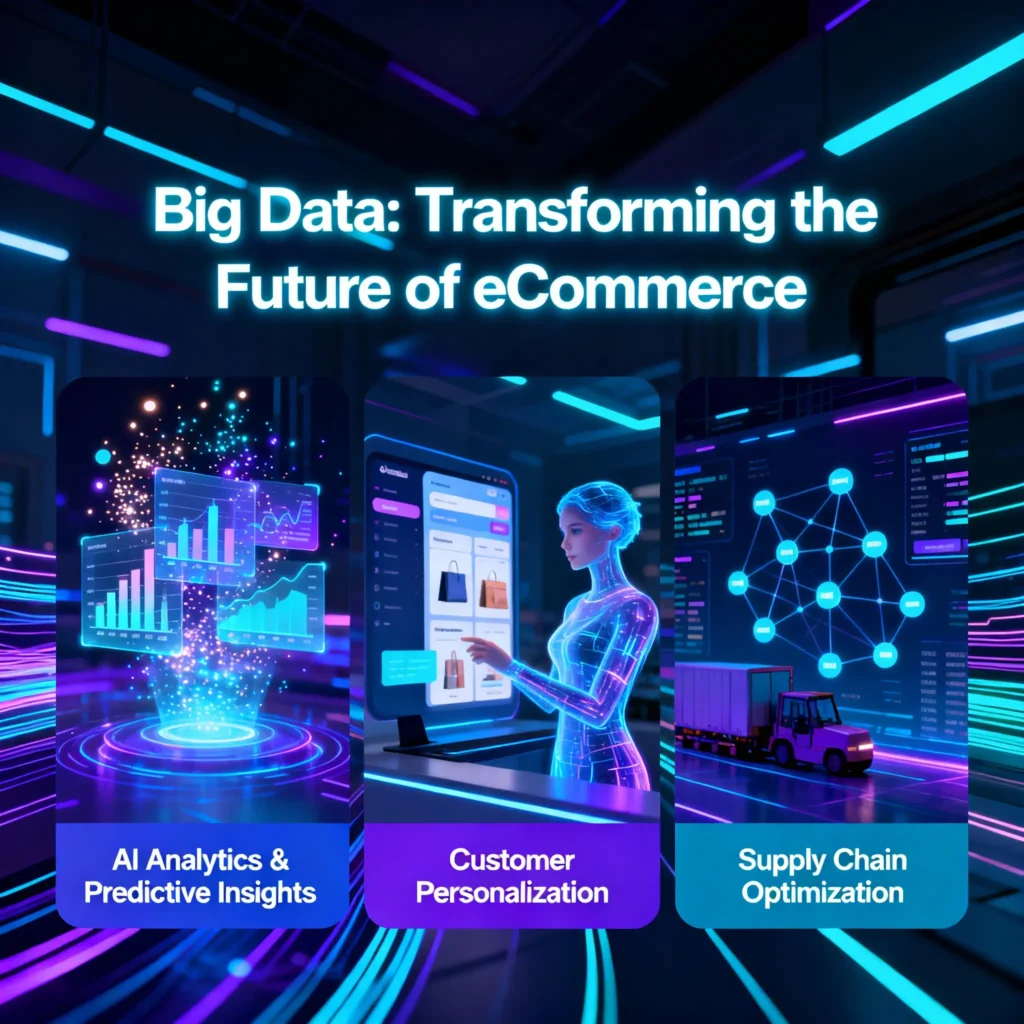
Big Data is not just improving how eCommerce brands operate—it’s redefining every layer of the digital commerce ecosystem. From marketing and logistics to customer experience, the ability to capture, interpret, and act on large-scale data will determine which companies stay competitive in 2025 and beyond.
As predictive analytics, AI, and automation become deeply integrated, eCommerce businesses will shift from reactive decision-making to proactive growth strategies. Data-driven insights will enable brands to forecast demand with greater accuracy, personalize experiences in real time, and optimize prices dynamically based on ever-changing market conditions.
Operationally, Big Data will streamline inventory management, enhance supply chain transparency, and reduce inefficiencies that lead to lost revenue or excess stock. On the marketing front, it will help businesses identify high-value customer segments, tailor retention campaigns, and allocate budgets more effectively across channels.
In the future, the fusion of AI and Big Data will become the foundation of every successful eCommerce strategy. Companies that invest early in data infrastructure, analytics tools, and ethical data practices will gain a lasting advantage—delivering smarter, faster, and more sustainable commerce experiences.
Final Thoughts
Big Data in eCommerce is no longer a competitive advantage, it’s becoming the foundation of modern digital commerce. The businesses that effectively collect, process, and act on data will outperform those relying on intuition or outdated systems.
As 2025 unfolds, the role of Big Data will continue to expand across every touchpoint: from hyper-personalized shopping experiences and real-time customer engagement to dynamic pricing, demand forecasting, and sustainability initiatives. With AI and automation powering analytics at scale, eCommerce brands can transform complex datasets in shopee, lazada, tiktok shop or other platform into clear, actionable insights that drive measurable growth.
The future belongs to data-driven retailers that prioritize transparency, ethical data use, and continuous innovation. By investing in the right data infrastructure and analytics capabilities today, companies can build smarter, more adaptive, and customer-centric eCommerce operations for the years ahead.
Leave a Reply